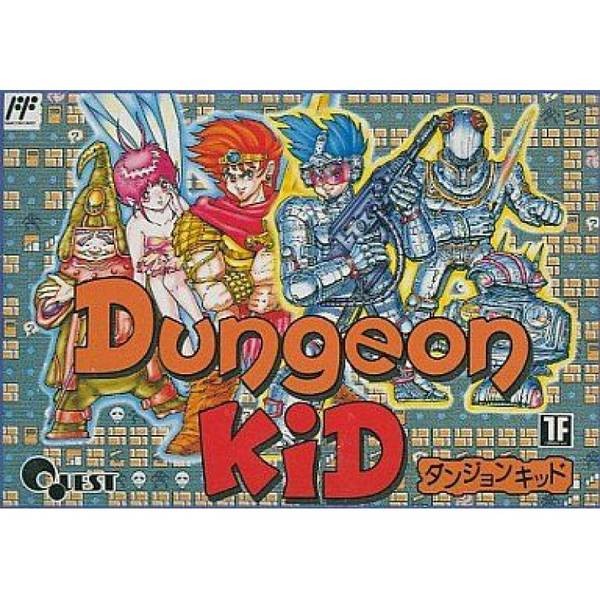
迷宮小子

Dungeon Kid(ダンジョンキッド)是由 Quest 於 1990 年 8 月 31 日在任天堂 Famicom(紅白機)上推出的一款極具開創性的作品。在當時的家用主機市場中,它顯得格外與眾不同,因為這不僅是一款 3D 迷宮探索 RPG,更同時是一套讓玩家能「自己設計遊戲」的編輯工具。在《RPG 製作大師》尚未普及的年代,讓許多懷抱遊戲開發夢的玩家,首次在家用主機上體驗到從無到有打造一個地牢世界的成就感。
在整體設計上,可說是 RPG 與創作工具的先驅性結合。雖然受限於 8 位元硬體性能,但其核心概念相當超前。遊戲由 Pixel 開發、Quest 發行,主打「創作與分享」的樂趣。視覺方面提供「奇幻(Fantasy)」與「科幻(SF)」兩種風格,可以自由切換,打造出截然不同的世界觀,無論是傳統劍與魔法的地牢,或是充滿未來感的科技基地都能實現。此外,還內建一個完整範例《古城魔法師》,在動手創作前先了解系統的潛力與上限。
在劇情設定上,本作與傳統 RPG 有著根本性的差異。由於其本質是工具型遊戲,官方並未提供固定的主線故事。相反地,所有的敘事元素——包含世界背景、迷宮名稱、角色對話,甚至最終魔王的設定——都完全交由玩家決定。玩家可以組建一支由三名角色構成的冒險隊伍,從 12 種各具特色的性格(職業)中進行選擇,並在自己設計的五層、每層 30×30 的大型迷宮中展開探索。這種將創作主導權完全交還給玩家的設計,在當時可說極具實驗性與前瞻性。
在操作與玩法上,主要分為「編輯模式」與「遊戲模式」兩大部分,對玩家的耐心與創意都有相當高的要求。在編輯模式中,可以自由設計迷宮結構、配置牆壁與通道、設置陷阱(如傳送點或傷害地板)、安排寶箱內容,以及調整怪物出現的頻率。甚至連 NPC 對話、道具名稱與魔法效果都可以逐字輸入自訂。雖然以手把輸入文字的過程略顯繁瑣,但也正因如此,玩家能獲得極高自由度的創作空間。
完成設計後,玩家便可進入遊戲模式,體驗自己打造的迷宮。遊戲採用類似 Wizardry 的第一人稱 3D 視角,進行經典的地城探索。戰鬥系統為回合制,角色擁有力量、速度、防禦等基本數值。值得一提的是,本作還支援外接儲存裝置「Turbo File」,玩家可以保存並與朋友分享自己設計的迷宮,進一步強化了「創作與交流」的核心理念。
此外,隊伍配置與數值平衡也是遊戲的重要一環。十二種性格各有優缺點,例如「妖精」升級速度快且抗魔能力強,但生命值較低;「戰士」則擁有穩定的防禦與生存能力。玩家不僅要設計迷宮,還要思考如何透過數值與配置,打造出既公平又具有挑戰性的遊戲體驗,這種「設計者與玩家合一」的機制,正是本作最迷人的地方。
在市場評價方面,被普遍視為一款「概念卓越但門檻極高」的作品。評論家高度肯定其作為家用機版 RPG 製作工具的先驅地位,認為它在類似《Dante 98》這類創作軟體出現之前,就已經實現了地圖、劇情與系統的全面自訂,是極具創意的實驗性傑作。然而,由於硬體限制導致輸入繁瑣,加上自製內容難以平衡以及偏高的遇敵率,讓不少一般玩家難以長時間投入。
整體而言,《迷宮小子》被視為一封「寫給未來遊戲開發者的情書」。對於熱衷於研究遊戲機制、享受創作過程的玩家來說,它是紅白機平台上極為獨特且不可忽視的作品之一,也是一顆在 8 位元時代中閃耀著創意光芒的隱藏寶石。
Dungeon Kid (ダンジョンキッド) is a highly innovative title released on August 31, 1990, for the Nintendo Famicom (NES) by Quest. At the time, it stood out in the home console market as a uniquely experimental work. Not only is it a 3D dungeon-crawling RPG, but it also functions as a game creation tool, allowing players to design their own adventures. Long before the widespread popularity of tools like RPG Maker, this game gave aspiring young creators their first chance to experience the satisfaction of building a dungeon world from scratch on a console.
In terms of concept and design, Dungeon Kid represents an early fusion of RPG gameplay and editing software. Developed by Pixel and published by Quest, the game emphasizes “creation and sharing” as its core appeal. Although limited by 8-bit hardware, it offers two distinct visual styles—Fantasy and Science Fiction (SF)—which players can freely switch between. This allows users to create either traditional sword-and-sorcery worlds or futuristic sci-fi bases. In addition to its robust creation tools, the game includes a complete sample scenario titled The Magician of the Ancient Castle, giving players a clear demonstration of the system’s full potential before they begin designing their own content.
Narratively, Dungeon Kid breaks away from the conventions of traditional RPGs. As a tool-based game, it does not provide a fixed storyline. Instead, it places full creative control in the hands of the player. Everything—from the world setting and dungeon names to NPC dialogue and the identity of the final boss—can be customized. Players assemble a party of three adventurers, choosing from twelve distinct personality types (classes), and explore a self-designed five-floor dungeon composed of large 30×30 maps. This complete transfer of narrative control to the player was highly experimental for its time and remains one of the game’s defining features.
The gameplay is divided into two primary modes: Edit Mode and Game Mode, both of which demand patience and creativity. The editing system offers an impressive level of freedom. Players can design dungeon layouts, place traps such as teleporters or damage floors, determine treasure contents, and control enemy spawn rates. They can even input custom dialogue and define item names and magic effects manually—though entering text using a controller can be time-consuming. Once completed, these creations can be experienced in the game’s first-person 3D dungeon exploration mode, which closely resembles classics like Wizardry. Combat is turn-based, with characters defined by attributes such as strength, speed, and defense. Notably, the game supports the external “Turbo File” storage device, allowing players to save and share their custom dungeons with others.
Another key aspect of gameplay lies in party composition and resource balance. Each of the twelve personality types has unique strengths and weaknesses—for example, fairies level up quickly and possess strong magic resistance but are physically fragile, while warriors serve as durable frontline defenders. Designing a dungeon that challenges the player fairly requires careful balancing of these elements, making the creation process itself a strategic and rewarding experience.
Critically, Dungeon Kid received a polarized reception, often described as a “brilliant concept with a high barrier to entry.” Reviewers praised its pioneering role as a console-based precursor to RPG creation software, noting that it allowed full customization of maps, systems, and narratives well before similar tools became mainstream. However, its limitations—such as slow text input, difficulty in balancing custom scenarios, and a high encounter rate—made it less accessible to casual players. As a result, it gained a reputation as a niche but deeply respected title.
Today, Dungeon Kid is widely regarded as a “love letter to future game developers.” For players who enjoy dissecting game mechanics and expressing creativity through design, it remains one of the most unique and ambitious titles on the Famicom—a hidden gem that pushed the boundaries of what 8-bit systems could achieve.
運費計算方式:
貨款滿1000元運費外加90元
貨款1000以下:買1件運費外加 60元,買2件運費外加 70元,
買3件運費外加 80元 ,買4件運費外加 90元
貨到付款外加30元手續費
外島及大陸地區運費另計
付款方式:
線上刷卡:本站採用Paypal線上刷卡
虛擬帳號匯款:屬於您專屬的虛擬帳戶,方便站長查帳使用,本站強力推薦
實體ATM匯款:請將匯款帳號記錄下來至各大銀行ATM提款機轉帳
超商條碼繳費:請列印本站提供的條碼至四大超商繳費
線上轉帳:透過玉山銀行線上ATM轉帳(此系統只支援IE瀏覽器)
貨到付款:本站採用黑貓宅急便貨到付款
其他注意事項:
如需購買線上點數卡請直接跟站長連絡,本站不提供點數卡的線上付款