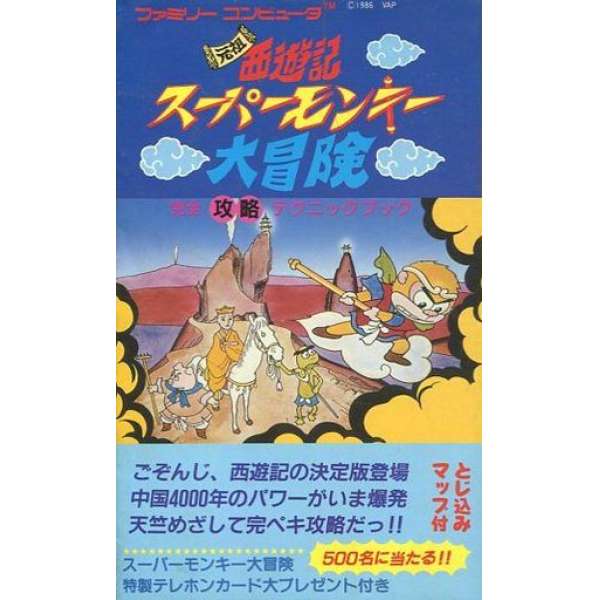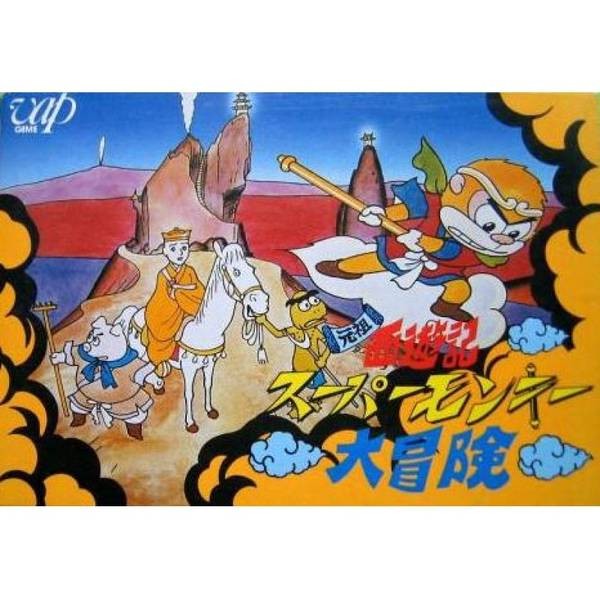
元祖西遊記:超級猴子大冒險 (無書盒)
 1986-11-21
1986 年由 VAP 在紅白機(FC)平台推出的《元祖西遊記:超級猴子大冒險》,在電玩史上佔有一個相當特殊的位置。它常被拿來與《Star Luster》等早期作品並列討論,但更多時候,是因為其極端混亂且不友善的設計,而成為玩家口中的「反面教材」。
以中國古典名著《西遊記》為題材,孫悟空,與豬八戒、沙悟淨等角色一同踏上前往天竺取經的旅程。然而,幾乎沒有真正的劇情演出或對話鋪陳,故事存在感極低。整體推進方式主要依靠在大地圖上不斷移動,目標只是抵達地圖最西端,敘事功能相當薄弱。
在玩法上,結合大地圖探索與橫向捲軸動作戰鬥,但兩者之間的銜接與設計都相當不成熟。在大地圖模式中,以俯視視角操控悟空移動,但移動速度非常緩慢,地圖卻異常龐大且缺乏指引,容易讓人迷失方向。此外,還加入飢餓值與晝夜系統等生存要素,若未及時進城補給,角色甚至可能因體力耗盡而死亡,增加不必要的壓力與挫折感。
當遭遇敵人或特定事件時,畫面會切換為橫向捲軸戰鬥模式。悟空使用金箍棒進行攻擊,但攻擊判定極為不穩定,敵人的行動也缺乏規律,使戰鬥體驗顯得混亂且難以掌控。雖然可以切換悟空、八戒與沙悟淨等角色,但實際差異不大,多半僅體現在數值上的微調,未能帶來真正的戰術變化。
隨著時間推移,逐漸被視為紅白機時代著名的「高爭議作品」。玩家普遍反映遊戲缺乏引導、節奏緩慢且機制不清晰,容易在短時間內產生強烈的挫敗感。技術層面上也存在不少問題,例如攻擊判定不可靠、明明擊中卻無傷害的情況頻繁發生,以及城鎮入口必須精準對準像素才能進入等設計瑕疵,都進一步加劇遊戲的不友善體驗。
音樂部分同樣備受批評,背景音樂段落短且重複性高,在長時間遊玩下容易造成疲勞感。更有傳聞指出,後來對 ROM 的分析中發現疑似開發者在程式碼內留下對工作環境與管理層不滿的字串,使這款作品的「幕後故事」更加傳奇化。
整體而言,《元祖西遊記:超級猴子大冒險》更像是一個早期遊戲開發探索期的產物。它試圖融合動作、RPG 與生存要素等多種設計,但各系統之間缺乏整合與打磨,最終呈現出一款極具野心卻嚴重失控的作品。
對現代玩家而言,它與其說是一款「好玩」的遊戲,不如說是一段歷史紀錄:見證早期遊戲設計如何在缺乏完善經驗時,可能走向完全相反的結果。
Released on the Family Computer (FC) by VAP in 1986, Ganso Saiyuuki: Super Monkey Daibouken occupies a notorious place in gaming history, often mentioned alongside titles like Star Luster as part of the early era of experimental console design. However, its reputation today is largely defined by its chaotic structure and notoriously unfriendly gameplay rather than any conventional sense of quality.
The game loosely adapts the classic Chinese novel Journey to the West, with the player taking control of Sun Wukong on a pilgrimage to the West alongside companions such as Zhu Bajie and Sha Wujing. Despite this familiar premise, the narrative is extremely minimal. There are almost no story scenes or meaningful dialogue. Instead, progression is conveyed almost entirely through movement across a vast overworld, with the ultimate goal simply being to reach the far western edge of the map.
Gameplay is split between two disconnected systems: an overworld exploration mode and a side-scrolling combat mode. On the overworld map, the player moves Sun Wukong through a large, sparsely populated terrain from a top-down perspective. Movement is extremely slow, and the lack of guidance or clear objectives often leaves players feeling lost. The game also introduces survival-like mechanics such as a hunger meter and a day-night cycle. If the player fails to find towns and eat regularly, the character’s vitality depletes and can result in death, adding pressure without clear instruction.
When combat is triggered, the game switches to a side-scrolling action format. Sun Wukong attacks with his staff, but the hit detection is inconsistent and enemy movement is unpredictable, making battles feel chaotic rather than strategic. Although players can switch between party members like Pigsy and Sandy, the differences between characters are minimal in practice, offering little meaningful variation in gameplay.
Over time, the game gained a reputation as one of the most frustrating and poorly designed titles of its generation. Players frequently reported feeling disoriented within minutes due to the lack of direction, extremely slow pacing, and unclear mechanics. Technical issues further damaged the experience, including unreliable collision detection where attacks often failed to register even when they appeared to connect, as well as awkward town entry points that required near-perfect positioning to access.
Audio design also contributed to the game’s negative perception, with short, repetitive background tracks that quickly became grating during extended play sessions. Perhaps the most infamous anecdote surrounding the game is that later ROM analysis allegedly uncovered hidden strings in the code containing developer frustrations and insults directed at management and working conditions, further cementing its reputation as a troubled production.
In retrospect, Ganso Saiyuuki: Super Monkey Daibouken is often viewed less as a traditional game and more as a historical artifact from the experimental and sometimes unrefined early Famicom era. It stands as an example of ambitious ideas—combining action, RPG elements, survival mechanics, and exploration—executed without the cohesion or clarity needed to make them enjoyable.
For modern audiences, it remains a curiosity rather than a recommendation: a case study in how early game design, when left unrefined, could easily turn a legendary story into one of gaming’s most infamous frustrations.
運費計算方式:
貨款滿1000元運費外加90元
貨款1000以下:買1件運費外加 60元,買2件運費外加 70元,
買3件運費外加 80元 ,買4件運費外加 90元
貨到付款外加30元手續費
外島及大陸地區運費另計
付款方式:
線上刷卡:本站採用Paypal線上刷卡
虛擬帳號匯款:屬於您專屬的虛擬帳戶,方便站長查帳使用,本站強力推薦
實體ATM匯款:請將匯款帳號記錄下來至各大銀行ATM提款機轉帳
超商條碼繳費:請列印本站提供的條碼至四大超商繳費
線上轉帳:透過玉山銀行線上ATM轉帳(此系統只支援IE瀏覽器)
貨到付款:本站採用黑貓宅急便貨到付款
其他注意事項:
如需購買線上點數卡請直接跟站長連絡,本站不提供點數卡的線上付款
-
元祖西遊記:超級猴子大冒險 (無書盒)
- 定 價: 5,145円
- 售 價: 0.00
- 庫存量: 0 套
- 已賣出: 0 套
人氣指數: 0.6 / 6 顆星 -
哆啦A夢
- 定 價: 5,775円
- 售 價: 650.00
- 庫存量: 0 套
- 已賣出: 0 套
人氣指數: 0.6 / 6 顆星