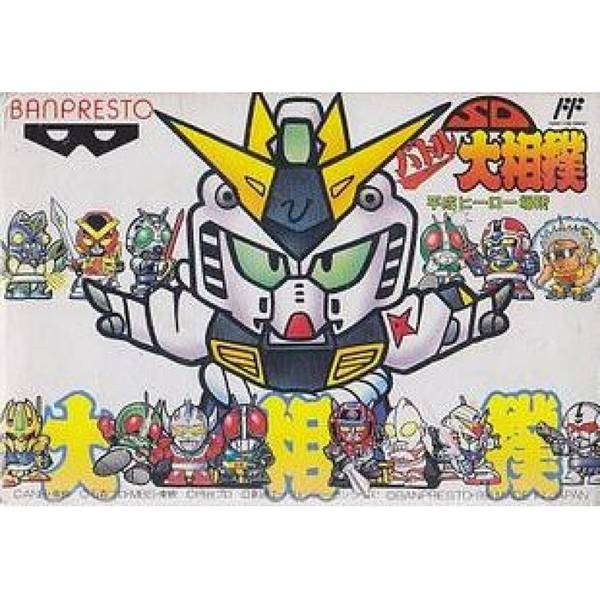
SD大相撲:平成英雄場所
 1990-04-20
於 1990 年在紅白機推出的《SD 大相撲:平成英雄場所》(SD Battle Oozumou: Heisei Hero Basho),是Banpresto「Compati Hero」系列的重要開端之一。將日本傳統國技相撲與當時最受歡迎的特攝與動畫英雄巧妙融合,創造出一種既反差十足又熱血沸騰的獨特遊戲體驗。
本作最大的魅力,在於其夢幻般的跨界角色陣容。操控來自不同作品的 Q 版(SD)英雄參加相撲對決,包括《超人力霸王》系列的Ultraman與Ultraseven,《假面騎士》系列的Kamen Rider Ichigo與Kamen Rider V3,以及《機動戰士鋼彈》中的RX-78-2 Gundam與Zeta Gundam等經典角色,甚至還包含萬普自家原創人物。看著這些來自不同世界的英雄站上相撲土俵彼此推擠、摔投,那種跨時代的大亂鬥設計,在當時可說是極具衝擊力與創意。
雖然畫風走的是可愛的 SD 路線,但卻相當紮實地還原相撲的競技精神。每場比賽開始時,雙方會進行象徵性的「立合」,需要快速操作來取得有利的站位與抓握優勢。隨後的對戰則圍繞著推擠、壓制與摔投等技巧展開,講求力與技之間的平衡。更有趣的是,每位英雄都保留原作特色並轉化為相撲技能,例如超人力霸王能以光線化作強力推進,鋼彈則利用機械出力在對抗中取得壓倒性優勢。
遊戲中也加入必殺技與華麗的決勝動作系統。除基本的「推出」或「抱出」等勝利方式之外,當能量累積到一定程度時,還可以施展極具魄力的摔投技,帶來相當過癮的視覺效果。同時,採用真實相撲的階級制度,需從低階力士一路晉升,最終挑戰成為象徵最高榮譽的橫綱,讓整體遊玩過程更具目標感與成就感。
在畫面與音效方面,於紅白機平台上展現出相當高水準的表現。角色雖為二頭身比例,但細節刻畫精準,每個英雄的招牌動作與姿態都被忠實呈現,而穿上相撲裝扮後更增添一種幽默趣味。音樂則充滿濃厚的日本祭典與競技場氛圍,搭配強烈的打擊音效,讓每一次碰撞與摔出土俵的瞬間都充滿力量感。
在當時的市場評價中,因其創新題材與高度娛樂性而廣受好評。它不僅成功奠定了「Compati Hero」系列的基礎,也間接促成後來《英雄挑戰》以及《超級機器人大戰》等跨界作品的誕生。由於操作簡單、角色知名度高,本作也成為當年朋友間對戰與同樂的熱門選擇。
總體而言,《SD 大相撲:平成英雄場所》不只是一款趣味十足的運動遊戲,更是一場融合傳統文化與流行英雄的創意盛宴。對於喜愛昭和、平成英雄文化,或是熱衷復古遊戲的玩家來說,這款讓英雄們在土俵上激烈對決的作品,無疑是紅白機時代中最具特色且令人難忘的一段回憶。
Released in 1990 for the Famicom, SD Battle Oozumou: Heisei Hero Basho is one of the foundational titles of the Compati Hero series by Banpresto. The game delivers a highly distinctive concept by merging Japan’s traditional sport of sumo wrestling with a crossover cast of popular heroes from tokusatsu and anime, resulting in a uniquely charming yet surprisingly intense fighting experience.
At the heart of the game lies its standout feature: a dream lineup of super-deformed (SD) heroes from multiple franchises. Players can choose characters from the Ultraman series, including Ultraman and Ultraseven, from the Kamen Rider series such as Kamen Rider Ichigo and Kamen Rider V3, and from the Gundam franchise including RX-78-2 Gundam and Zeta Gundam. The roster also features original characters created by Banpresto. Watching these iconic heroes face off inside a sumo ring—pushing, grappling, and throwing each other—is both humorous and groundbreaking for its time, embodying an early form of large-scale crossover gaming.
Despite its cute and comedic presentation, the gameplay system is deeply rooted in authentic sumo mechanics. Each match begins with the traditional tachiai (initial charge), where players must rapidly input commands to gain the upper hand in positioning. From there, matches revolve around a balance of strength and technique, as players attempt to outmaneuver opponents using pushes, grapples, and throws. Each character retains elements of their original abilities, adapted cleverly into sumo-style techniques. For instance, Ultraman can unleash a version of his beam attack as a powerful pushing force, while Gundam units rely on mechanical strength to overpower opponents.
The game also incorporates special moves and finishing techniques that add excitement and spectacle. Beyond standard victory conditions such as pushing an opponent out of the ring (oshidashi) or forcing them down (yorikiri), players can trigger dramatic throwing moves when their energy gauge is filled. These finishing animations are especially satisfying and give each match a cinematic flair.
Adding further depth is a progression system modeled after real sumo rankings. Players begin at the lowest rank and must fight their way up through the hierarchy, ultimately aiming to achieve the prestigious title of Yokozuna. This structure provides a strong sense of accomplishment and long-term engagement.
Visually, the game stands out on the Famicom with its bright colors and expressive SD character designs. Despite their chibi proportions, each hero’s animations faithfully capture their iconic traits and signature poses, now humorously adapted to sumo attire. The audio design complements the action with energetic music inspired by festival and arena atmospheres, while impactful sound effects enhance the feeling of weight and collision during matches.
Upon release, the game was highly praised for its originality and entertainment value. It successfully laid the groundwork for what would become a major crossover franchise. Its success directly contributed to the creation of later titles such as the Great Battle series and even influenced the development of the long-running Super Robot Wars franchise. The game also proved to be an excellent party experience, as its intuitive controls and recognizable characters made it ideal for competitive play among friends.
In the end, SD Battle Oozumou: Heisei Hero Basho is more than just a novelty sports game. It represents a bold and creative fusion of traditional culture and pop entertainment, capturing the spirit of late 80s and early 90s hero fandom. For players who appreciate classic tokusatsu, retro gaming, or unconventional crossover ideas, this title remains one of the most memorable and unique experiences of the Famicom era.
運費計算方式:
貨款滿1000元運費外加90元
貨款1000以下:買1件運費外加 60元,買2件運費外加 70元,
買3件運費外加 80元 ,買4件運費外加 90元
貨到付款外加30元手續費
外島及大陸地區運費另計
付款方式:
線上刷卡:本站採用Paypal線上刷卡
虛擬帳號匯款:屬於您專屬的虛擬帳戶,方便站長查帳使用,本站強力推薦
實體ATM匯款:請將匯款帳號記錄下來至各大銀行ATM提款機轉帳
超商條碼繳費:請列印本站提供的條碼至四大超商繳費
線上轉帳:透過玉山銀行線上ATM轉帳(此系統只支援IE瀏覽器)
貨到付款:本站採用黑貓宅急便貨到付款
其他注意事項:
如需購買線上點數卡請直接跟站長連絡,本站不提供點數卡的線上付款
-
SD大相撲:平成英雄場所
- 定 價: 6,615円
- 售 價: 485.00
- 庫存量: 0 套
- 已賣出: 0 套
人氣指數: 0 / 6 顆星