超人迪瓦
 1986-12-05
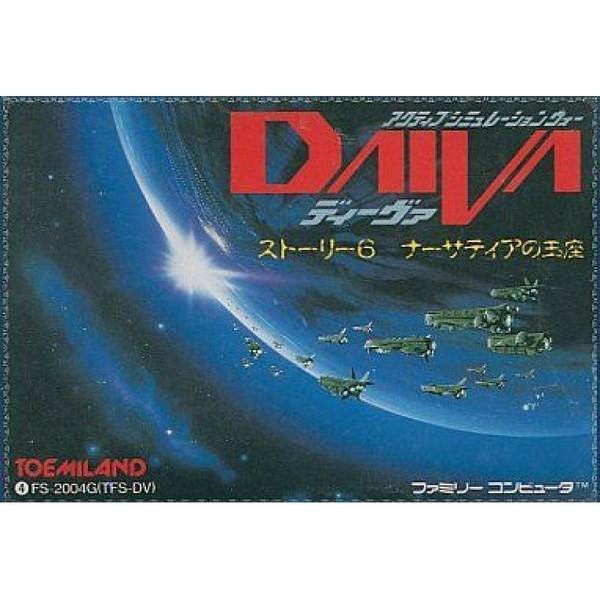
由T&E Soft於1986年12月5日在任天堂Famicom(紅白機)上推出的《超人迪瓦》(Daiva Story 6: Imperial of Nirsartia / ディーヴァ ストーリー6 ナーサティアの王座),是日本早期電子遊戲史上一項極具野心的跨平台企劃代表作之一。當時《Daiva》系列橫跨多達七種不同電腦與主機平台,每個版本各自描繪同一場銀河戰爭的不同面向,而紅白機上的第六章則以融合「星際戰略」與「橫向捲軸動作」的複合玩法聞名,試圖在8位元主機上構築一場完整且壯闊的太空史詩。
在基本表現上,展現出強烈的實驗精神。畫面被劃分為兩個截然不同的系統:一方面是充滿資訊與數據感的星際戰略地圖,需在此進行艦隊調度與資源規劃;另一方面則是在登陸行星後切換成橫向捲軸動作畫面。這種設計在當時相當少見,也讓整體體驗呈現出一種「宏觀與微觀交錯」的特殊節奏。尤其在戰鬥場景中,主角機體「路西法(Lucifer)」的巨大存在感與流暢動作,為紅白機動作遊戲帶來更具衝擊力的視覺效果。音樂表現同樣值得一提,從戰略畫面的沉穩旋律到行星戰鬥時轉為節奏鮮明的激昂配樂,成功營造出從指揮官到前線戰士的情境轉換。
劇情方面,設定在遙遠未來的銀河系,長年分裂與戰亂使各大勢力彼此對立。玩家扮演一名隸屬帝國的年輕指揮官,肩負奪回象徵統治權威的「納薩蒂亞王座」的使命。整個遊戲舞台涵蓋十四個行星系統,玩家需要在星際之間穿梭,與叛軍、地方軍閥以及外星文明進行交涉與戰鬥。雖然紅白機版本在敘事上多以文字與靜態畫面呈現,但其宏大的世界觀與完整設定,在推進過程中能感受到一種參與銀河戰爭的沉重與史詩感。
在操作與系統設計上,提供一套極具深度的雙層玩法。首先,在星際地圖中,必須進行艦隊派遣、敵情偵察與能源分配等戰略決策,這部分帶有濃厚的模擬策略色彩,考驗玩家對全局的掌控能力。而當艦隊抵達行星並展開攻擊時,遊戲會立即切換為動作模式,操作機甲「路西法」在敵軍密集火力與複雜地形中推進,摧毀核心設施。這種從策略到動作的轉換,要求玩家同時具備思考與操作的能力。此外,還加入機體成長與改裝系統,透過佔領行星獲得資源來強化裝甲、武器與機動性能,使整體體驗帶有RPG式的長期養成要素。
在市場評價方面,被視為一款極具前瞻性但同時也充滿爭議的作品。評論普遍肯定其大膽將電腦平台常見的硬核戰略元素引入家用主機,並嘗試與動作遊戲結合的創新精神,認為它是後來A-RPG與SLG融合形式的早期先驅之一。然而,其複雜的系統與極高的學習門檻,也讓不少玩家難以適應,尤其在戰略與動作之間切換時,節奏偶爾顯得不夠流暢。此外,冗長的密碼儲存系統也成為當年玩家的一大負擔。整體而言,市場普遍將本作視為一款「超越時代」的實驗性作品,它在8位元硬體限制下所展現的野心與創意,至今仍讓許多老玩家對其獨特風格留下深刻印象。
Released on December 5, 1986, for the Nintendo Famicom (NES) by T&E Soft, Daiva Story 6: Imperial of Nirsartia (ディーヴァ ストーリー6 ナーサティアの王座) stands as one of the most ambitious cross-platform projects in early Japanese video game history. At the time, the Daiva series spanned seven different computer and console platforms, with each version portraying a different perspective of the same galactic war. The Famicom installment, as the sixth chapter, became particularly notable for its hybrid gameplay that combined “interstellar strategy” with “side-scrolling action,” attempting to deliver a full-scale space opera experience on 8-bit hardware.
In terms of presentation, Daiva Story 6 clearly reflects a strong experimental spirit. The game is divided into two fundamentally different gameplay systems: one is a data-heavy galactic strategy map where players manage fleets and resources, while the other shifts into side-scrolling action sequences when landing on planets. This dual-structure design was quite rare at the time and created a unique rhythm that alternates between macro-level planning and micro-level execution. During combat, the protagonist’s giant mech unit, “Lucifer,” delivers a strong visual impact with its size and fluid movement, pushing the limits of what Famicom action games could achieve. The soundtrack further enhances the experience, transitioning from calm, contemplative tones during strategic planning to intense, rhythmic compositions during planetary battles, effectively reinforcing the shift from commander to frontline warrior.
The story is set in a distant future where the galaxy has long been fractured by conflict and division. Players take on the role of a young commander of the Galactic Empire, tasked with reclaiming the legendary “Throne of Nirsartia” and restoring unity across the stars. The game world spans fourteen planetary systems, requiring players to travel between them while confronting warlords, rebel factions, and alien civilizations. Although the Famicom version presents much of its narrative through text and static imagery, its rich world-building and detailed setting successfully convey the weight and scale of a galaxy-wide war, immersing players in an epic interstellar struggle.
From a gameplay perspective, Daiva Story 6 offers a deeply layered system that challenges players to switch between strategic thinking and real-time control. On the galactic map, players must make decisions involving fleet deployment, reconnaissance, and energy allocation, creating an experience similar to a hardcore strategy simulation. Once a planet is targeted for invasion, the game transitions into action mode, where players control the “Lucifer” mech, navigating hostile terrain filled with enemies and heavy defenses while destroying key installations. This constant shift between strategy and action demands both careful planning and precise execution. Additionally, the game features a progression and customization system, allowing players to upgrade armor, weapons, and mobility using resources gained from conquered planets, adding RPG-like depth and replay value.
In terms of market reception, Daiva Story 6 was widely regarded as a bold yet polarizing title. Critics praised its innovative attempt to bring PC-style hardcore strategy elements to a home console and merge them with action gameplay, recognizing it as an early pioneer of hybrid A-RPG and strategy systems. However, its complexity and steep learning curve proved challenging for many players at the time, especially those accustomed to more straightforward action games. The transition between gameplay modes could feel uneven, and the lengthy password system required for saving progress was often seen as cumbersome. Overall, the game is now remembered as a “ahead-of-its-time” experimental work, whose ambition to simulate a complete galactic war on 8-bit hardware left a lasting impression on players and remains a distinctive example of creative design in the Famicom era.
運費計算方式:
貨款滿1000元運費外加90元
貨款1000以下:買1件運費外加 60元,買2件運費外加 70元,
買3件運費外加 80元 ,買4件運費外加 90元
貨到付款外加30元手續費
外島及大陸地區運費另計
付款方式:
線上刷卡:本站採用Paypal線上刷卡
虛擬帳號匯款:屬於您專屬的虛擬帳戶,方便站長查帳使用,本站強力推薦
實體ATM匯款:請將匯款帳號記錄下來至各大銀行ATM提款機轉帳
超商條碼繳費:請列印本站提供的條碼至四大超商繳費
線上轉帳:透過玉山銀行線上ATM轉帳(此系統只支援IE瀏覽器)
貨到付款:本站採用黑貓宅急便貨到付款
其他注意事項:
如需購買線上點數卡請直接跟站長連絡,本站不提供點數卡的線上付款