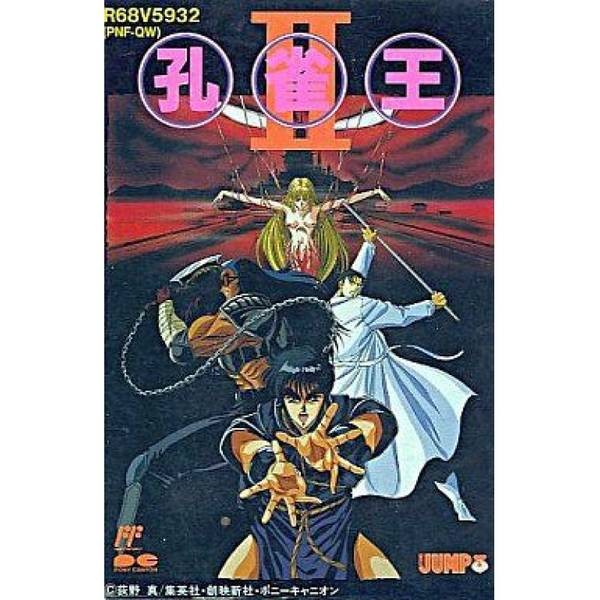
孔雀王II

波麗佳音(Pony Canyon)於 1990 年 8 月 21 日在任天堂 Famicom(紅白機)上推出《孔雀王 2》,作為該系列在 8 位元主機上的完結篇。與第一代純粹的文字指令冒險不同,第二代進行大幅革新,將遊戲系統演變為「大地圖 RPG 探索與橫向捲軸動作戰鬥」的混血模式,試圖在故事敘事與遊戲性之間取得更好的平衡。
技術上,擺脫前作靜態畫面的限制,展現更具動態感的遊玩體驗。採用雙重模式:在城鎮與大地圖移動時使用典型俯瞰 RPG 視角,而在戰鬥或特定迷宮時,則切換成橫向捲軸動作模式。視覺方面依然保有荻野真原作那種冷峻、神祕,帶有肉慾與獵奇感的畫風,對話時的角色頭像比前作更精緻。音樂則延續系列沉重、壓抑的宗教電音風格,動作關卡的節奏感也更強烈,增加遊戲張力。
劇情延續漫畫版後期的故事線,邪惡組織「六道眾」的陰謀升級,企圖利用古代遺產喚醒終極破壞神。孔雀及其夥伴,如劍客王仁丸、具有神力的阿修羅,必須穿越日本各地,尋找被封印的神器與聖杯。整個冒險是一場關於光與影、血緣之謎以及毀滅預言的最終決戰,最終目標是擊敗隱藏在黑暗深處的魔神,守護人類世界。
操作方面,結合文戲與武戲。文戲部分在城鎮中調查消息、購買裝備與補給品,透過對話觸發劇情、開啟新的地圖路徑;武戲部分則為橫向動作戰鬥,孔雀可以使用基本近戰攻擊,也能透過術法選單消耗法力發動各種密教咒語,如火焰、雷擊或防禦障壁。在某些關卡中,利用阿修羅的特殊能力進行攻略。此外,可以隨劇情切換控制不同角色,根據敵人的屬性(魔族、機械、幽靈)決定使用物理攻擊或九字真言。迷宮關卡中還穿插平台跳躍與開關解謎,操作判定比一般純動作遊戲稍寬鬆,但依然具有挑戰性。
市場的評價褒貶不一,但普遍認為遊戲野心十足。評論家讚賞開發團隊打破文字冒險框架的勇氣,但也有玩家反映,動作關卡的加入分散劇情沉浸感,操作手感較純動作遊戲略顯生硬。即便如此,在呈現「密教神話」與「黑暗英雄」的氛圍上表現出色,特別是 Boss 的登場動畫在當時極具震撼力。
歷史地位方面,是紅白機上少數成功融合 RPG、AVG 與 ACT 三種元素的作品,為後續在超級任天堂(SFC)與 Mega Drive 上的系列提供豐富的開發靈感。許多玩家最深刻的回憶,是在大地圖上辛苦奔波,最後進入橫向關卡,用九字真言轟殺巨大魔物的成就感,以及在詭異迷宮中為找出隱藏聖物繞無數圈的挑戰。
Pony Canyon released Kujaku Ou 2 on the Nintendo Famicom on August 21, 1990, marking the conclusion of the series on 8-bit consoles. Unlike the first installment, which was a pure text-based command adventure, the sequel underwent a major transformation, evolving into a hybrid system that combined overworld RPG exploration with side-scrolling action combat, aiming to strike a balance between narrative depth and gameplay.
Technically, Kujaku Ou 2 broke free from the static screens of the first game, offering a more dynamic experience. The game features dual modes: while navigating towns and the overworld, it uses a typical top-down RPG perspective, but when entering combat or specific dungeons, it switches to side-scrolling action. Visually, it retains Ogino Shin’s original style—dark, mysterious, and infused with erotic and grotesque elements—with more detailed character portraits during dialogues. The music continues the series’ heavy, oppressive religious electronic tone, and the action stages feature a stronger rhythmic intensity, enhancing the game’s tension.
The story adapts later arcs from the manga. The evil organization “Rokudō-shū” escalates its schemes, aiming to awaken an ultimate destructive god using ancient relics. Players control Kujaku and his allies, such as the swordsman Ōnimaru and the god-powered Asura, journeying across Japan to recover sealed artifacts and the Holy Grail. The adventure revolves around themes of light versus shadow, bloodline mysteries, and apocalyptic prophecies, culminating in the defeat of the hidden demon god to protect humanity.
Gameplay blends exploration and combat. In the RPG-style segments, players gather information, purchase equipment and supplies, and trigger story events through dialogue to unlock new paths. In action segments, Kujaku engages in melee combat and can cast powerful esoteric spells via the magic menu, consuming mana for abilities like fire, lightning, or defensive barriers. Certain stages allow the use of Asura’s special abilities to overcome challenges. Players can also switch between characters according to enemy types—demonic, mechanical, or ghostly—deciding whether to use physical attacks or the Nine Syllable Mantra. Dungeon levels include platforming and switch-based puzzles; while controls are slightly more forgiving than in pure action games, they remain challenging.
Reception for Kujaku Ou 2 was mixed but acknowledged its ambition. Critics praised the developers’ courage in breaking the traditional text-adventure mold, though some players felt that the action stages diluted narrative immersion, and the controls were less refined compared to pure action titles. Nevertheless, the game excels in portraying the atmosphere of “esoteric mysticism” and “dark heroes,” with boss entrance animations that were highly impressive for the time.
Historically, Kujaku Ou 2 stands out as one of the few Famicom titles successfully combining RPG, adventure, and action elements, providing valuable inspiration for subsequent Kujaku Ou games on Super Famicom and Mega Drive. Many players remember the sense of accomplishment in traversing the overworld, then entering side-scrolling stages to annihilate gigantic monsters with the Nine Syllable Mantra, as well as the countless loops around eerie dungeons in search of hidden sacred artifacts.
運費計算方式:
貨款滿1000元運費外加90元
貨款1000以下:買1件運費外加 60元,買2件運費外加 70元,
買3件運費外加 80元 ,買4件運費外加 90元
貨到付款外加30元手續費
外島及大陸地區運費另計
付款方式:
線上刷卡:本站採用Paypal線上刷卡
虛擬帳號匯款:屬於您專屬的虛擬帳戶,方便站長查帳使用,本站強力推薦
實體ATM匯款:請將匯款帳號記錄下來至各大銀行ATM提款機轉帳
超商條碼繳費:請列印本站提供的條碼至四大超商繳費
線上轉帳:透過玉山銀行線上ATM轉帳(此系統只支援IE瀏覽器)
貨到付款:本站採用黑貓宅急便貨到付款
其他注意事項:
如需購買線上點數卡請直接跟站長連絡,本站不提供點數卡的線上付款