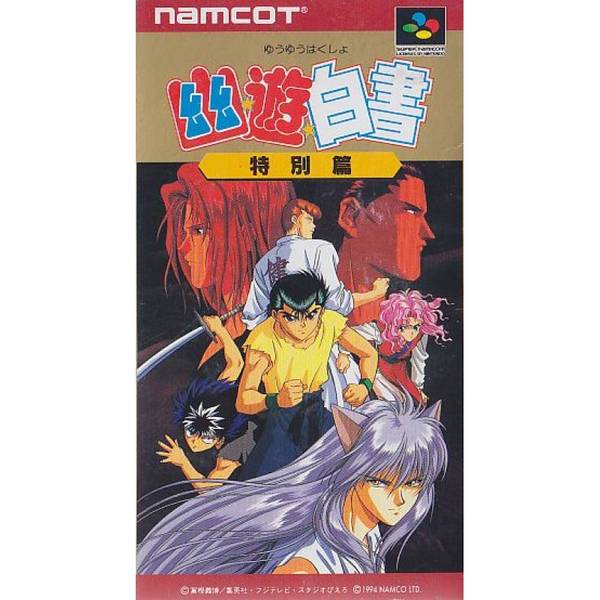
幽遊白書 特別篇

《幽遊白書:特別篇》於1994年12月22日在超級任天堂(SFC)推出,是萬代在該平台上的系列第三作,也是「視覺格鬥系統(Visual Battle)」的最終進化形態。相較於當時主流的橫向格鬥遊戲,以電影式運鏡和指令輸入的獨特玩法,成功將《幽遊白書》那種張力十足、華麗且富含心理博弈的戰鬥風格呈現到極致,被廣大粉絲認為是SFC時代最能還原動畫神韻的傑作。
《特別篇》延續前兩作備受好評的「視覺對峙」系統。與一般格鬥遊戲不同,並非依靠複雜的轉圈指令,而是透過十字鍵和按鈕組合,在實時流動的畫面中下達攻擊、防禦或閃避的命令。作為系列的最終章,角色陣容極其豪華,不僅包含浦飯幽助、飛影、藏馬等主角群,還加入暗黑武術大會後的強力對手,如「仙水篇」的靈力者以及劇場版的神祕強敵耶雲。SFC末期的點陣圖美術表現達到極致,角色動作和分鏡特效精緻細膩,幾乎挑戰16位元主機的極限。
劇情模式以原作中氣氛最緊張的兩大篇章為核心。故事從「暗黑武術大會」最終決賽展開,需帶領浦飯隊與戶愚呂兄弟展開命運的死鬥。劇情隨後切換至「仙水篇」,描述魔界洞穴即將開啟,幽助與夥伴們必須面對擁有聖光氣的前任靈界偵探仙水忍,以及他麾下的七名能力者。遊戲透過大量精美過場和原作對白,讓玩家彷彿在親自編導一場長篇動畫,每場戰鬥的勝負都與原著命運緊密相連。
操作系統是其最大魅力與爭議所在。戰鬥並非完全即時,而是當雙方距離接近時進入特殊對峙分鏡。玩家需在氣力槽充足的情況下,透過方向鍵與Y、B、A、X鍵輸入指令,例如「左 + A」可能觸發重擊,連打按鍵則可施展華麗連段。當發動「炎殺黑龍波」或「靈丸」等必殺技時,畫面會轉為特寫動畫;防守方則需依預判輸入防禦或反彈指令。玩家必須平衡靈力消耗與距離控制,過度攻擊可能導致氣力耗盡而陷入虛弱,距離遠近會影響技能可用性,這種充滿策略性的「剪刀石頭布」心理博弈,使每一秒戰鬥都緊張刺激。
市場對《特別篇》的評價極高,尤其受到原作粉絲的追捧。其視覺表現力在當時震撼人心,成功避開SFC手把對複雜格鬥指令支援不足的弱點,強化戰鬥的儀式感與策略感。角色語音和必殺技同步良好,玩家會有「我真的在發射靈丸」的沉浸感。此外,角色數量和劇情豐富度在同期同類遊戲中屬頂級。缺點在於對習慣《快打旋風》式純反應操作的玩家而言,指令輸入後觀看動畫的節奏較慢且不直覺,部分強力角色平衡性不足,容易造成對戰模式中戰力偏向特定角色。
總體而言,《幽遊白書:特別篇》是萬代獻給粉絲最浪漫的禮物。它以創意的方式解決動作與敘事之間的矛盾,即便至今,「視覺格鬥」的獨特魅力仍在格鬥遊戲史上佔有一席之地,是回味16位元時代不可錯過的經典之作。
Yu Yu Hakusho: Tokubetsu-hen was released on December 22, 1994, for the Super Famicom (SFC) and represents Bandai’s third installment on the platform. It is also the final evolution of the series’ “Visual Battle” system. Unlike the mainstream side-scrolling fighters of the time, this game used cinematic camera work and a command-input mechanic to faithfully recreate the tense, flashy, and psychologically intense combat style of Yu Yu Hakusho. Fans widely regard it as the SFC-era title that best captured the spirit and aesthetic of the original anime.
The game inherits the highly praised “visual confrontation” system from the previous two entries. Unlike typical fighters that rely on complex circular input commands, this system lets players issue attacks, defenses, and evasive actions in real time by combining the D-pad with the Y, B, A, and X buttons. Being the series’ finale, Tokubetsu-hen boasts an exceptionally rich roster, including main characters like Yusuke Urameshi, Hiei, and Kurama, alongside formidable opponents introduced after the Dark Tournament, such as the Spirit Detectives from the Sensui arc and mysterious theatrical villains like Yūen. The game’s pixel art, animations, and cinematic effects push the Super Famicom to its limits, making it one of the most visually striking 16-bit titles of its era.
The story mode covers two of the most intense arcs from the original series. It begins with the final matches of the Dark Tournament, where players lead Yusuke’s team against the Toguro brothers in a fight for survival. The plot then shifts to the Sensui arc, depicting the opening of the demon world cave, where Yusuke and his allies face Sensui and his seven empowered followers. Through numerous detailed cutscenes and faithful dialogue, the game creates the feeling of directing a full-length animated story, where the outcomes of each battle are closely tied to the original narrative.
Gameplay is the most distinctive—and sometimes controversial—aspect of Tokubetsu-hen. Combat is not fully real-time; instead, when characters approach each other, the game enters a special confrontation sequence. Players must manage their spirit energy gauge while issuing directional commands combined with buttons—for instance, “Left + A” might trigger a heavy strike, and button sequences can unleash stylish combos. When executing powerful special attacks like the “Dragon of the Darkness Flame” or the “Spirit Gun,” the camera shifts to a cinematic close-up, while the defending player must input counter or block commands based on prediction. Managing spirit energy and distance is critical: overcommitting to offense can leave characters exhausted, and attack options vary with range. This strategic “rock-paper-scissors” dynamic makes every second of battle tense and rewarding.
The game received widespread acclaim, particularly from fans of the original anime. Its visual presentation was groundbreaking for the time, and it avoided the Super Famicom controller’s limitations for executing complex fighting commands by emphasizing ritualistic and strategic combat. Voice cues and special attack animations were perfectly synchronized, giving players the immersive feeling of actually firing a Spirit Gun. The large roster and deep storyline further cemented its status as one of the top fighting games of its era. Some drawbacks included a slower pacing for players accustomed to pure reaction-based fighters like Street Fighter, and occasional balance issues with certain characters, which could skew competitive matches.
Overall, Yu Yu Hakusho: Tokubetsu-hen stands as Bandai’s most ambitious gift to fans of the series. It elegantly resolves the tension between action and narrative, and even today, its unique “Visual Battle” system remains a distinctive and influential feature in the history of fighting games. For anyone revisiting the 16-bit era, it is an essential classic.
運費計算方式:
貨款滿1000元運費外加90元
貨款1000以下:買1件運費外加 60元,買2件運費外加 70元,
買3件運費外加 80元 ,買4件運費外加 90元
貨到付款外加30元手續費
外島及大陸地區運費另計
付款方式:
線上刷卡:本站採用Paypal線上刷卡
虛擬帳號匯款:屬於您專屬的虛擬帳戶,方便站長查帳使用,本站強力推薦
實體ATM匯款:請將匯款帳號記錄下來至各大銀行ATM提款機轉帳
超商條碼繳費:請列印本站提供的條碼至四大超商繳費
線上轉帳:透過玉山銀行線上ATM轉帳(此系統只支援IE瀏覽器)
貨到付款:本站採用黑貓宅急便貨到付款
其他注意事項:
如需購買線上點數卡請直接跟站長連絡,本站不提供點數卡的線上付款