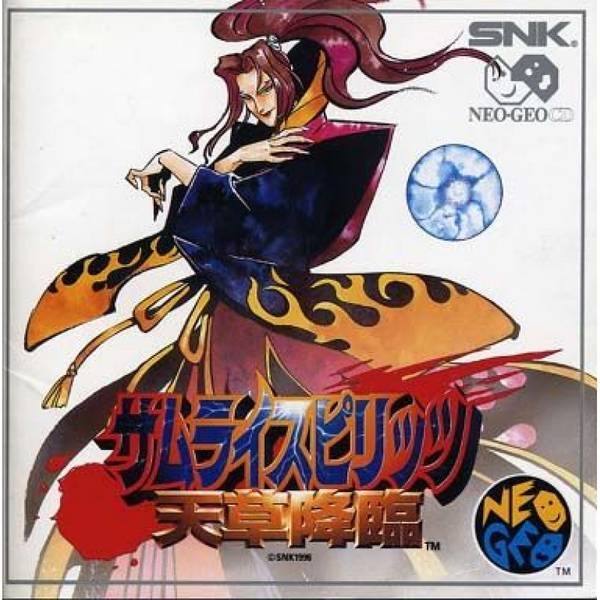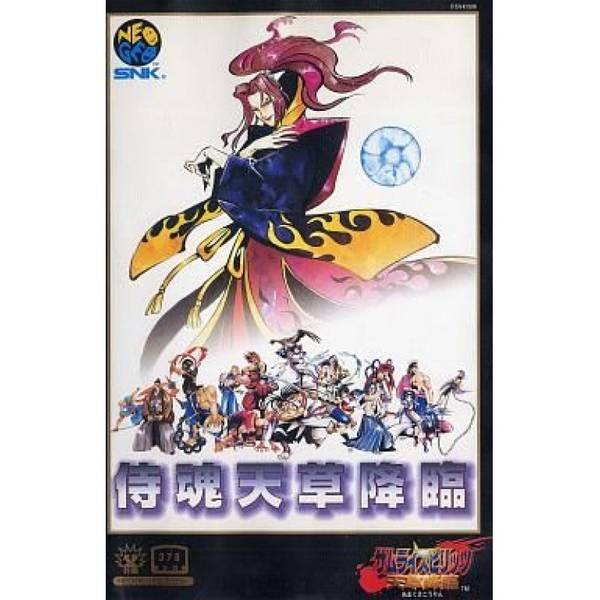
侍魂 天草降臨 (CD ROM)
於1996年率先登場於Neo Geo 街機基板(MVS),並迅速移植至家用主機AES 與Neo Geo CD的《侍魂:天草降臨》,是SNK旗下刀劍格鬥系列的第四部正統續作。承接前作《斬紅郎無雙劍》所建立的陰鬱世界觀,但在整體節奏與戰鬥流暢度上進行大幅優化與調整,使其從偏向壓抑的對峙風格,轉變為更具爆發力與觀賞性的攻防對決。許多資深玩家普遍認為,這一代不僅是Neo Geo點陣格鬥技術的成熟展現,更是系列中攻擊性與華麗度達到高峰的代表作之一。
在畫面與視覺呈現上,展現出一種極具末世氣息的殘酷美學。相較於二代明亮且帶有詩意的浮世繪風格,整體色調轉為冷冽與壓抑,背景多為荒廢的寺廟、被邪氣侵蝕的村落,以及逐漸崩壞的江戶城,營造出世界即將走向毀滅的氛圍。角色動作依舊維持高水準的細膩度,而最令人印象深刻的,莫過於戰鬥中出現的「終結演出」與帶有強烈衝擊力的斬擊效果,將刀劍交鋒的殘酷性毫不保留地呈現出來。音效方面則刻意壓低熱血感,轉而採用充滿張力的環境聲與帶有禪意的和風配樂,使整體氛圍更加沉重而肅殺,強化「生死一瞬」的緊張感。
劇情延續前作事件,在「鬼神」壬無月斬紅郎被擊敗之後,原本應該消逝的 天草四郎時貞 再度現身,其靈魂分裂為善與惡兩個極端。邪惡的一方透過奪取強者靈魂,在島原城上空召喚出巨大的魔界城,企圖再次讓世界陷入黑暗。面對這場即將吞噬人間的災厄,霸王丸、牙神幻十郎 等熟悉的劍豪再度踏上征途,而新登場的風間兄弟——火月與蒼月——則肩負著拯救妹妹葉月的使命,讓整體故事在正邪對抗之外,增濃厚的親情與宿命色彩,使劇情更具情感張力。
在操作系統方面,進一步強化攻擊節奏,引入多項改變系列風格的重要機制。其中最具代表性的「連斬系統」讓玩家可以透過特定按鍵觸發連續攻擊,形成最多可觀賞性的長連段,大幅提升戰鬥的爽快感與視覺張力。怒氣系統也被重新設計,可主動進入「怒爆發」狀態,在時間短暫靜止的瞬間施放威力驚人的「一閃」,這是一種高風險高回報的致命技,一旦命中往往能瞬間逆轉戰局,但也伴隨著失去後續怒氣運用的代價。此外,延續自前作的「修羅」與「羅剎」雙模式依然保留,讓每位角色擁有截然不同的招式配置與戰術定位,大幅提升遊戲深度與對戰變化。而極具象徵意義的「自決」系統,更讓玩家能在劣勢局面下主動結束回合,換取下一局滿怒氣的優勢,展現出一種近乎武士道精神的戰略抉擇。
市場評價方面,普遍被視為系列中最具娛樂性與爆發力的一作。評論界普遍認為,它成功修正三代在節奏與判定上的爭議,並透過連斬與怒爆發系統,創造出更高的對戰張力與逆轉空間。儘管部分偏好精準對刀節奏的老玩家認為連段系統略微削弱了系列原有「一擊定生死」的純粹感,但整體而言,多數玩家仍對其高速且華麗的戰鬥體驗給予高度肯定。
在長期評價中,被公認為Neo Geo平台上極具收藏價值的經典之一,不僅角色陣容豐富且極具魅力,新增角色如風間兄弟更深受玩家喜愛,其招式演出與奧義特寫也成為系列標誌。它既回應90年代格鬥遊戲逐漸「連段化」的潮流,同時又成功保留《侍魂》獨有的肅殺氣氛與美學深度。即使歷經多年,《侍魂:天草降臨》依然是許多老玩家心中那段刀光血影、充滿榮耀與殘酷的武士傳奇巔峰之作。
Released in 1996 for the Neo Geo arcade system (MVS) and later quickly ported to home platforms (AES and Neo Geo CD), Samurai Shodown IV: Amakusa’s Revenge is the fourth main installment in SNK’s weapon-based fighting game series. Building upon the dark aesthetic established in its predecessor, Zankuro’s Revenge, this entry significantly refines the game’s pacing and combat flow, transforming the experience into one that is far more explosive, fluid, and visually engaging. Many veteran players regard it as one of the most aggressive and visually striking titles of the Neo Geo 2D fighting era.
Visually, the game embraces a bleak and apocalyptic tone. In contrast to the vibrant, ukiyo-e-inspired beauty of Samurai Shodown II, this installment adopts a colder and more subdued color palette. Backgrounds depict ruined temples, cursed villages, and the crumbling remains of Edo Castle, all reinforcing a sense of impending doom. Character animations remain highly detailed, but what truly stands out are the brutal finishing effects and impactful slash visuals, which vividly convey the lethality of blade combat. The audio design complements this atmosphere by moving away from energetic themes and instead utilizing ambient sounds and traditional Japanese music with a meditative, almost somber quality, heightening the tension of life-or-death encounters.
The story continues after the defeat of the demon Zankuro Minazuki. The once-defeated Amakusa Shirō Tokisada returns, his soul split into two opposing forces—good and evil. The evil half gathers powerful souls to summon a massive demonic fortress above Shimabara Castle, threatening to plunge the world into darkness once again. In response, familiar warriors such as Haohmaru and Genjuro Kibagami set out to confront this new threat, while the newly introduced Kazama brothers, Kazuki and Sogetsu, join the battle with the personal goal of rescuing their kidnapped sister, Hazuki. This narrative not only presents a clash between good and evil but also weaves in themes of family and fate, adding emotional depth to the conflict.
In terms of gameplay, Samurai Shodown IV introduces several mechanics that dramatically shift the series toward a faster and more offense-driven style. The most notable addition is the “Slash Combo” system, which allows players to initiate extended combo sequences, greatly enhancing both the visual spectacle and the sense of momentum during combat. The Rage system is also expanded, enabling players to activate “Rage Explosion,” temporarily freezing time and allowing the execution of a devastating technique known as “Issen.” This move carries high risk and high reward—if it connects, it can deal massive damage, but it comes at the cost of losing access to Rage for the remainder of the match. Returning from the previous title is the dual “Slash” and “Bust” system, giving each character two distinct fighting styles with different move sets and strategies, effectively doubling the depth of the roster. Additionally, the unique “Self-Destruct” mechanic allows players to intentionally forfeit a round in exchange for starting the next one with a full Rage gauge, reflecting a bold, almost philosophical interpretation of samurai honor in gameplay form.
Critically, the game was praised for its intensity, speed, and overall sense of excitement. Reviewers noted that it successfully addressed the slower pacing and controversial mechanics of its predecessor, delivering a more dynamic and engaging combat system. While some purists argued that the introduction of combo mechanics slightly diminished the original “one decisive strike” philosophy of the series, the majority of players embraced the heightened tempo and dramatic flair.
Over time, Samurai Shodown IV: Amakusa’s Revenge has earned recognition as one of the most collectible and beloved titles on the Neo Geo platform. Its expanded roster, including the popular Kazama brothers, and its visually impressive special moves have left a lasting impression. The game stands as both a response to the combo-heavy trends of 1990s fighting games and a preservation of the series’ unique blend of brutality and elegance. Even decades later, it remains a defining example of the franchise’s ability to balance style, substance, and the raw intensity of sword-based combat.
運費計算方式:
貨款滿1000元運費外加90元
貨款1000以下:買1件運費外加 60元,買2件運費外加 70元,
買3件運費外加 80元 ,買4件運費外加 90元
貨到付款外加30元手續費
外島及大陸地區運費另計
付款方式:
線上刷卡:本站採用Paypal線上刷卡
虛擬帳號匯款:屬於您專屬的虛擬帳戶,方便站長查帳使用,本站強力推薦
實體ATM匯款:請將匯款帳號記錄下來至各大銀行ATM提款機轉帳
超商條碼繳費:請列印本站提供的條碼至四大超商繳費
線上轉帳:透過玉山銀行線上ATM轉帳(此系統只支援IE瀏覽器)
貨到付款:本站採用黑貓宅急便貨到付款
其他注意事項:
如需購買線上點數卡請直接跟站長連絡,本站不提供點數卡的線上付款
-
侍魂 天草降臨 (CD ROM)
- 定 價: 7,140円
- 售 價: 0.00
- 庫存量: 0 套
- 已賣出: 0 套
 人氣指數: 0 / 6 顆星