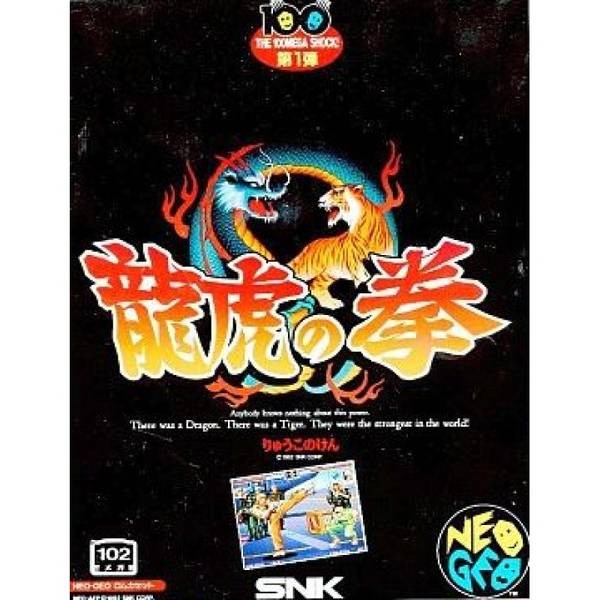
龍虎之拳

於1992年在Neo Geo街機基板(MVS)震撼問世,並隨後移植至家用主機AES與Neo Geo CD的《龍虎之拳》(Art of Fighting / 龍虎の拳),是SNK在格鬥遊戲領域奠定霸權的重要起點之一。在當時以「超巨大角色比例」與極具戲劇張力的電影化演出為核心賣點,不僅在視覺呈現上突破時代限制,更導入多項開創性系統,徹底改變了玩家對格鬥遊戲的既有印象。它不只是單純的對戰作品,更像是一場融合動作電影節奏與街機刺激感的沉浸式體驗,將玩家帶入充滿暴力美學與江湖氣息的南鎮世界。
在技術與表現層面,最令人驚嘆的莫過於其革命性的「動態縮放系統」。當角色彼此逼近時,鏡頭會自動拉近,使人物佔據畫面大半,肌肉線條與動作細節清晰可見;當雙方拉開距離時,畫面則平滑縮小,呈現完整戰場空間。這種隨距離即時變化的視覺演出,在16位元時代堪稱前所未見。此外更首度引入「受傷損傷系統」,角色在戰鬥過程中會出現臉部瘀青、流血甚至面罩破裂等細節,大幅提升真實感與代入感。配合當時極為罕見的全語音演出與厚重有力的打擊音效,使本作在街機廳中擁有壓倒性的存在感與辨識度。
劇情方面,採用濃厚的動作電影敘事風格。故事發生在犯罪橫行的南鎮,極限流空手道的繼承人坂崎亮,與其摯友、出身名門的羅伯特·加西亞,為了拯救遭神秘勢力綁架的妹妹坂崎百合,毅然深入這座黑暗都市的核心。兩人一路挑戰各路高手,從酒吧鬥毆到工地決戰,再到道場對決,逐步逼近事件真相。最終,他們將面對戴著天狗面具的神秘強者Mr. Karate,而結局留下的關鍵伏筆——「亮,那個人其實是……」——則成為遊戲史上極具代表性的懸念之一,也為後續系列鋪陳出更龐大的世界觀與人物關係。
在操作與系統設計上,與同時期主流格鬥遊戲形成鮮明對比。其核心機制「氣力槽系統」要求玩家在攻防之間進行更深層的策略思考。所有必殺技皆需消耗氣力,一旦氣力不足,招式威力與判定將大幅下降。玩家可透過手動蓄力來回復能量,或利用「挑釁」動作削減對手氣力,形成一種結合資源管理與心理壓制的對戰節奏。此外,本作亦是「超必殺技」概念的先驅之一,當角色處於低體力且氣力滿格時,便可透過隱藏指令施展威力驚人的「霸王翔吼拳」,帶來瞬間逆轉戰局的戲劇張力。這種高風險高報酬的設計,讓每一場對決都充滿不確定性與觀賞性。
在市場與評價方面,被普遍視為一款極具開創性與震撼力的里程碑作品。評論界高度讚賞其突破性的視覺規模與電影式演出節奏,認為它成功將格鬥遊戲從單純的操作競技,提升至兼具藝術性與敘事張力的娛樂形式。儘管單人模式中可選角色僅限坂崎亮與羅伯特,且操作手感偏向厚重、電腦AI難度極高,對新手而言頗具挑戰,但其獨樹一幟的系統與硬派風格仍吸引大量核心玩家投入其中。整體而言,本作被公認為Neo Geo初期最具代表性的作品之一,不僅開啟《龍虎之拳》系列,更為後來的《格鬥天王(KOF)》系列奠定角色與世界觀基礎,是復古格鬥遊戲史上不可動搖的經典起點。
Released in 1992 for the Neo Geo arcade system (MVS) and later ported to home platforms including the AES and Neo Geo CD, Art of Fighting stands as one of SNK’s foundational works in establishing its dominance in the fighting game genre. At the time, it captivated players with its oversized character sprites and cinematic presentation, pushing beyond technical limitations to deliver a visually striking and highly dramatic experience. More than just a traditional fighting game, it blended the pacing of action films with the intensity of arcade combat, immersing players in the gritty, hard-edged world of South Town.
From a technical and visual standpoint, the most groundbreaking feature of Art of Fighting was its revolutionary “dynamic zoom” system. As characters moved closer together, the camera would zoom in dramatically, filling the screen with highly detailed character models; when they moved apart, the view would smoothly zoom out to display the full battlefield. This real-time scaling effect was virtually unprecedented in the 16-bit era. In addition, the game introduced a “damage system,” where characters would visibly show injuries such as bruises, bleeding, or broken masks as the fight progressed, greatly enhancing realism and immersion. Combined with heavy, impactful sound effects and fully voiced character dialogue—rare at the time—the game commanded a powerful presence in arcades.
Narratively, Art of Fighting adopted a strong action-movie style. Set in the crime-ridden South Town, the story follows Ryo Sakazaki, heir to the Kyokugen Karate style, and his close friend Robert Garcia, a wealthy heir from Italy. Together, they venture into the city’s dangerous underworld to rescue Ryo’s kidnapped sister, Yuri Sakazaki. Along the way, they battle a series of formidable opponents across various locations, from bars and construction sites to martial arts dojos, gradually uncovering the truth behind the conspiracy. The story reaches its climax in a confrontation with the mysterious masked fighter Mr. Karate. The ending’s famous unresolved line—“Ryo, that man is actually…”—became one of the most iconic cliffhangers in fighting game history, laying the groundwork for a much larger interconnected universe.
In terms of gameplay, Art of Fighting distinguished itself sharply from its contemporaries through its emphasis on strategy and resource management. Central to this design is the “Spirit Gauge” system, where all special moves consume energy. If the gauge is depleted, the effectiveness and power of attacks are significantly reduced. Players must manually recharge their energy or use a “taunt” mechanic to drain their opponent’s gauge, creating a layer of psychological warfare alongside traditional combat. The game also pioneered the concept of “super moves.” When a character’s health is low and their spirit gauge is full, players can execute devastating techniques like the Haoh Shoko Ken through hidden commands, introducing the thrilling possibility of last-second comebacks. This high-risk, high-reward design ensured that every match remained tense and unpredictable until the very end.
Critically and commercially, Art of Fighting was widely recognized as a groundbreaking and impactful title. Reviewers praised its bold visual presentation and cinematic pacing, noting how it elevated fighting games beyond simple mechanical contests into a more artistic and narrative-driven experience. While the single-player mode limited character selection to Ryo and Robert, and the controls felt heavier with notoriously difficult AI, these elements did little to diminish its appeal among dedicated players. The game is now regarded as one of the defining early titles of the Neo Geo platform. It not only launched the Art of Fighting series but also contributed key characters and concepts to the later King of Fighters franchise, securing its place as a timeless classic in the history of fighting games.
運費計算方式:
貨款滿1000元運費外加90元
貨款1000以下:買1件運費外加 60元,買2件運費外加 70元,
買3件運費外加 80元 ,買4件運費外加 90元
貨到付款外加30元手續費
外島及大陸地區運費另計
付款方式:
線上刷卡:本站採用Paypal線上刷卡
虛擬帳號匯款:屬於您專屬的虛擬帳戶,方便站長查帳使用,本站強力推薦
實體ATM匯款:請將匯款帳號記錄下來至各大銀行ATM提款機轉帳
超商條碼繳費:請列印本站提供的條碼至四大超商繳費
線上轉帳:透過玉山銀行線上ATM轉帳(此系統只支援IE瀏覽器)
貨到付款:本站採用黑貓宅急便貨到付款
其他注意事項:
如需購買線上點數卡請直接跟站長連絡,本站不提供點數卡的線上付款