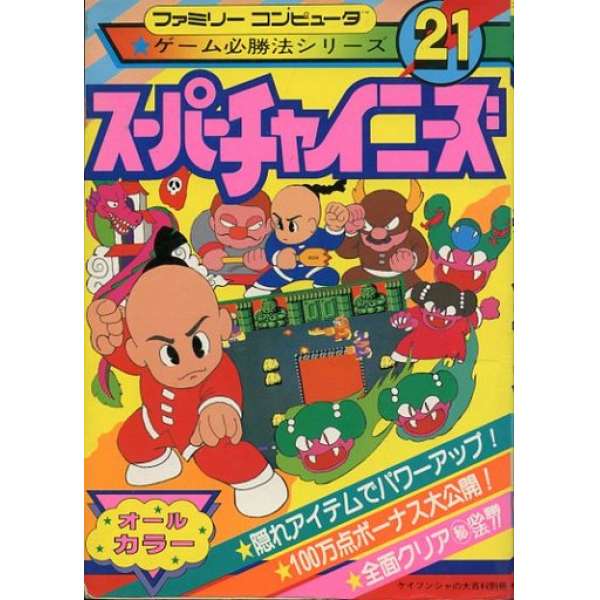
FC 超級中國人 彩色攻略
 1986-07-15
由 Culture Brain 於 1986 年在紅白機(Famicom / NES)上推出的《超級中國人》,是整個長壽系列的開山之作。
雖然後續的續作逐漸轉型為角色扮演遊戲(RPG),但初代《超級中國人》本質上是一款節奏明快、玩法純粹的單畫面動作清場遊戲。它奠定雙胞胎功夫少年傑克(Jack)與龍(Ryu)的經典形象,也正式開啟他們在「Chinaland」這個奇幻國度的冒險旅程。
核心玩法相當直接:必須在限定時間內擊敗一定數量的敵人,當通往下一關的出口開啟後,順利進入即可過關。操作上以拳擊為主要攻擊手段,但最具特色的地方在於「翻滾」動作——它不僅能用來閃避敵人攻擊,還可以直接撞擊敵人造成傷害,使整體手感在當時顯得相當靈活流暢。
關卡設計方面,遊戲中佈滿可破壞的磚塊。透過攻擊將其打碎,隨機取得各種道具,例如加分物品、提升攻擊力的「P」道具,甚至還有能讓角色飛上天空進入獎勵關卡的特殊物品。此外,場景中也設置多種機關與障礙,例如阻擋路線的石牆、危險的岩漿池,以及需要精準跳躍才能通過的陷阱,讓每一關都充滿變化與挑戰。
在 80 年代廣受歡迎的一大原因,是支援雙人同時遊玩。可以分別操作紅色的傑克與藍色的龍,一同進行闖關。這種設計帶來既合作又競爭的樂趣:兩人可以互相支援擊敗敵人,但也常常因為搶奪強力道具而發生「內鬥」,甚至一不小心害隊友陣亡。這種混亂又歡樂的體驗,正是遊戲最迷人的地方之一。
隨著遊戲進行(共 8 個世界、每個世界 4 小關,合計 32 關),敵人種類與配置會逐漸變得更加複雜。從普通小兵到會發射子彈的法師、行動敏捷的刺客,每一種敵人都考驗玩家的反應與操作。同時,也延續當時大型電玩的設計精神,加入大量隱藏要素,例如「隱形道具」,需要透過不斷跳躍或在特定位置攻擊,才能發現額外生命或捷徑。
在視覺與音效表現上,雖受限於 1986 年的硬體能力,背景較為簡單,但角色採用頭大身體小的可愛比例設計,辨識度極高。音樂則節奏明快,帶有濃厚的東方風格,那段充滿動感的背景旋律,至今仍讓許多老玩家一聽就能回想起當年緊張刺激的遊玩畫面。
從歷史角度來看,本作誕生於功夫題材盛行的年代,與《Spartan X》等作品同屬風潮之中。不過,《超級中國人》憑藉其探索性、破壞要素與雙人合作玩法,成功建立自己的特色。儘管初代尚未具備劇情對話或升級系統,但其優異的市場表現,為後續作品導入 RPG 要素打下堅實基礎。
總體而言,初代《超級中國人》是一款「上手容易、精通困難」的經典動作遊戲,充分展現紅白機早期追求高分與生存極限的遊戲精神。對許多玩家來說,與朋友一起搶奪「P」道具、邊玩邊吵的回憶,正是那個年代最純粹、最難忘的樂趣。
Released in 1986 on the Famicom (NES) by Culture Brain, Super Chinese marks the very beginning of a long-running and beloved series.
Although its sequels would later evolve into RPGs, the original Super Chinese is a pure, fast-paced single-screen action game. It established the foundational image of the twin kung fu heroes, Jack and Ryu, and launched their adventures in the fantastical land known as “Chinaland.”
At its core, the gameplay is simple and direct: within a limited time, players must defeat a set number of enemies. Once the exit to the next stage opens, they must safely make their way through. Combat revolves around basic punches, but one of the game’s most interesting mechanics is the rolling move. Not only does it serve as a way to dodge attacks, but it can also be used offensively to crash into enemies, giving the controls a surprising level of flexibility for its time.
Stage design plays a key role in the experience. Each level is filled with destructible bricks that can be broken to reveal random items. These may include score bonuses, power-ups like the “P” item that enhances attack strength, or special objects that launch the player into the sky and into bonus stages. Environmental hazards such as stone walls, lava pits, and tricky jump-based traps add further variety and challenge to each stage.
One of the main reasons for the game’s popularity in the 1980s is its support for simultaneous two-player gameplay. Player 1 controls the red-clad Jack, while Player 2 takes on the role of the blue-clad Ryu. This cooperative mode creates a dynamic mix of teamwork and chaos. Players can help each other defeat enemies, but competition often emerges when both try to grab the same valuable item—sometimes even leading to accidental sabotage. This blend of cooperation and rivalry is a defining charm of the game.
As players progress through the game’s structure—eight worlds with four stages each, totaling 32 levels—the enemy variety increases significantly. From basic foot soldiers to projectile-casting magicians and fast-moving assassins, enemy patterns become more complex and demanding. The game also embraces hidden elements inspired by arcade design philosophy. Invisible items are scattered throughout the stages, encouraging players to jump or attack suspicious areas to uncover extra lives or shortcuts.
Visually, the game reflects the technical limitations of 1986, with relatively simple backgrounds. However, the character designs stand out with their super-deformed proportions—large heads and small bodies—giving them a playful and memorable appearance. The soundtrack is equally iconic, featuring upbeat, fast-tempo music with an Eastern flavor that many players instantly associate with frantic button-mashing sessions.
From a historical perspective, Super Chinese can be seen as part of the kung fu craze that swept gaming at the time, alongside titles like Spartan X. However, it distinguished itself through its emphasis on exploration, destructible environments, and cooperative gameplay. While the original game lacked story dialogue and RPG systems, its commercial success laid the groundwork for the series’ later evolution into more complex, story-driven experiences.
In the end, the first Super Chinese is a classic example of early Famicom design philosophy: easy to pick up, but difficult to master. It captures a time when games were about chasing high scores and pushing survival skills to the limit. For many players, the memory of arguing with a friend over who gets the all-important “P” power-up remains one of the purest joys of that era.
運費計算方式:
貨款滿1000元運費外加90元
貨款1000以下:買1件運費外加 60元,買2件運費外加 70元,
買3件運費外加 80元 ,買4件運費外加 90元
貨到付款外加30元手續費
外島及大陸地區運費另計
付款方式:
線上刷卡:本站採用Paypal線上刷卡
虛擬帳號匯款:屬於您專屬的虛擬帳戶,方便站長查帳使用,本站強力推薦
實體ATM匯款:請將匯款帳號記錄下來至各大銀行ATM提款機轉帳
超商條碼繳費:請列印本站提供的條碼至四大超商繳費
線上轉帳:透過玉山銀行線上ATM轉帳(此系統只支援IE瀏覽器)
貨到付款:本站採用黑貓宅急便貨到付款
其他注意事項:
如需購買線上點數卡請直接跟站長連絡,本站不提供點數卡的線上付款
-
FC 超級中國人 彩色攻略
- 定 價: 391円
- 售 價: 0.00
- 庫存量: 0 套
- 已賣出: 0 套
人氣指數: 0 / 6 顆星