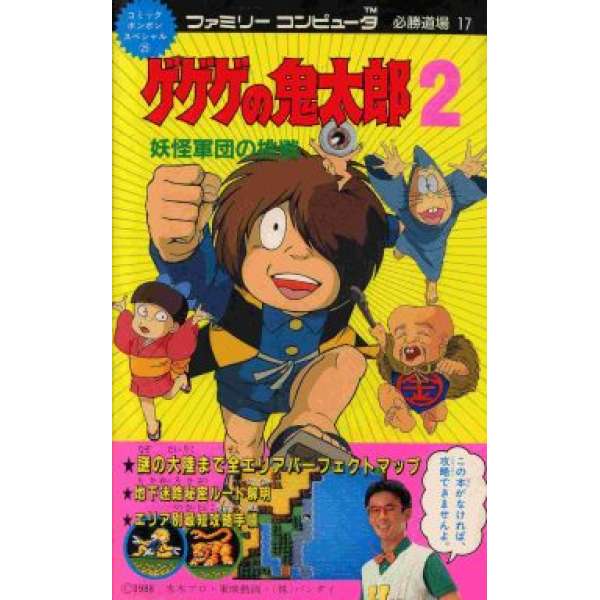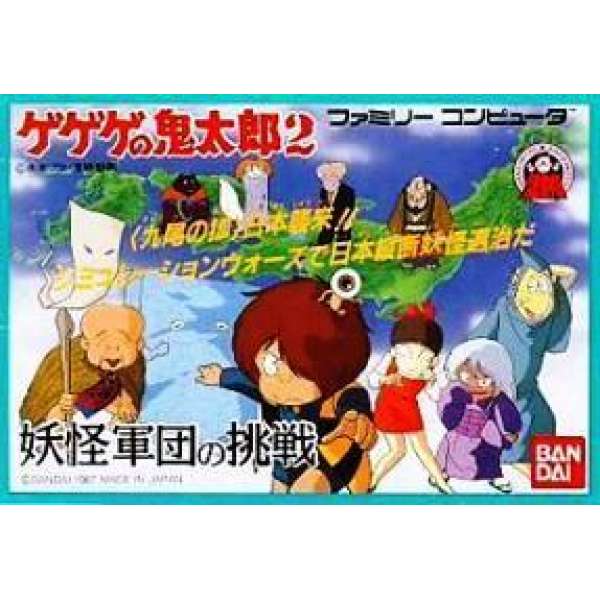
FC 鬼太郎2:怪獸軍團的挑戰 任天堂必勝道場17
 1988-02-29
由Bandai於 1987 年 12 月 22 日在任天堂紅白機 Family Computer 上推出的《ゲゲゲの鬼太郎2 妖怪軍団の挑戦》(Gegege no Kitarō 2: Yōkai Gundan no Chōsen)。本作是前作大獲成功之後的正統續篇,但在遊戲類型上卻進行極為大膽的轉型,從原本的橫向捲軸動作遊戲,徹底改為當時正流行的角色扮演遊戲(RPG)。這樣的改變不僅大幅擴展遊戲的規模,也讓玩家能以更具敘事性的方式,深入體驗水木茂筆下獨特而詭譎的妖怪世界。
在整體設計上,展現 1980 年代後期紅白機 RPG 的典型樣貌。採用俯瞰視角的大地圖探索,並搭配第一人稱的回合制戰鬥系統,其形式與當時風靡一時的勇者鬥惡龍相當接近。視覺表現方面,將舞台從日本本土大幅拓展至全球,玩家將隨著鬼太郎的腳步橫跨世界各地,包含美國、中國與非洲等區域,對抗當地風格迥異的妖怪勢力。音樂設計除了保留經典主題旋律的改編之外,也針對不同國家與戰鬥場景加入帶有異國氛圍的曲風,使整體冒險更具規模感與神祕色彩。
故事圍繞著一個席捲世界的妖怪危機展開。邪惡勢力「妖怪軍團」在各地興風作浪,企圖同時支配人類與妖怪兩個世界。鬼太郎在收到來自各國妖怪的求救訊息後,決定與夥伴踏上遠征之旅。隨著劇情推進,他將與目玉親父、貓女與砂掛婆等熟悉角色並肩作戰,對抗包括滑頭鬼在內的宿敵,以及各地傳說中的怪物,例如西方的吸血鬼與中國的殭屍。整體敘事以「拯救被囚禁的同伴」與「尋找傳說妖怪武具」為主軸,最終帶領玩家直搗妖怪軍團的核心據點,迎來決戰時刻。
在操作與系統方面,捨棄即時動作的反應要求,轉而強調數值成長與策略選擇。戰鬥採用隨機遇敵機制,進入戰鬥後玩家可選擇攻擊、防禦、使用道具,或施展鬼太郎特有的技能,例如「毛針」與「遙控木屐」。這些能力會消耗妖力(類似 MP),因此在戰鬥中如何分配資源,成為影響勝負的關鍵。此外,遊戲中的裝備與同伴系統也頗具特色,可以在隱密的村落或據點中取得各式強化裝備,而隨著劇情發展,原作角色也會以不同形式提供支援,使戰鬥與探索更具變化。
由於遊戲流程相當龐大,採用當時常見的密碼存檔系統,需要記錄長串密碼來保存進度。同時,大地圖導航並不直觀,許多關鍵線索隱藏得相當隱晦,必須在世界各地反覆探索與嘗試,這也使遊戲帶有一定程度的解謎與冒險要素。然而,這樣的設計在當時也對玩家的耐心與理解能力提出不小的挑戰。
在市場評價方面,被普遍視為一款極具野心但評價兩極的作品。一方面,評論肯定Bandai勇於突破既有框架,將妖怪題材與全球冒險結合,創造出獨特的遊戲體驗;另一方面,也有不少玩家對其節奏偏慢、遇敵率過高以及提示不足的設計感到挫折。對於習慣前作爽快動作風格的玩家而言,這樣的轉變尤其明顯。儘管如此,《鬼太郎 2》仍在紅白機 RPG 發展史中佔有一席之地,它或許不如初代那般廣為人知,但憑藉其深厚的世界觀與鮮明風格,至今仍被不少系列愛好者視為一部別具魅力的經典之作。
This title was released by Bandai on December 22, 1987, for the Family Computer. Titled Gegege no Kitarō 2: Yōkai Gundan no Chōsen, it serves as the official sequel to the highly successful first game. However, it introduced a dramatic shift in genre, transforming from a side-scrolling action game into a role-playing game (RPG), which was rapidly gaining popularity at the time. This bold change not only expanded the scale of the game but also allowed players to explore the eerie and imaginative yokai world created by Shigeru Mizuki in a more narrative-driven way.
In terms of overall design, the game reflects the standard structure of late-1980s Famicom RPGs. It features a top-down overworld exploration system combined with first-person, turn-based battles, closely resembling the gameplay style of Dragon Quest. Visually, the scope of the adventure expands far beyond Japan, sending players across the globe to locations such as the United States, China, and Africa, where they must confront regionally inspired yokai and monsters. The music retains arrangements of the iconic Kitarō theme while incorporating more exotic and mysterious compositions for battles and different world regions, reinforcing the sense of a global supernatural conflict.
The story centers on a worldwide crisis caused by an evil organization known as the “Yokai Army,” which seeks to conquer both the human and yokai realms. After receiving distress calls from yokai across the world, Kitarō embarks on an international journey alongside familiar allies such as Medama-Oyaji, Neko Musume, and Sunakake Baba. Throughout the adventure, he faces not only recurring enemies like Nurarihyon but also legendary creatures from various cultures, including Western vampires and Chinese jiangshi. The narrative revolves around rescuing captured allies and collecting legendary yokai equipment, ultimately leading to a final confrontation at the enemy’s stronghold.
Gameplay-wise, the title abandons real-time action in favor of character progression and strategic decision-making. Battles are triggered through random encounters, and players can choose actions such as attacking, defending, using items, or activating Kitarō’s signature abilities like the “Hair Needle” and “Remote-Control Geta.” These abilities consume spiritual energy (similar to MP), making resource management a key aspect of combat. The game also features a distinctive equipment and companion system, where players can acquire stronger gear in hidden villages or secret locations, while familiar characters from the original work join as support or combat partners, adding variety to both battles and exploration.
Due to its considerable length, the game uses a password save system, a common feature of the era, requiring players to record long strings of characters to preserve progress. Navigation across the world map can be challenging, as directions are often vague and clues are obscure, forcing players to rely heavily on exploration and experimentation. This design adds an element of puzzle-solving but also increases the overall difficulty.
In terms of reception, the game is widely regarded as an ambitious yet divisive experiment. Critics praised Bandai for its willingness to break away from convention and for its unique concept of a global yokai adventure. However, many players found the slow pacing, high encounter rate, and lack of clear guidance frustrating—especially those who preferred the fast-paced action of the original game. Despite this, the title holds a distinctive place in the history of Famicom RPGs. While it may not be as universally recognized as its predecessor, its rich world-building and unique approach have earned it a lasting reputation as a cult classic among fans of the series.
運費計算方式:
貨款滿1000元運費外加90元
貨款1000以下:買1件運費外加 60元,買2件運費外加 70元,
買3件運費外加 80元 ,買4件運費外加 90元
貨到付款外加30元手續費
外島及大陸地區運費另計
付款方式:
線上刷卡:本站採用Paypal線上刷卡
虛擬帳號匯款:屬於您專屬的虛擬帳戶,方便站長查帳使用,本站強力推薦
實體ATM匯款:請將匯款帳號記錄下來至各大銀行ATM提款機轉帳
超商條碼繳費:請列印本站提供的條碼至四大超商繳費
線上轉帳:透過玉山銀行線上ATM轉帳(此系統只支援IE瀏覽器)
貨到付款:本站採用黑貓宅急便貨到付款
其他注意事項:
如需購買線上點數卡請直接跟站長連絡,本站不提供點數卡的線上付款
-
FC 鬼太郎2:怪獸軍團的挑戰 任天堂必勝道場17
- 定 價: 421円
- 售 價: 0.00
- 庫存量: 0 套
- 已賣出: 0 套
人氣指數: 0 / 6 顆星