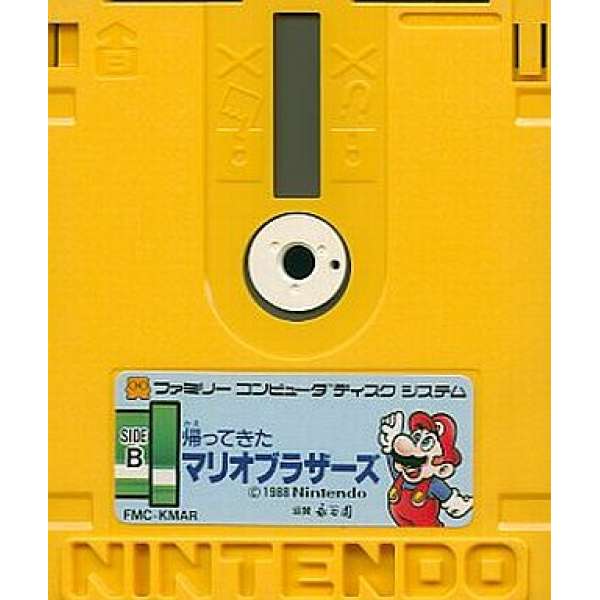
返迴吧!水管瑪莉 (無書盒)
 1988-11-30
1988年11月30日,任天堂(Nintendo)在Famicom Disk System(FDS/紅白機磁碟機)平台推出《返回吧!瑪利歐兄弟》(Kaettekita Mario Bros./帰ってきたマリオブラザーズ)。這款作品並非單純的移植版本,而是與日本知名食品企業永谷園(Nagatanien)合作的跨界企劃,成為遊戲史上早期將商業廣告與遊戲內容深度融合的代表案例之一。它延續《Mario Bros.》的核心玩法,同時透過硬體特性與商業設計,賦予經典作品全新的面貌。
在基本設計上,充分利用磁碟機的技術優勢,提供高分紀錄保存與較為流暢的資料讀取體驗。遊戲整體結構仍然維持原版的單畫面固定捲軸形式,但在視覺呈現上加入大量與永谷園相關的元素。無論是過場畫面還是背景裝飾,都可以看到茶泡飯與拌飯粉等產品標誌,形成一種獨特的「廣告即場景」風格。此外,遊戲引入名為「Nagatanien World」的抽獎系統,當玩家達到特定分數時,可以透過輸入產品包裝上的密碼或直接進行抽選,有機會獲得現實中的贈品。這種結合實體商品與遊戲進度的互動設計,在1980年代屬於極為前衛的創新。
劇情依然延續系列一貫的簡潔風格。故事背景再次回到紐約地下水道,過去曾被清除的各種生物再次大量繁殖,烏龜、螃蟹與飛行昆蟲重新佔據了整個管道系統。瑪利歐(Mario)與路易吉(Luigi)在經歷一段平靜生活後,再次投入這份辛苦卻熟悉的工作。與原版不同的是,這一次他們的冒險過程被賦予一層輕鬆幽默的商業色彩——遊戲中不時出現的食品廣告,彷彿成為兩人補充體力的來源,讓整個清理任務多一種貼近日常生活的趣味氛圍。
在操作層面,針對原版在FC平台上略顯滑動過度的問題進行細緻調整,使角色控制更接近街機版本的精準度。玩家在跳躍中的空中轉向變得更加靈敏,減少因慣性造成的誤判,整體節奏也因此更加流暢。核心玩法依然圍繞「從下方頂擊地板使敵人翻轉,再將其踢出場外」的循環機制,但在操作手感提升後,整體體驗顯得更加穩定。此外,新增與廣告系統結合的「續命機制」,當玩家生命耗盡時,會進入抽獎或小遊戲環節,若運氣良好即可獲得額外生命繼續挑戰,這不僅降低挫折感,也讓遊戲進程更具延續性。磁碟機的儲存功能則進一步強化競技性,使玩家之間能長期競逐高分紀錄。
在市場評價方面,呈現出一種相當特殊的定位。雖然在玩法上並未進行大幅革新,但評論普遍認為其操作手感的優化,使其成為當時最完善、最容易上手的版本之一。至於廣告植入,當時並未引發負面反應,反而因其新奇與幽默感成為熱門話題,尤其是與實體商品連動的抽獎活動,在日本學生族群中引發了結合購買食品與挑戰高分的熱潮。整體而言,市場普遍將本作視為任天堂在商業模式上的一次大膽嘗試。對現今的收藏家來說,這款作品具有極高的歷史價值,因為受到授權與合約限制,鮮少被重新移植或重製,成為少數停留在特定時代與平台上的珍稀版本。它證明即使是結構簡單的經典遊戲,只要透過細節調整與創新的跨界合作,依然能在多年後展現出截然不同的生命力,並在遊戲文化史上留下獨特的一頁。
On November 30, 1988, Nintendo released Kaettekita Mario Bros. (帰ってきたマリオブラザーズ) for the Famicom Disk System (FDS). Rather than being a simple port, this title was the result of a cross-promotional collaboration with the Japanese food company Nagatanien. It stands as one of the earliest examples in video game history where in-game advertising was deeply integrated into both presentation and mechanics. While retaining the core gameplay of the original Mario Bros. (1983), this version introduced new features and commercial elements that gave the classic formula a distinctive new identity.
From a design perspective, the game takes advantage of the Disk System’s hardware capabilities, allowing players to save high scores and enjoy smoother data loading. The core structure remains faithful to the original single-screen, fixed-platform format, but the visual presentation is heavily infused with Nagatanien branding. Product imagery—such as ochazuke and rice seasoning packages—appears throughout background elements and intermission scenes, creating a unique “advertising-as-environment” aesthetic. In addition, the game introduces the “Nagatanien World” lottery system. Upon reaching certain score thresholds, players can enter codes found on real product packaging or participate in in-game draws for a chance to win actual prizes. This form of real-world integration was remarkably forward-thinking for the late 1980s.
The story maintains the series’ traditionally simple and lighthearted tone. Once again set in the underground sewers of New York City, the game depicts a renewed outbreak of creatures emerging from the pipes. Turtles, crabs, and flying insects return in large numbers, throwing the system into chaos. Mario and Luigi, after a period of peace, resume their roles as hardworking plumbers to restore order. What sets this version apart is the humorous commercial layer added to the narrative context—frequent appearances of food advertisements suggest that the brothers are being “supported” by Nagatanien products, adding a playful, everyday charm to their otherwise routine job.
In terms of gameplay, this version refines the control mechanics of the original Famicom release, particularly addressing the issue of excessive slipperiness in movement. Mid-air control is more responsive, reducing accidental collisions caused by inertia and making the overall experience closer to the arcade original. The fundamental loop—flipping enemies by striking platforms from below and then kicking them away—remains unchanged, but feels tighter and more polished. A notable addition is the continue system tied to the promotional elements: when players lose all lives, they may enter a lottery or mini-game sequence, and with luck, earn extra chances to continue. This feature lowers frustration and extends gameplay sessions. The ability to save high scores further enhances competition among players, encouraging long-term engagement.
Reception of Kaettekita Mario Bros. was distinctively positive in a niche sense. While it did not introduce major gameplay innovations, critics and players appreciated the improved control responsiveness, often considering it one of the most comfortable versions of Mario Bros. to play at the time. The advertising integration, rather than being seen as intrusive, was regarded as novel and entertaining, especially due to its connection with real-world rewards. Among Japanese players—particularly younger audiences—it sparked a trend of purchasing Nagatanien products to participate in the game’s lottery features. In retrospect, the title is widely viewed as a bold experiment in business and marketing strategy by Nintendo. For modern collectors, it holds significant historical value, as licensing constraints have prevented it from being widely re-released or ported. As a result, it remains a rare and fascinating artifact—proof that even a simple classic game can be revitalized through thoughtful refinement and innovative cross-industry collaboration, securing its place as a unique milestone in gaming history.
運費計算方式:
貨款滿1000元運費外加90元
貨款1000以下:買1件運費外加 60元,買2件運費外加 70元,
買3件運費外加 80元 ,買4件運費外加 90元
貨到付款外加30元手續費
外島及大陸地區運費另計
付款方式:
線上刷卡:本站採用Paypal線上刷卡
虛擬帳號匯款:屬於您專屬的虛擬帳戶,方便站長查帳使用,本站強力推薦
實體ATM匯款:請將匯款帳號記錄下來至各大銀行ATM提款機轉帳
超商條碼繳費:請列印本站提供的條碼至四大超商繳費
線上轉帳:透過玉山銀行線上ATM轉帳(此系統只支援IE瀏覽器)
貨到付款:本站採用黑貓宅急便貨到付款
其他注意事項:
如需購買線上點數卡請直接跟站長連絡,本站不提供點數卡的線上付款
-
返迴吧!水管瑪莉 (無書盒)
- 定 價: 400円
- 售 價: 0.00
- 庫存量: 0 套
- 已賣出: 0 套
人氣指數: 0.6 / 6 顆星