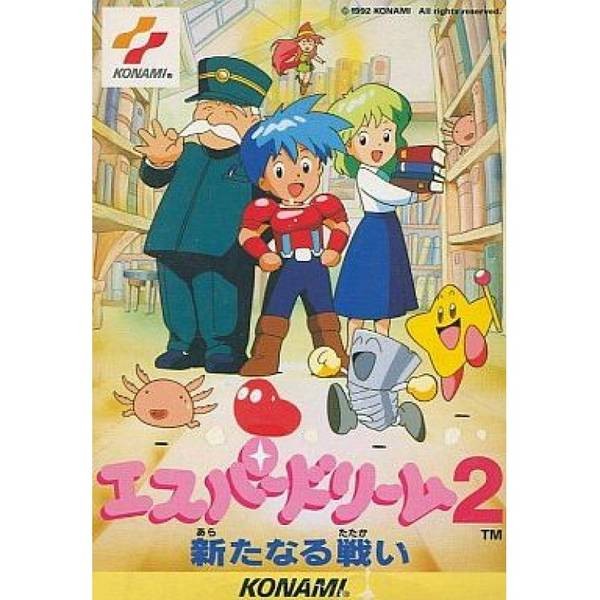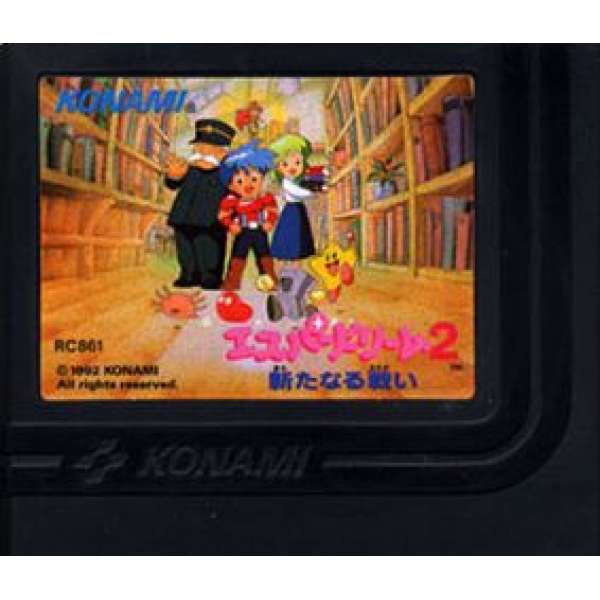
小超人2:新的戰鬥 / 世界之夢2
《小超人 2:新的戰鬥》(Esper Dream 2: Aratanaru Tatakai / エスパードリーム2 新たなる戦い)於 1992 年 6 月 26 日在任天堂 Famicom(紅白機)上推出,是 Konami 1987 年磁碟機名作《小超人》的正統續作。作為紅白機末期 Konami 的 RPG 代表作,不僅延續前作獨特的「書中世界」奇幻設定,更將動作角色扮演(ARPG)的流暢度與畫面精緻度推向 8 位元主機的極限,是一部結合童話氛圍與硬核戰鬥系統的經典之作。
在技術表現上,充分展示 Konami 在紅白機末期的開發實力。憑藉後期卡帶的大容量與 VRC 系列晶片,遊戲呈現出色彩鮮豔、細節豐富的點陣畫面,視覺設計完美捕捉了「夢境與童話」的主題。從噴水池廣場到風格各異的圖書館書中世界,場景切換流暢且美感十足。音樂方面,由 Konami 傳奇音效組「矩形波俱樂部」操刀,透過額外的音源頻道營造出層次分明、既溫馨又帶冒險感的旋律,使遊戲整體更顯成熟並帶有電影般的氛圍。
故事延續前作「平凡少年覺醒超能力」的浪漫設定。主角是一名擁有超能力(Esper)的少年,受命守護一座神奇的圖書館,其中每一本書都代表著一個真實存在的異世界。然而邪惡勢力企圖染指這些故事,導致書中世界陷入混亂。少年必須進入不同的書籍,包括充滿童趣的點心世界、神秘的龍宮城,甚至科幻感十足的未來都市,解開各地異變並收集失落的道具。這是一場關於「想像力與守護」的冒險,最終少年將面對操控混亂的幕後黑手,為所有書中故事畫下完美的結局。
採用當時相當先進的半開放式戰鬥系統,將探索的悠閒與戰鬥的緊湊感完美結合。在俯瞰視角的大地圖上,玩家探索時敵人會以腳印或圖標的形式移動,接觸後即會切換至專用的戰鬥畫面。在戰鬥中,玩家可以自由上下左右移動,並使用物理攻擊或超能力,操作感比傳統回合制 RPG 更加爽快,並需要玩家兼具反射力與策略性。隨著角色等級提升,少年會學會多樣化的 ESP 超能力,包括遠程攻擊、範圍破壞、治療以及輔助性傳送。玩家需根據敵人的屬性與陣型快速切換技能,並管理有限的能量(EP)以平衡強力技能與普通攻擊。此外,少年在冒險過程中會遇到各具特色的同伴,例如機器人或小動物,他們會自動協助戰鬥。也能在城鎮中購買增強超能力的裝備,使整體的數值成長與操作回饋感紮實,減少早期 RPG 繁瑣的刷等級過程。
在市場上獲得「系統高度完善、風格治癒且製作用心」的一致好評。評論家認為,其戰鬥系統的平衡性與世界觀營造堪稱紅白機 ARPG 的巔峰之一,完全不遜於任天堂《薩爾達傳說》。然而,由於遊戲發售時 Super Famicom 已經普及,且未正式推出海外版,商業影響力受到限制,因而成為許多老玩家心中的「遺珠之憾」。市場公認本作是 Konami 留給紅白機玩家最美的一場夢,其獨特的藝術風格與流暢的操作體驗至今仍吸引許多懷舊玩家在模擬器或二手市場中苦苦追尋。
Esper Dream 2: Aratanaru Tatakai (エスパードリーム2 新たなる戦い), released by Konami on June 26, 1992, for the Nintendo Famicom (NES), is the official sequel to Konami’s 1987 Famicom Disk System classic Esper Dream. As one of Konami’s final RPG efforts on the Famicom, this game not only continues the original’s unique “book-world” fantasy setting but also pushes the limits of 8-bit hardware in terms of both smooth action-RPG gameplay and visual refinement. It is a classic that blends a fairy-tale atmosphere with a challenging combat system.
Technically, Esper Dream 2 demonstrates Konami’s development prowess in the late Famicom era. Utilizing the larger cartridge capacity and VRC series chips available at the time, the game delivers colorful, detailed pixel art. The visual design perfectly captures the theme of “dreams and fairy tales,” with smooth scene transitions ranging from fountain plazas to diverse book-world environments. The music, composed by Konami’s legendary sound team, the Konami Kukeiha Club, uses additional sound channels to create layered melodies that are both warm and adventurous, giving the game a cinematic feel and a more mature tone compared to its predecessor.
The story continues the romantic setup of the original game, where an ordinary boy awakens his psychic powers. The protagonist, a boy with Esper abilities, is entrusted with protecting a magical library where each book represents a real, separate world. Evil forces threaten these worlds, causing chaos within the stories. The boy must enter different books—including whimsical candy-themed worlds, mysterious dragon palaces, and even futuristic sci-fi cities—to resolve anomalies and collect lost items. This is a journey of “imagination and guardianship,” culminating in a confrontation with the mastermind behind the chaos to restore order and complete the stories.
The game features an advanced semi-open combat system that balances leisurely exploration with tense, real-time battles. On the overhead world map, enemies move as footprints or icons, and contact triggers a transition to a dedicated battle screen. In combat, players can freely move in all directions while using physical attacks or psychic powers, providing a much faster and more responsive experience than traditional turn-based RPGs. As the boy levels up, he learns a variety of ESP powers, including ranged attacks, area-of-effect abilities, healing, and supportive teleportation. Players must quickly switch between skills based on enemy types and formations, managing limited energy (EP) to balance powerful attacks with basic strikes. The protagonist also encounters unique companions, such as robots or small animals, who assist automatically in battle. Players can equip gear in towns to enhance ESP abilities, creating a solid sense of progression while avoiding the tedious grinding common in early RPGs.
Esper Dream 2 received widespread praise for its polished systems, charming aesthetic, and meticulous production. Critics regard it as one of the peak ARPG experiences on the Famicom, comparable to Nintendo’s The Legend of Zelda. However, because it was released after the Super Famicom had already become mainstream and never officially released overseas, its commercial impact was limited, making it a “hidden gem” among veteran players. The game is now recognized as Konami’s beautiful farewell to Famicom players, with its distinctive art style and smooth gameplay still attracting nostalgic gamers on emulators or through the second-hand market.
運費計算方式:
貨款滿1000元運費外加90元
貨款1000以下:買1件運費外加 60元,買2件運費外加 70元,
買3件運費外加 80元 ,買4件運費外加 90元
貨到付款外加30元手續費
外島及大陸地區運費另計
付款方式:
線上刷卡:本站採用Paypal線上刷卡
虛擬帳號匯款:屬於您專屬的虛擬帳戶,方便站長查帳使用,本站強力推薦
實體ATM匯款:請將匯款帳號記錄下來至各大銀行ATM提款機轉帳
超商條碼繳費:請列印本站提供的條碼至四大超商繳費
線上轉帳:透過玉山銀行線上ATM轉帳(此系統只支援IE瀏覽器)
貨到付款:本站採用黑貓宅急便貨到付款
其他注意事項:
如需購買線上點數卡請直接跟站長連絡,本站不提供點數卡的線上付款
-
小超人2:新的戰鬥 / 世界之夢2
- 定 價: 7,140円
- 售 價: 0.00
- 庫存量: 0 套
- 已賣出: 0 套
 人氣指數: 0 / 6 顆星