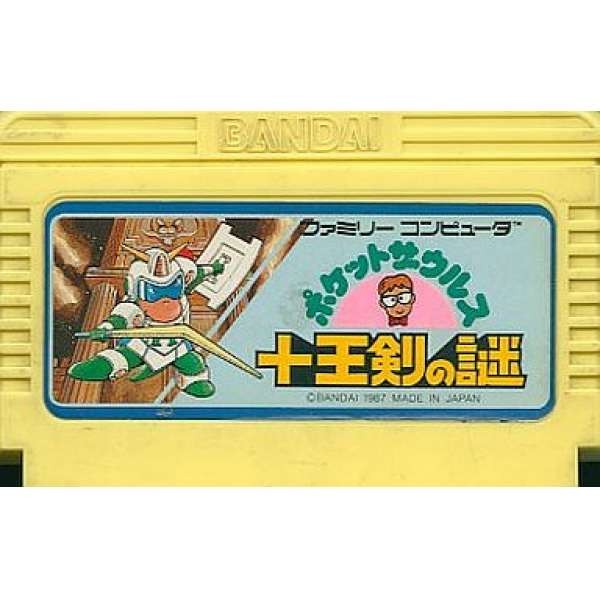
十王劍之謎 (無書盒)
 1987-02-27
於1987年2月27日在Family Computer(FC/紅白機)平台上推出的《十王劍之謎》(Pocket Zaurus: Juuouken no Nazo),是由TOSE 開發、Bandai(萬代)發行的橫向捲軸動作冒險遊戲。本作的誕生背景相當特別,源自當時萬代旗下熱銷的龍型文具系列「Pocket Zaurus(口袋恐龍)」,並將這個帶有童趣的商品形象轉化為充滿奇想的時空冒險。玩家所操控的不再是傳統的騎士或戰士,而是一隻能投擲迴力鏢、甚至可進化為機械裝甲形態的恐龍英雄,這樣的設定在當時的紅白機遊戲中顯得格外新穎且具有辨識度。
在基本資料與整體設計上,以「跨時空旅行」為核心概念,展現出高度多樣化的關卡風格。遊戲將世界分割為數個不同時代與文化背景的舞台,從原始恐龍時代、妖怪橫行的江戶、日本風格濃厚的奇幻領域,到古代埃及與未來科技都市,最終甚至延伸至帶有神話色彩的終極空間。這種跨越歷史與幻想的構成,在 8 位元時代顯得極具野心與創意。此外,還加入簡單的問答(Quiz)元素,在特定情境下回答問題即可獲得分數或獎勵,這種結合娛樂與教育的設計,也反映出當時萬代針對兒童與青少年市場的產品思維。
在劇情方面,描繪一場圍繞「十王劍」展開的時空冒險。邪惡勢力「大帝魔羅」企圖操控時間與空間,並奪取象徵無上力量的十王劍以統治世界。原本只是普通存在的恐龍主角,因緣際會踏上旅程,必須穿越五個不同的歷史節點,收集散落各地的十王劍碎片。只有集齊全部武器,才能與大帝魔羅正面對決。整體敘事雖然簡潔,但透過關卡場景的變化,營造出恐龍、法老、妖怪與未來科技共存的奇異世界觀,帶來一種充滿童話與科幻交織的獨特魅力。
在操作系統上,融合傳統平台跳躍與具特色的遠距攻擊機制,並透過裝備變化創造出節奏上的差異。主角的主要武器為迴力鏢,具備來回飛行的軌跡,玩家不僅需要準確投擲,更要掌握接回武器的節奏,否則在攻擊空窗期容易陷入危險。遊戲中的「超級盾牌」則是關鍵道具,一旦取得,主角會進入全身機械化的強化狀態,大幅提升防禦力與攻擊效率,並能同時投擲多枚高速迴力鏢,帶來極強的爽快感。然而這種強化並非永久,當體力下降至一定程度後便會解除,使戰鬥節奏在強勢與脆弱之間反覆切換。關卡結構方面亦具有變化性,例如中段關卡的出現順序帶有隨機性,而在全滅後提供直面最終頭目的「最終挑戰」機會,更進一步提升遊戲的重玩價值與緊張感。
在市場評價上,呈現出相當鮮明的兩極化反應。支持者普遍讚賞其關卡題材的多樣性與音樂表現,認為其世界觀充滿想像力,尤其對當時的年輕玩家而言,能操控文具品牌角色展開冒險具有高度吸引力。另一方面,批評則集中在其難度設計與判定問題上。部分關卡對跳躍精準度要求極高,加上敵人配置往往出其不意,使得遊戲整體體驗偏向嚴苛,尤其最終迷宮與頭目戰更被不少玩家視為「童年陰影」等級的挑戰。
儘管評價分歧,《十王劍之謎》仍憑藉其獨特的授權背景與跨越科幻與奇幻的世界觀,在紅白機動作遊戲史上留下難以取代的位置。對許多經歷過 8 位元時代的玩家而言,它不僅是一款難度頗高的作品,更是一段充滿想像力與挑戰性的經典回憶。
Released on February 27, 1987, for the Family Computer (Famicom/NES), Pocket Zaurus: Juuouken no Nazo is a side-scrolling action-adventure game developed by TOSE and published by Bandai. The origins of this title are particularly unique, as it was based on Bandai’s then-popular dragon-themed stationery line, “Pocket Zaurus.” The game transforms this playful commercial concept into a fantastical time-travel adventure. Instead of controlling a traditional warrior or knight, players take on the role of a dinosaur hero capable of throwing boomerangs and even transforming into a mechanized armored form, a concept that stood out as highly original in the Famicom era.
In terms of its overall design, Juuouken no Nazo revolves around the theme of time travel and presents a wide variety of stage settings. The game world is divided into multiple distinct eras and environments, including the prehistoric dinosaur age, a yokai-infested Edo period, ancient Egypt, a futuristic city, and ultimately a mythological final realm. This ambitious blending of historical and fantastical elements was particularly impressive for an 8-bit title. Additionally, the game incorporates simple quiz elements, where players can answer questions during certain moments to earn points or rewards. This educational twist reflects Bandai’s strategy of appealing to younger audiences at the time.
The story centers on a grand time-spanning quest involving the legendary “Juuouken” (Ten Kings’ Swords). An evil force known as Emperor Mado seeks to dominate time and space by collecting these powerful weapons. The protagonist, originally an ordinary dinosaur, is drawn into this conflict and must travel across five different time periods to gather the scattered swords. Only by collecting them all can the hero gain the strength needed to confront the final enemy. While the narrative itself is relatively simple, the constantly shifting environments create a surreal and imaginative world where dinosaurs, pharaohs, yokai, and futuristic technology coexist.
Gameplay combines traditional platforming with a distinctive ranged combat system. The protagonist’s primary weapon is a boomerang, which follows a returning trajectory, requiring players not only to aim carefully but also to manage timing in order to catch it on its return. This adds a layer of rhythm and risk to combat. A key gameplay element is the “Super Shield,” which allows the character to transform into a fully armored mechanical form. In this state, both defense and attack power are significantly enhanced, and the player can throw multiple high-speed boomerangs simultaneously, creating a strong sense of power. However, this transformation is temporary and will be lost once health drops below a certain level, creating a dynamic balance between strength and vulnerability. The game also features structural variety, such as randomized stage order in the mid-game and a special “final challenge” opportunity that allows players to confront the final boss directly after a game over, further increasing replay value and tension.
Critical reception of Juuouken no Nazo was notably divided. Supporters praised its diverse stage design and memorable soundtrack, as well as its imaginative world-building. For younger players at the time, the novelty of controlling a character based on a stationery brand added to its appeal. On the other hand, criticism focused on its high difficulty and unforgiving collision detection. Many stages demand extremely precise jumping, and enemy placements can feel unpredictable. The final stages in particular, including the maze-like structure and boss battles, were often cited by players as notoriously punishing.
Despite its mixed reception, Juuouken no Nazo has secured a unique place in the history of Famicom action games due to its unusual licensed origins and its blend of science fiction and fantasy elements. For many players who grew up in the 8-bit era, it remains not only a challenging title but also a memorable and imaginative classic.
運費計算方式:
貨款滿1000元運費外加90元
貨款1000以下:買1件運費外加 60元,買2件運費外加 70元,
買3件運費外加 80元 ,買4件運費外加 90元
貨到付款外加30元手續費
外島及大陸地區運費另計
付款方式:
線上刷卡:本站採用Paypal線上刷卡
虛擬帳號匯款:屬於您專屬的虛擬帳戶,方便站長查帳使用,本站強力推薦
實體ATM匯款:請將匯款帳號記錄下來至各大銀行ATM提款機轉帳
超商條碼繳費:請列印本站提供的條碼至四大超商繳費
線上轉帳:透過玉山銀行線上ATM轉帳(此系統只支援IE瀏覽器)
貨到付款:本站採用黑貓宅急便貨到付款
其他注意事項:
如需購買線上點數卡請直接跟站長連絡,本站不提供點數卡的線上付款
-
十王劍之謎 (無書盒)
- 定 價: 5,775円
- 售 價: 199.00
- 庫存量: 0 套
- 已賣出: 0 套
人氣指數: 0.6 / 6 顆星