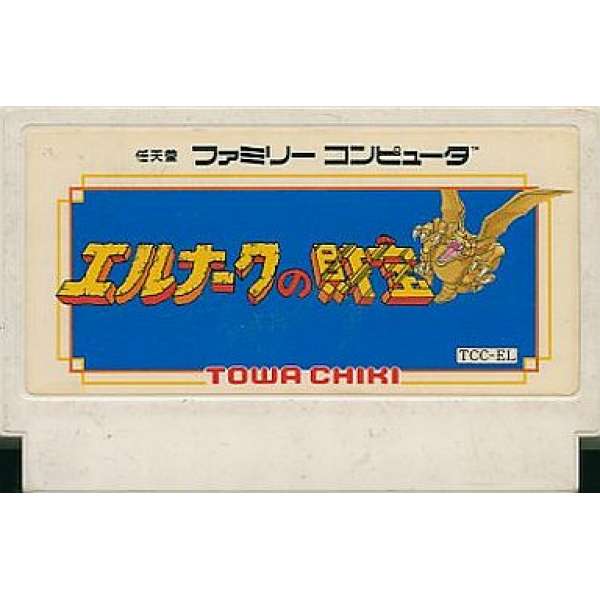
艾魯那財寶 (無書盒)
 1987-08-10
艾魯那財寶是由Atlus開發,並由Towachiki於 1987 年 8 月 10 日在任天堂 Famicom(紅白機)上推出的動作冒險遊戲。本作在早期紅白機遊戲中以其極高難度與晦澀不明的系統設計聞名,雖然表面呈現出類似冒險電影風格的奇幻探險氛圍,但其內在卻是一款極為硬派且對玩家極不友善的作品,也因此在復古遊戲史上留下相當獨特且具爭議性的地位。
在基本表現方面,展現 1987 年紅白機動作遊戲的典型樣貌。採用俯瞰視角與橫向捲軸交錯的關卡設計,舞台涵蓋叢林、遺跡神殿與荒野等場景。雖然受限於當時硬體性能與色彩數量,但開發團隊透過密集的地形障礙與陷阱配置,成功營造出一種危機四伏的遺跡探索氛圍。音樂部分則以簡潔的電子音為主,節奏急促且帶有神祕的異國情調,搭配角色揮動短劍與投擲道具的音效,使整體遊玩體驗充滿壓迫感。值得注意的是,這款作品誕生於 Atlus 尚未以《真·女神轉生》系列聞名之前,卻已能看出其對複雜系統與高難度設計的偏好。
劇情設定在名為「羅雷斯島」的神祕之地。傳說中,這座島嶼隱藏著古代文明遺留下來的寶藏「艾魯那財寶」,但同時也佈滿了危險的魔物與致命陷阱。玩家將扮演冒險家喬,為了尋找失蹤的朋友並追尋傳說中的寶藏,踏入這片禁忌之地。在冒險過程中,喬需要蒐集各式神像與鑰匙,逐步解鎖通往最終神殿的道路。整體故事雖然採用傳統的尋寶冒險框架,但在高難度的壓力之下,更強調的是生存與試煉的過程。
在操作與系統設計上,最具特色的是其極為特殊的「光明與黑暗」屬性系統。玩家角色的行動會影響其屬性傾向,例如擊敗不同類型的敵人或觸發特定事件,都會讓角色逐漸偏向 Light 或 Dark。這個屬性值並非單純的數值變化,而是直接影響遊戲進程的關鍵條件,因為某些關卡出口或重要道具,只有在特定屬性狀態下才會出現。由於遊戲本身幾乎沒有提供明確提示,玩家往往需要透過反覆試錯與記憶來掌握規則,否則極容易陷入無法通關的困境。
除了屬性系統外,喬還能使用多種副武器,例如斧頭與炸彈,來應對不同的敵人與障礙。儘管基本攻擊為短劍,玩家仍需靈活切換武器以提高生存率。跳躍動作雖然略顯僵硬,但在避開陷阱時不可或缺。此外,遊戲中充斥著大量隱藏路徑與「看不見的牆壁」,玩家必須透過不斷測試與探索,才能發現正確路線。再加上極高的遇敵率與嚴苛的傷害判定,使得操作需要極高精準度,一旦失誤便可能迅速喪命,這也讓本作被玩家戲稱為「挫折感製造機」。
在市場評價方面,長期以來呈現兩極化發展。在當年,許多玩家因為其不透明的系統設計與過高難度,將其視為「糞作」,尤其是在缺乏說明的情況下,屬性系統幾乎成為阻礙通關的最大障礙。然而,隨著時間推移,一部分硬核玩家開始重新審視本作,認為其概念在當時極具前瞻性,尤其是將角色屬性與關卡進程深度綁定的設計,展現了與眾不同的創意。如今市場普遍將其視為紅白機早期「不親切設計」的代表之一,同時也是一款極具挑戰價值的經典異色作品。
整體而言,《艾魯那財寶》雖然難以被大眾接受,但正因其高難度與神祕設計,使其在復古遊戲文化中佔據一席之地,成為許多玩家口中既令人挫敗又令人著迷的傳奇作品。
Basic Information, Story, Gameplay, and Market Reception of a Nintendo Famicom (NES) Game: The Treasure of Ernack
Released on August 10, 1987, for the Nintendo Famicom, The Treasure of Ernack (Erunaaku no Zaihou / エルナークの財宝) was developed by Atlus and published by Towachiki. It stands as one of the most controversial early Famicom titles, infamous for its extreme difficulty and obscure gameplay systems. While its visual style evokes a fantasy adventure reminiscent of Indiana Jones-style treasure hunting, the game’s internal design is notably unforgiving and cryptic, earning it a uniquely notorious place in retro gaming history.
In terms of presentation, the game reflects the typical characteristics of action titles from the late 1980s. It alternates between a top-down perspective and side-scrolling sections, with environments spanning jungles, temples, and wastelands. Despite the limited color palette of the hardware, the developers attempted to create a sense of danger through dense environmental hazards and traps. The background music consists of simple electronic tones, fast-paced and carrying a mysterious, exotic atmosphere. Combined with the sound effects of the protagonist swinging a short sword or throwing items, the game creates a constant sense of tension. Notably, this title represents an early work by Atlus before it became widely known for RPG franchises such as Shin Megami Tensei, already hinting at the company’s inclination toward complex systems and hardcore design philosophies.
The story takes place on a mysterious land known as Loles Island, where an ancient civilization is said to have left behind the legendary “Treasure of Ernack.” The island is filled with deadly traps and monstrous creatures. Players take on the role of an adventurer named Joe, who ventures into this forbidden land in search of both his missing friend and the fabled treasure. Throughout the journey, Joe must collect ancient statues and keys to unlock the path to the final temple. The narrative follows a classic theme of temptation by wealth and the struggle for survival, culminating in a confrontation with a powerful guardian protecting the treasure.
One of the most distinctive—and confusing—features of the game lies in its gameplay mechanics, particularly the alignment system that governs progression. Players must manage a “Light” and “Dark” attribute displayed on the screen, which changes depending on the enemies defeated or specific in-game actions. Certain exits and essential items only appear when Joe’s alignment is fully Light or fully Dark. Because the game provides little to no explanation of how this system works, players are forced to memorize which enemies to defeat or avoid, or risk becoming permanently stuck in an unwinnable state.
In addition to the alignment system, Joe can utilize various sub-weapons such as axes and bombs alongside his basic short sword. Players must switch between these tools strategically to overcome different obstacles. The jumping mechanics, while stiff, are essential for avoiding ground-based traps. The game also features numerous hidden or “invisible” walls, requiring players to constantly test their surroundings through trial and error.
Combat and survival are particularly punishing. Enemy encounters are frequent, with unpredictable movement patterns, and Joe’s low defense makes repeated hits often fatal. The game demands extremely precise control, especially when navigating tight spaces, contributing to its reputation as a “frustration simulator.”
Upon release, The Treasure of Ernack received highly polarized reviews. Many players at the time labeled it a “kusoge” (a notoriously bad game), largely due to its lack of clear guidance regarding core mechanics and its punishing difficulty. Numerous players found themselves stuck in the early stages with no understanding of how to progress. However, in later years, some hardcore gaming enthusiasts have reevaluated the title more positively. They argue that its alignment system was ahead of its time and that its labyrinthine design offers a unique and demanding challenge. Today, it is widely regarded as a representative example of early Famicom-era “unfriendly game design,” with its suffocating difficulty and mysterious mechanics cementing its status as a cult classic among retro gaming fans.
運費計算方式:
貨款滿1000元運費外加90元
貨款1000以下:買1件運費外加 60元,買2件運費外加 70元,
買3件運費外加 80元 ,買4件運費外加 90元
貨到付款外加30元手續費
外島及大陸地區運費另計
付款方式:
線上刷卡:本站採用Paypal線上刷卡
虛擬帳號匯款:屬於您專屬的虛擬帳戶,方便站長查帳使用,本站強力推薦
實體ATM匯款:請將匯款帳號記錄下來至各大銀行ATM提款機轉帳
超商條碼繳費:請列印本站提供的條碼至四大超商繳費
線上轉帳:透過玉山銀行線上ATM轉帳(此系統只支援IE瀏覽器)
貨到付款:本站採用黑貓宅急便貨到付款
其他注意事項:
如需購買線上點數卡請直接跟站長連絡,本站不提供點數卡的線上付款
-
艾魯那財寶 (無書盒)
- 定 價: 5,565円
- 售 價: 0.00
- 庫存量: 0 套
- 已賣出: 0 套
人氣指數: 0.6 / 6 顆星