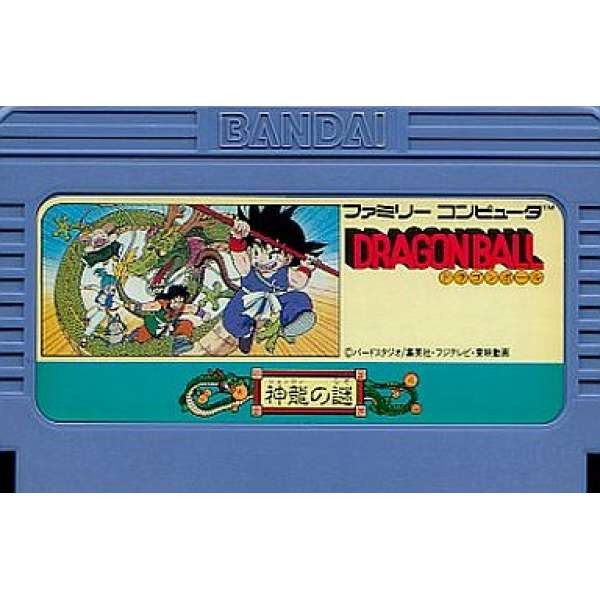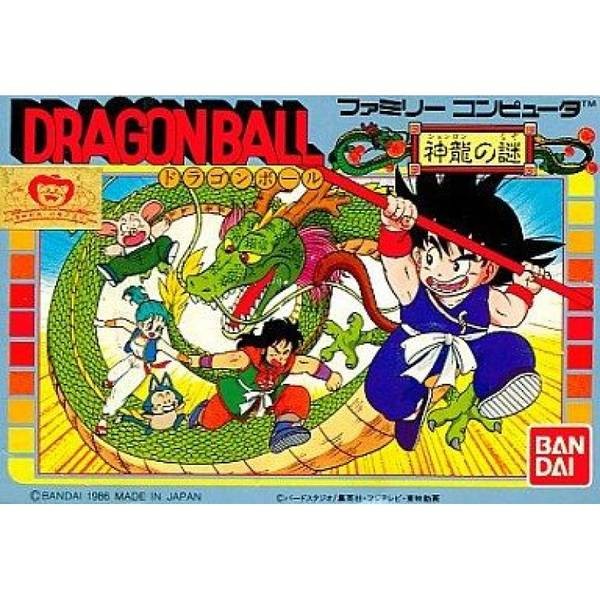
七龍珠:神龍之謎 (無書盒)
 1986-11-27
由萬代於1986年11月27日在紅白機上推出的《七龍珠:神龍之謎》,是整個《七龍珠》系列史上第一款遊戲作品。儘管有時容易被誤認為超任時期作品,但它其實誕生於FC/NES的早期年代,對當時閱讀週刊少年Jump長大的玩家而言,這不只是一款遊戲,更像是一段童年記憶的起點,也揭開橫跨數十年的龍珠遊戲發展序幕。
這款作品推出的時間點,正值原作漫畫仍停留在早期冒險篇章的階段,故事氛圍偏向輕鬆幽默,而非後期宇宙級戰鬥的熱血風格。遊戲本身採用俯瞰視角的動作玩法,並結合簡單的選單式互動,在當時屬於相當新穎的設計。值得一提的是,本作在北美地區以《Dragon Power》之名發行,為了避免授權問題,主角孫悟空被改成一般小猴子形象,音樂與部分設定也遭到大幅修改,成為一段頗具趣味的在地化歷史。即便如此,原版在日本仍獲得不錯的銷售成績,成功將鳥山明筆下那種融合搞笑與戰鬥的世界觀帶入遊戲之中。
在劇情方面,遊戲高度還原漫畫最初的經典橋段。故事從悟空與布瑪在深山相遇開始,兩人為了尋找散落世界各地的七顆龍珠而踏上旅程。隨著冒險推進,玩家會依序遇到烏龍、在沙漠與飲茶對決,並向龜仙人學習與取得筋斗雲。之後劇情延伸至對抗紅緞帶軍團、參與天下第一武道會,最終在皮拉夫大王的城堡中召喚神龍。整體結構將漫畫中的段落轉化為關卡形式,每一區域幾乎都設有強力頭目,使遊戲節奏兼具探索與戰鬥的緊張感。
操作系統看似簡單,實際上卻蘊含極高難度。玩家透過按鍵進行基本攻擊與跳躍,當取得如意棒後,攻擊範圍會明顯提升,而經典招式「龜派氣功」則需透過特定操作或選單觸發。然而真正讓玩家印象深刻的,是遊戲中獨特且近乎嚴苛的「滿腹度」系統。悟空的體力會隨時間持續下降,即使未遭受敵人攻擊,只要數值歸零就會直接失敗。這迫使玩家在探索迷宮時必須持續尋找補充能量的食物,無法悠閒行動,而是要在壓力下快速判斷路線並擊敗敵人。這種設計在當年相當少見,也讓遊戲節奏顯得格外緊湊而壓迫。
整體市場評價呈現出一種極端的兩面性。一方面,作為系列首作,它成功重現動畫與漫畫的氛圍,音樂改編與角色呈現都讓當時玩家感到新鮮且興奮,並且精準捕捉了早期龍珠「以冒險為核心」的魅力。另一方面,其難度設計卻讓人又愛又恨。體力快速流失、敵人判定詭異,加上後期如紅緞帶軍團基地與皮拉夫城堡的迷宮結構極為複雜,使得許多玩家在沒有攻略資訊的情況下難以通關。
即便如此,《神龍之謎》仍被視為紅白機時代的重要作品之一。它不僅開創龍珠改編遊戲的先河,也為後來如《龍珠Z:強襲賽亞人》等作品奠定基礎。從今日的角度回顧,這款遊戲或許顯得粗糙且苛刻,但正是這種帶著挑戰與創新的原始風貌,使它成為整個龍珠遊戲歷史中不可忽視的起點。
Released by Bandai on November 27, 1986 for the Famicom, Dragon Ball: Shenron no Nazo stands as the very first video game adaptation of the Dragon Ball series. Although it is sometimes mistakenly associated with the Super Famicom era, it actually belongs to the early FC/NES generation. For players who grew up reading Weekly Shonen Jump, this cartridge represented far more than just a game—it marked the beginning of a legacy that would span decades of Dragon Ball titles.
At the time of its release, the original manga was still in its early adventure-driven phase, emphasizing humor and exploration rather than the large-scale cosmic battles seen in later arcs. The game reflects this tone by combining top-down action gameplay with simple menu-based interactions, which was relatively innovative for its era. Notably, the game was released in North America under the title Dragon Power. Due to licensing concerns, the protagonist Goku was altered into a generic monkey-like character, and both the music and certain elements of the game were significantly modified. Despite these changes, the original Japanese version performed well commercially and successfully translated the unique blend of humor and action created by Akira Toriyama into an interactive format.
In terms of story, the game closely follows the earliest arcs of the manga. It begins with Goku’s encounter with Bulma in the mountains, setting off their journey to collect the seven Dragon Balls scattered across the world. Along the way, players meet characters such as Oolong, battle Yamcha in the desert, and train under Master Roshi to obtain the Flying Nimbus. The adventure continues through encounters with the Red Ribbon Army, participation in the World Martial Arts Tournament, and ultimately culminates in summoning Shenron at the castle of Emperor Pilaf. These story elements are structured into stage-based gameplay, with each area typically ending in a boss battle that reinforces the game’s mix of exploration and combat.
While the controls appear straightforward—featuring basic attacks and jumping mechanics—they conceal a surprisingly punishing level of difficulty. As players acquire items like the Power Pole, their attack range improves, and iconic techniques such as the Kamehameha can be executed through specific commands or menu options. However, the most infamous mechanic is the “hunger” (or stamina) system. Goku’s health continuously decreases over time, regardless of enemy encounters, and reaching zero results in immediate failure. This forces players to constantly search for food items to survive, creating a tense gameplay loop where exploration must be efficient and deliberate rather than leisurely. The pressure of managing stamina while navigating complex stages defines much of the game’s challenge.
Critically, the game is remembered as a product of extremes. On one hand, it was groundbreaking as the first Dragon Ball game, successfully capturing the charm of the early series through its music, character designs, and adventurous spirit. On the other hand, it became notorious for its unforgiving difficulty. Rapid stamina depletion, unpredictable enemy hit detection, and the maze-like complexity of later stages—such as the Red Ribbon Army base and Pilaf’s castle—made it exceptionally difficult for players to complete without guidance.
Despite these frustrations, Shenron no Nazo remains a significant title in gaming history. It not only pioneered Dragon Ball adaptations in video games but also laid the groundwork for future entries such as Dragon Ball Z: Attack of the Saiyans. From a modern perspective, the game may feel rough and punishing, but its ambition and originality secure its place as an essential starting point in the long-running evolution of Dragon Ball games.
運費計算方式:
貨款滿1000元運費外加90元
貨款1000以下:買1件運費外加 60元,買2件運費外加 70元,
買3件運費外加 80元 ,買4件運費外加 90元
貨到付款外加30元手續費
外島及大陸地區運費另計
付款方式:
線上刷卡:本站採用Paypal線上刷卡
虛擬帳號匯款:屬於您專屬的虛擬帳戶,方便站長查帳使用,本站強力推薦
實體ATM匯款:請將匯款帳號記錄下來至各大銀行ATM提款機轉帳
超商條碼繳費:請列印本站提供的條碼至四大超商繳費
線上轉帳:透過玉山銀行線上ATM轉帳(此系統只支援IE瀏覽器)
貨到付款:本站採用黑貓宅急便貨到付款
其他注意事項:
如需購買線上點數卡請直接跟站長連絡,本站不提供點數卡的線上付款
-
七龍珠:神龍之謎 (無書盒)
- 定 價: 5,565円
- 售 價: 90.00
- 庫存量: 0 套
- 已賣出: 0 套
人氣指數: 0.6 / 6 顆星