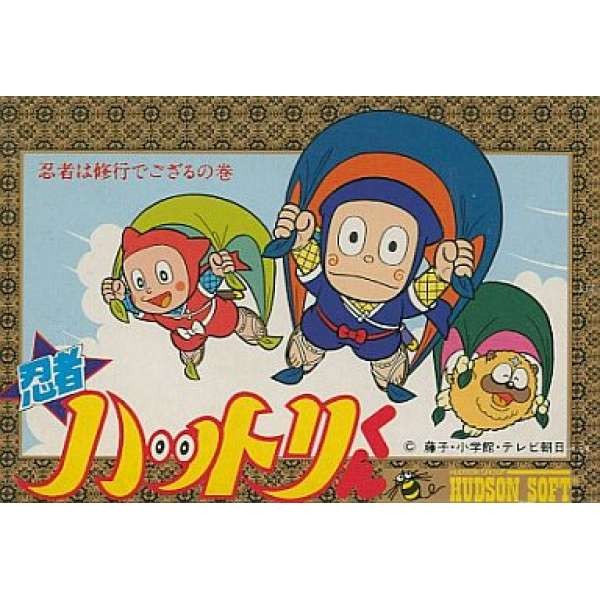
忍者哈特利
 1986-03-05
於1986年3月5日在Family Computer(FC/紅白機)平台推出的《忍者哈特利:忍者修行之卷》(Ninja Hattori-kun / 忍者ハットリ君 忍者は修行でござるの巻),是由Hudson Soft開發並發行的橫向捲軸動作遊戲。改編自藤子不二雄A的同名人氣漫畫與動畫,在紅白機早期眾多改編作品中脫穎而出,成為極具代表性的成功案例之一。憑藉高 150萬套的銷售成績,不僅奠定Hudson Soft在8位元主機時代的市場地位,也讓「忍者哈特利」這個角色深入人心,成為當時兒童與玩家共同的文化記憶。
在遊戲基本資料與整體設計上,充分展現早期紅白機作品的技術潛力與創意。遊戲採用明亮鮮豔的配色與流暢的角色動作,搭配橫跨十六個關卡的長篇冒險,場景涵蓋森林、鐵橋、城鎮、忍者屋敷乃至帶有未來感的機械區域。最令人印象深刻的是其背景音樂,幾乎完整重現動畫主題曲的旋律,節奏輕快且極具洗腦性,使玩家在遊玩過程中始終保持高度投入。更重要的是,本作在系統上引入當時極為罕見的「忍術切換」概念,讓玩家不再只是單純跳躍與攻擊,而是必須根據環境與敵人特性靈活運用不同能力,為橫向動作遊戲注入更深層的策略元素。
劇情方面,忠實承襲原作設定。來自伊賀的少年忍者哈特利(服部甘藏)為了精進自身忍術,踏上前往東京的修行之旅,並寄宿於三葉家中。在這段修行過程中,他必須面對來自敵對忍者勢力的阻撓,同時也要應對宿敵煙卷與調皮搗蛋的機械貓影千代。故事並不著重複雜敘事,而是透過關卡推進展現哈特利不斷突破自我、完成試煉的過程。弟弟新藏與忍犬獅子丸則在特定情境中登場,為冒險增添更多變化與趣味。整體而言,這是一段融合幽默與熱血的修行旅程,最終目標是證明哈特利能夠繼承伊賀流忍術的正統地位。
在操作系統上,展現出超越同時代的設計深度。遊戲採用體力條機制,讓主角在受到攻擊時不會立即死亡,而是保留一定容錯空間,但若墜入深坑或水中仍會直接失敗,維持緊張感。同時,體力會隨時間逐漸減少,迫使玩家持續前進,避免過度停留。最具特色的則是「十二種忍術」系統,玩家可透過收集卷軸解鎖各種能力,例如能在水面行走的水蜘蛛、用於防禦與強化攻擊的影分身、可在空中滑翔的飛行術,以及能改變體型的縮小術等。這些忍術需要透過按鍵切換並在適當時機發動,使遊戲在節奏快速的同時,也要求玩家具備判斷與策略思考能力。此外,在關卡結尾出現的父親投擲竹輪小遊戲,則為整體體驗增添一絲輕鬆幽默的氣氛,成為令人難忘的特色橋段。
市場評價方面,普遍被視為紅白機時期「高難度與高樂趣並存」的代表作品。評論界對其高度還原原作的表現給予一致好評,無論是角色動作、忍術設計,還是整體氛圍,都充分體現出原作的魅力。儘管遊戲後期難度顯著提升,對操作精準度與反應速度提出嚴苛要求,但多樣化的忍術組合讓玩家能以不同策略反覆挑戰,提升了耐玩度與重玩價值。整體而言,本作被廣泛認為是「史上最成功的漫畫改編遊戲之一」,其紮實的操作手感與充滿童趣的世界觀,使其在玩家心中佔據不可動搖的地位。即使時至今日,那段輕快的旋律與哈特利的忍者身影,仍然象徵著1980年代遊戲文化中最純粹而難忘的記憶。
Released on March 5, 1986 for the Family Computer (Famicom/NES), Ninja Hattori-kun: Ninja wa Shugyō de Gozaru no Maki is a side-scrolling action game developed and published by Hudson Soft. Adapted from the popular manga and anime by Fujiko Fujio A, the game stands out as one of the most successful licensed titles of the early Famicom era. With impressive sales of around 1.5 million copies, it not only solidified Hudson Soft’s dominance in the 8-bit console market but also helped cement Ninja Hattori as an iconic character deeply ingrained in the childhood memories of many players.
In terms of overall design and technical presentation, Ninja Hattori-kun showcases the creative potential of early Famicom titles. The game features bright, colorful visuals and smooth character animations across sixteen lengthy stages, spanning environments such as forests, iron bridges, towns, ninja mansions, and even mechanical-themed areas. One of its most memorable elements is the background music, which closely recreates the anime’s theme song with a catchy and upbeat rhythm that keeps players fully engaged. More notably, the game introduces a relatively advanced “ninjutsu switching” system for its time, requiring players to adapt their abilities based on terrain and enemy behavior, adding a layer of strategy beyond simple jumping and attacking.
The story remains faithful to its source material. Hattori, a young ninja from Iga, travels to Tokyo as part of his training and stays with the Mitsuba family. Throughout his journey, he faces interference from rival ninja forces, his recurring foe Kemumaki, and the mischievous robotic cat Kagechiyo. Rather than focusing on a complex narrative, the game emphasizes progression through trials that test Hattori’s growth and skill. Supporting characters such as his younger brother Shinzo and the ninja dog Shishimaru also appear in certain segments, adding variety and charm to the adventure. Overall, the story delivers a blend of humor and determination, centered on Hattori’s quest to prove himself as a true successor of the Iga ninja tradition.
From a gameplay perspective, the system demonstrates a level of depth that surpasses many of its contemporaries. The game uses a health bar system, allowing players to sustain multiple hits instead of dying instantly, although falling into pits or water still results in immediate failure. Additionally, health gradually decreases over time, encouraging constant forward momentum. The standout feature is the “twelve ninjutsu” system, where players can unlock abilities such as water-walking techniques, shadow clones for defense and enhanced offense, gliding through the air, and shrinking in size. These abilities must be selected and activated at the right moments, creating a balance between fast-paced action and strategic decision-making. At the end of each stage, a bonus mini-game involving Hattori’s father throwing chikuwa (fish cakes) adds a humorous and memorable touch to the experience.
In terms of reception, Ninja Hattori-kun is widely regarded as a prime example of balancing high difficulty with strong gameplay appeal during the Famicom era. Critics praised its faithful adaptation of the original work, from character animations to the implementation of ninjutsu mechanics. Although the later stages become significantly more challenging, demanding precise control and quick reflexes, the variety of abilities allows players to experiment with different strategies, enhancing replay value. Overall, the game is often considered one of the most successful manga-based adaptations of its time. Its solid mechanics and playful charm have secured it a lasting legacy, with its catchy music and the image of Hattori continuing to symbolize the spirit of 1980s gaming culture.
運費計算方式:
貨款滿1000元運費外加90元
貨款1000以下:買1件運費外加 60元,買2件運費外加 70元,
買3件運費外加 80元 ,買4件運費外加 90元
貨到付款外加30元手續費
外島及大陸地區運費另計
付款方式:
線上刷卡:本站採用Paypal線上刷卡
虛擬帳號匯款:屬於您專屬的虛擬帳戶,方便站長查帳使用,本站強力推薦
實體ATM匯款:請將匯款帳號記錄下來至各大銀行ATM提款機轉帳
超商條碼繳費:請列印本站提供的條碼至四大超商繳費
線上轉帳:透過玉山銀行線上ATM轉帳(此系統只支援IE瀏覽器)
貨到付款:本站採用黑貓宅急便貨到付款
其他注意事項:
如需購買線上點數卡請直接跟站長連絡,本站不提供點數卡的線上付款