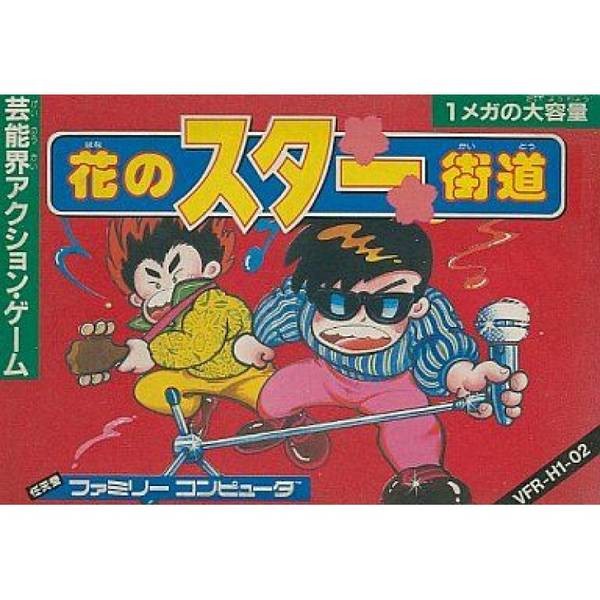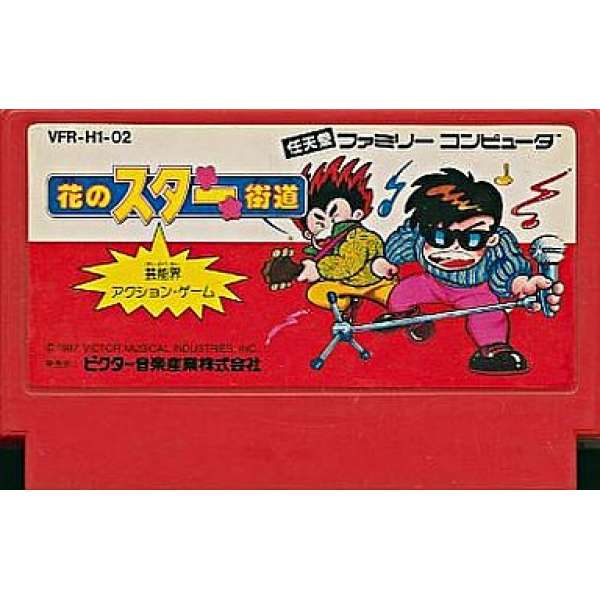
明星街道 / 明星之路 / 花之星街道
 1987-03-17
由Victor Musical Industries於 1987 年 3 月 17 日在任天堂 Famicom(紅白機)推出的《花之星街道》(Hana no Star Kaidou / 花のスター街道),是紅白機歷史上極具異色風格的「藝能界養成」動作遊戲。在《勇者鬥惡龍》和《超級瑪利歐》稱霸遊戲市場的年代,大膽將焦點放在日本 80 年代偶像文化與演藝夢想,讓玩家體驗從街頭藝人一路晉升為樂壇巨星的荒誕旅程。
從技術與美術角度來看,呈現出極為鮮豔、帶有濃厚 80 年代流行美學的視覺風格。遊戲採用橫向捲軸模式,玩家可選擇操作男主角「茂(Tsutomu)」或女主角「幸子(Sachiko)」。關卡背景涵蓋充滿生活氣息的東京街道、電視台、錄音室,最終進入演出舞台,充分展現當時日本都市文化的細節。音樂則是遊戲的核心亮點,作為唱片公司的 JVC 投入大量音樂資源,背景旋律洗腦且節奏感十足,配合角色發射的「音符攻擊」,營造出既滑稽又充滿動感的演藝圈冒險氛圍。
故事背景設在繁華的東京,講述兩位懷抱歌星夢的年輕人——茂與幸子,為了參加傳說中的「武道館」歌唱大賽並奪冠,必須從基層打拼起。他們需要穿越五大區域,如原宿街頭、電視台、錄音室等,同時收集散落的「樂譜碎片」,並擊退演藝圈的競爭對手與各種奇怪障礙。故事核心是「努力、收集與登台」,最終目標是集齊五張金唱片,站上夢想的巔峰舞台。
操作上,與傳統動作遊戲大相徑庭,將音樂元素轉化為攻擊手段,提供趣味性與挑戰性兼具的遊玩體驗。主要以口中發射音符作為攻擊,音符彈道呈波浪狀,需要精準掌握敵人位置與射擊節奏。跳躍動作浮空感強,需在招牌、障礙物間靈活穿梭。關卡設計強調「收集」,每一關隱藏樂譜碎片,必須收集完整才能進入 Boss 戰(通常是評審或競爭對手),缺少任何碎片就無法晉級。
此外,設有生命值與時間雙重壓力。玩家的心形生命值會因碰到瘋狂粉絲或障礙物而減少,同時需在限時內完成關卡,否則視為「演藝生涯終止」。這種緊湊的節奏感模擬了演藝圈分秒必爭的壓力。
上市後獲得了極為兩極化的評價。評論家讚賞其創意與音樂表現,認為 JVC 勇於挑戰非傳統題材。然而,許多玩家認為跳躍手感別扭、音符彈道難以掌握,受傷判定過高,使其成為「高難度怪作」。如今,《花之星街道》被視為紅白機時代珍貴的偶像文化數位縮影,其結合夢想與荒誕的遊玩體驗,成為老玩家口中充滿魔性魅力的演藝圈都市傳說。
Released by Victor Musical Industries on March 17, 1987, for the Nintendo Famicom (NES), Hana no Star Kaidou (花のスター街道) stands out as one of the most unconventional titles of its era—a bizarre yet fascinating “idol training” action game. At a time when games like Dragon Quest and Super Mario dominated the market, this title boldly shifted its focus to Japan’s 1980s pop idol culture and the dream of stardom, offering players an absurd journey from street performer to music industry superstar.
From a technical and artistic standpoint, the game presents a vivid, highly saturated visual style heavily influenced by 1980s pop aesthetics. It uses a side-scrolling format, allowing players to choose between two protagonists: Tsutomu and Sachiko. The stages are filled with lively depictions of urban Japan, ranging from everyday Tokyo streets to television studios and eventually grand performance venues. Music plays a central role in the experience, which is fitting given JVC’s background as a record company. The soundtrack is catchy and rhythmic, and when combined with the protagonist’s “musical note attacks,” it creates a quirky yet energetic atmosphere that reflects the chaotic charm of the entertainment world.
The story is set in a bustling Tokyo, where two aspiring singers—Tsutomu and Sachiko—dream of winning a major singing competition held at the legendary Budokan. To reach that stage, they must start from the bottom, navigating five major districts such as Harajuku, TV stations, and recording studios. Along the way, players collect scattered sheet music fragments while fending off rivals and bizarre obstacles within the entertainment industry. The narrative revolves around perseverance, collection, and performance, culminating in the ultimate goal of gathering five gold records and achieving stardom.
In terms of gameplay, Hana no Star Kaidou diverges significantly from traditional action games by transforming musical elements into core mechanics. The primary attack involves shooting musical notes from the character’s mouth. These notes travel in unusual, wave-like trajectories, requiring precise timing and positioning. Jumping mechanics are also notably floaty, demanding careful navigation across platforms, signboards, and hazards. Progression is heavily tied to collection: each stage contains hidden sheet music pieces, and players must gather all of them before they can access the boss encounter, typically represented by judges or rival performers. Missing even one piece prevents advancement, adding a layer of exploration and difficulty.
The game also imposes dual pressure through its health and time systems. Players have a heart-based life meter that decreases upon contact with enemies or obstacles, such as overzealous fans. At the same time, stages must be completed within a time limit, or the character’s “career” is effectively over. This creates a tense, fast-paced experience that mirrors the relentless pressure of the entertainment industry.
Upon release, the game received highly polarized reviews. Critics praised its originality and strong musical identity, recognizing JVC’s willingness to experiment with unconventional themes. However, many players found the controls awkward, particularly the imprecise jumping and unpredictable note trajectories, as well as the punishing hit detection. As a result, it earned a reputation as a strange yet challenging cult title.
Today, Hana no Star Kaidou is remembered as a unique digital snapshot of 1980s idol culture within the Famicom era. Its blend of ambition, absurdity, and charm has given it a lasting legacy among retro gaming enthusiasts, who continue to regard it as a bizarre yet memorable “cult classic” from a time when developers were unafraid to take creative risks.
運費計算方式:
貨款滿1000元運費外加90元
貨款1000以下:買1件運費外加 60元,買2件運費外加 70元,
買3件運費外加 80元 ,買4件運費外加 90元
貨到付款外加30元手續費
外島及大陸地區運費另計
付款方式:
線上刷卡:本站採用Paypal線上刷卡
虛擬帳號匯款:屬於您專屬的虛擬帳戶,方便站長查帳使用,本站強力推薦
實體ATM匯款:請將匯款帳號記錄下來至各大銀行ATM提款機轉帳
超商條碼繳費:請列印本站提供的條碼至四大超商繳費
線上轉帳:透過玉山銀行線上ATM轉帳(此系統只支援IE瀏覽器)
貨到付款:本站採用黑貓宅急便貨到付款
其他注意事項:
如需購買線上點數卡請直接跟站長連絡,本站不提供點數卡的線上付款
-
明星街道 / 明星之路 / 花之星街道
- 定 價: 5,565円
- 售 價: 550.00
- 庫存量: 0 套
- 已賣出: 0 套
人氣指數: 0 / 6 顆星