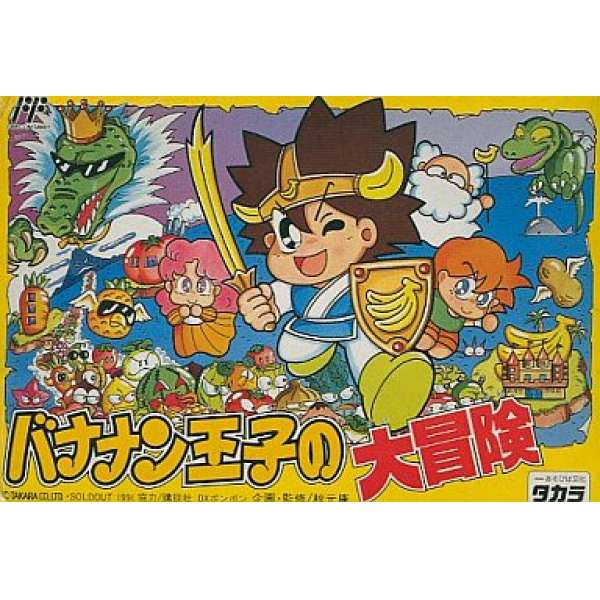
香蕉王子大冒險
 1991-12-20
於1991年12月20日在任天堂 Famicom(紅白機)上推出、由 Takara 發行、Kid 開發的《香蕉王子大冒險》(Bananan Ouji No Daibouken / バナナン王子の大冒険),誕生於8位元主機即將被16位元世代全面取代的過渡時期,卻以極高完成度與鮮明創意逆勢突圍。這款橫向捲軸動作遊戲不僅展現紅白機晚期技術的成熟,更透過獨樹一格的「植物生長」玩法,為傳統平台動作類型注入新鮮活力,成為不少老玩家心中代表「末期精品」的經典之作。
在基本資料與整體呈現上,幾乎可說是紅白機視覺表現的高峰之一。以細膩的像素描繪出層次豐富的場景,從陽光普照的熱帶島嶼、色彩繽紛的城鎮,到帶有奇幻氛圍的城堡關卡,每一處都展現出超越早期作品的美術水準。主角香蕉王子的角色設計充滿親和力,不僅動作流暢,還擁有多樣的表情與細節演出,使整體演出更具生命力。關卡之間透過世界地圖串聯,在不同區域間移動時,會進入縮小比例的地圖畫面進行選擇,這種設計在當時帶有濃厚的冒險感,也提升整體遊戲節奏的變化。背景音樂則以輕快明亮為主軸,融合熱帶風情與嘉年華式節奏,使遊戲從視覺到聽覺都散發出一種輕鬆愉悅的氛圍。
在劇情方面,描繪一段帶有童話色彩卻不失冒險張力的旅程。故事發生在一座名為「香蕉王國」的島嶼國度,這裡原本和平繁榮,並由三件象徵力量與秩序的傳說祕寶守護。然而,邪惡勢力「香蕉鬼」率領軍團突襲王國,不僅奪走寶物,更讓整個國度陷入混亂與危機。玩家所扮演的香蕉王子,為了奪回王國的榮耀與守護家園,踏上橫跨多個區域的冒險旅程。在旅途中,他會遭遇各式怪物與機關,也會與風格各異的NPC互動,甚至參與充滿趣味的問答節目來獲取報酬或開啟新路徑。這種將正統冒險與幽默元素融合的敘事方式,使遊戲在輕鬆表象之下仍保有豐富的世界觀層次。
在操作與遊戲系統上,最大的特色在於其創新的「植物生長」機制,徹底改變了傳統平台遊戲對於地形的依賴。除基本的跳躍與攻擊外,還能在腳下種下種子,使香蕉樹迅速生長。這棵樹的高度會隨著按鍵時間改變,玩家可以藉此攀上高處、跨越原本無法到達的區域,甚至在危急時刻用來躲避敵人或地形陷阱。這種設計讓關卡不再只是單向的挑戰,而是轉變為需要靈活思考的立體空間解謎。除此之外,遊戲也提供多樣化的武器系統,從基礎的香蕉攻擊到各式可購買或升級的遠程武器,不同武器在射程與威力上的差異,使戰鬥策略更加多變。城鎮中的商店系統與問答玩法更進一步豐富遊戲節奏,讓玩家在動作挑戰之外,也能透過資源管理與知識問答來強化角色,形成少見的複合型遊戲體驗。
市場評價方面,普遍被視為一款長期被低估的佳作。評論者多半高度肯定其美術表現與創意機制,尤其是「植物生長」系統,被認為成功突破傳統平台遊戲在移動與關卡設計上的限制,帶來更高的自由度與策略深度。雖然本作在日本以外的地區發行規模有限,使其國際知名度不如同期大作,但在核心玩家與復古遊戲社群中,其評價隨時間逐漸上升。整體而言,它被視為Kid在紅白機平台上的代表性作品之一,也是一款象徵8位元世代晚期創意爆發的作品,證明即便在硬體逐漸過時的情況下,只要設計出色,依然能創造出歷久彌新的遊戲體驗。
Released on December 20, 1991, for the Nintendo Famicom, Bananan Ouji No Daibouken (バナナン王子の大冒険), published by Takara and developed by Kid, emerged during the transitional period when 8-bit consoles were gradually being overshadowed by the rise of 16-bit systems. Despite this shift, the game stood out with its remarkably high level of polish and creativity. As a side-scrolling action platformer, it not only showcased the technical maturity of late-era Famicom titles but also introduced a unique “plant growth” mechanic that injected fresh innovation into the genre, earning it a reputation among veteran players as a hidden late-generation gem.
In terms of basic presentation and overall design, Bananan Ouji No Daibouken can be considered one of the visual high points of the Famicom era. The game features richly detailed pixel art, depicting vibrant environments such as sunlit tropical islands, colorful towns, and fantastical castles, all rendered with a level of depth rarely seen in earlier titles. The protagonist, the Banana Prince, is charmingly designed, with smooth animations and expressive character details that bring him to life. Between stages, players navigate a world map that connects different regions, adding a sense of scale and adventure while diversifying the pacing. The soundtrack complements the visuals with upbeat, cheerful melodies infused with tropical and carnival-like rhythms, creating a consistently lighthearted and engaging atmosphere.
Narratively, the game presents a whimsical yet adventurous tale. The story takes place in the peaceful and prosperous Banana Kingdom, a land protected by three legendary treasures said to embody great power. This harmony is shattered when the evil Pepper General invades, steals the treasures, and plunges the kingdom into chaos. Players assume the role of the brave Banana Prince, who sets out on a journey across various regions to reclaim the stolen relics and restore order to his homeland. Along the way, he encounters a wide range of enemies, environmental hazards, and quirky NPCs. Notably, the game incorporates humorous elements such as quiz shows, where players can answer questions to earn rewards or unlock paths. This blend of classic adventure storytelling with lighthearted humor reflects the distinctive charm of early 1990s Japanese game design.
From a gameplay perspective, the most distinctive feature of Bananan Ouji No Daibouken is its innovative “plant growth” system, which fundamentally redefines how players interact with platforming environments. In addition to standard jumping and attacking, the player can plant seeds that instantly grow into banana trees beneath their feet. The height of the tree depends on how long the input is held, allowing players to climb to higher areas, bypass obstacles, or create improvised platforms in real time. This mechanic transforms level design into a more dynamic and spatial puzzle, encouraging creative problem-solving rather than simple reflex-based navigation. The game also offers a variety of weapons, ranging from basic banana-based attacks to more advanced equipment that can be purchased or upgraded, each with distinct properties that enhance combat flexibility. Furthermore, the inclusion of shops and quiz-based events adds layers of resource management and variety, making the overall experience more diverse than typical action platformers of its time.
In terms of reception, Bananan Ouji No Daibouken is widely regarded as an underrated classic. Critics and retro enthusiasts have praised its visual quality, inventive mechanics, and engaging gameplay systems, particularly highlighting the plant growth feature as a creative breakthrough in platform game design. Although its international exposure was limited—having only a few releases outside Japan, such as in parts of Europe—its reputation has steadily grown within retro gaming communities. Today, it is often recognized as one of Kid’s most notable works on the Famicom and a shining example of late 8-bit innovation. The game stands as proof that even in the twilight of aging hardware, exceptional creativity and thoughtful design could still produce timeless and memorable experiences.
運費計算方式:
貨款滿1000元運費外加90元
貨款1000以下:買1件運費外加 60元,買2件運費外加 70元,
買3件運費外加 80元 ,買4件運費外加 90元
貨到付款外加30元手續費
外島及大陸地區運費另計
付款方式:
線上刷卡:本站採用Paypal線上刷卡
虛擬帳號匯款:屬於您專屬的虛擬帳戶,方便站長查帳使用,本站強力推薦
實體ATM匯款:請將匯款帳號記錄下來至各大銀行ATM提款機轉帳
超商條碼繳費:請列印本站提供的條碼至四大超商繳費
線上轉帳:透過玉山銀行線上ATM轉帳(此系統只支援IE瀏覽器)
貨到付款:本站採用黑貓宅急便貨到付款
其他注意事項:
如需購買線上點數卡請直接跟站長連絡,本站不提供點數卡的線上付款