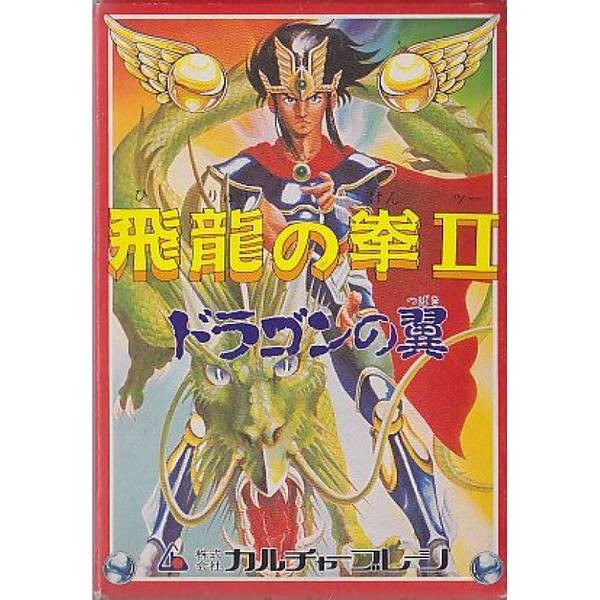
飛龍之拳 2 飛龍之翼
由 Culture Brain 於 1988 年在任天堂 Famicom(紅白機)上推出的《飛龍之拳 2》(Flying Dragon 2/飛龍の拳II),是系列發展中的關鍵轉捩點,正式確立「動作 RPG」與「格鬥模擬」雙軌並行的核心風格。延續前作的高人氣,在系統深度、劇情規模與視覺表現上都有顯著進化,並將原本偏向反應操作的「心眼」系統,昇華為一場帶有濃厚超自然色彩的武術史詩體驗。
在整體技術表現上,明顯優於前作,特別是在角色比例與場景細節的強化上更為突出。戰鬥畫面中的人物頭身比趨於寫實,背景設計也從單調的色塊升級為充滿異國風情的多樣場景,例如古老寺廟、雪山地帶與現代都市等,讓遊戲世界顯得更加立體。音樂方面則更加豐富,不僅保留熱血激昂的對戰曲風,也加入帶有神祕氛圍的旋律,進一步強化整體沉浸感。同時,導入更完整的選單與對話系統,在進行動作關卡的同時,也能體驗接近傳統 RPG 的敘事節奏與角色互動。
故事方面,大幅擴展世界觀。主角龍飛在奪回奧義之書後,發現背後隱藏著更巨大的陰謀——邪惡組織「暗黑龍」的首領「月之魔王」,企圖蒐集五個擁有神聖力量的「龍之牙」,以開啟通往魔界的大門。為了阻止這場災難,龍飛必須尋找另外四位繼承龍魂的戰士,包括拳法家、摔角手與拳擊手等,與他們並肩作戰,對抗暗黑龍的五大幹部。整體劇情從單純的復仇故事,發展為一場關乎世界存亡的壯闊戰役,最終將深入魔界裂縫,在「飛龍錦標賽」的最終決戰中封印魔王。
在操作與系統設計上,保留系列核心並進一步進化。「心眼」系統依舊是戰鬥的靈魂,但在本作中變得更加精準且富有節奏感。玩家除了需要根據標靶位置進行攻防判斷,還必須運用瞬間移動般的閃避與反擊技巧,使戰鬥更具動態張力。當敵人的標靶閃爍時,就是發動連續攻擊的最佳時機,整體節奏宛如一場精心編排的功夫對決。
此外,最大亮點之一是「變身」系統。龍飛可以化身為披著神聖鎧甲的「龍戰士」,在變身狀態下不僅攻擊力大幅提升,還能施展如「飛龍火球」與「烈火斬」等華麗必殺技。不過這一切都建立在「氣(KI)」的管理之上,玩家必須謹慎掌控能量條,決定何時變身與持續多久,讓戰鬥策略更具深度。
與前作線性推進不同,加入角色切換與分歧玩法。在特定關卡中,可以操作不同夥伴,每個角色在攻擊範圍與心眼判定上皆有所差異,例如摔角手雖然動作較慢,但擁有極高破壞力的投技。這種多角色操作的設計,也被視為後來格鬥遊戲「角色選擇」概念的雛形。
在市場評價方面,獲得了極高的肯定。評論普遍認為本作成功將「心眼系統」打磨至近乎完美,在保有格鬥遊戲緊張感的同時,也透過 RPG 要素降低了入門門檻。雖然部分玩家認為後期迷宮略顯冗長,加上密碼存檔系統較為繁瑣,但整體而言瑕不掩瑜。它被廣泛視為紅白機時期動作與格鬥融合的巔峰之作,其「龍戰士」變身概念與戰鬥邏輯,也對後續同類型作品產生深遠影響。
“Flying Dragon II” (Flying Dragon 2 / 飛龍の拳II), released by Culture Brain in 1988 for the Nintendo Famicom (NES), marked a pivotal turning point that firmly established the series’ dual identity as both an action RPG and a fighting simulation. Building upon the popularity of its predecessor, the sequel made significant leaps in system depth, narrative scope, and visual presentation, elevating the “Shin-Gan” system from a simple reflex-based mechanic into a supernatural martial arts epic.
In terms of technical presentation, Flying Dragon II showed clear advancements over the original, most notably in character proportions and environmental detail. The combat sprites adopted more realistic body ratios, while backgrounds evolved from simple color blocks into richly detailed settings such as ancient temples, snowy mountains, and modern cityscapes. The music also became more layered, blending intense battle themes with mysterious atmospheric tracks. One of the most striking additions was the expanded menu and dialogue system, allowing players to experience a more immersive, RPG-like narrative even during action stages.
The story expands the world dramatically. After recovering the Secret Scroll, the protagonist Ryuhi uncovers a greater conspiracy: the leader of the Dark Dragon organization, the Demon King of the Moon, seeks to gather five sacred “Dragon Fangs” to open the gates to the demon realm. To prevent this catastrophe, Ryuhi must seek out four other warriors who carry the souls of dragons—including a martial artist, a wrestler, and a boxer—and unite them against the Dark Dragon’s elite generals. What begins as a tale of personal revenge evolves into a grand war to save the world, culminating in a final confrontation within the demon realm and the climactic “Flying Dragon Tournament” to seal away the Demon King.
Gameplay retains the series’ core while introducing major innovations that deepen both strategy and variety. The evolved Shin-Gan system remains central, but now requires more precise timing and adds new mechanics such as teleportation dodges and counterattacks. Combat emphasizes rhythm, as flashing targets signal the perfect opportunity to unleash combos, making battles feel like dynamic martial arts choreography.
One of the game’s biggest highlights is Ryuhi’s ability to transform into the armored “Dragon Warrior.” In this form, his power increases dramatically, granting access to flashy special moves like the Flying Dragon Fireball and Blazing Slash. Players must carefully manage the “KI” gauge, which determines both the timing and duration of transformations, adding a layer of resource strategy to the combat.
Unlike the linear progression of the first game, Flying Dragon II introduces branching elements and character switching. At certain points, players can control different companions, each with unique combat properties and Shin-Gan timing. For example, the wrestler is slower but excels in powerful grapples. This multi-character approach foreshadows the character selection systems that would later become standard in fighting games.
The game was met with overwhelmingly positive reception, praised for its refined systems and substantial content. Critics widely regarded it as the perfected form of the Shin-Gan system, balancing the intensity of fighting mechanics with the accessibility of RPG elements. Although some players found the later dungeon exploration somewhat lengthy and the password save system cumbersome, these flaws were minor compared to its achievements. It is broadly recognized as one of the pinnacle action-fighting hybrids on the Famicom, and its depiction of the “Dragon Warrior” transformation and combat design would go on to influence later titles, including adaptations like Saint Seiya.
運費計算方式:
貨款滿1000元運費外加90元
貨款1000以下:買1件運費外加 60元,買2件運費外加 70元,
買3件運費外加 80元 ,買4件運費外加 90元
貨到付款外加30元手續費
外島及大陸地區運費另計
付款方式:
線上刷卡:本站採用Paypal線上刷卡
虛擬帳號匯款:屬於您專屬的虛擬帳戶,方便站長查帳使用,本站強力推薦
實體ATM匯款:請將匯款帳號記錄下來至各大銀行ATM提款機轉帳
超商條碼繳費:請列印本站提供的條碼至四大超商繳費
線上轉帳:透過玉山銀行線上ATM轉帳(此系統只支援IE瀏覽器)
貨到付款:本站採用黑貓宅急便貨到付款
其他注意事項:
如需購買線上點數卡請直接跟站長連絡,本站不提供點數卡的線上付款
-
飛龍之拳 2 飛龍之翼
- 定 價: 5,775円
- 售 價: 0.00
- 庫存量: 0 套
- 已賣出: 0 套
 人氣指數: 0 / 6 顆星