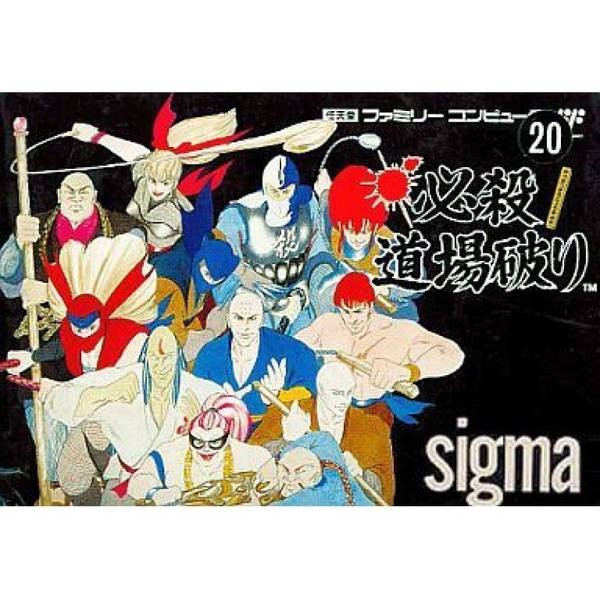
必殺道場 / 必殺道場破
由 Banpresto(萬普)於 1989 年在任天堂 Famicom(紅白機)上推出的《必殺道場破》(Hissatsu Doujou Yaburi / 必殺道場破り),是一款風格極其獨特的「劍術格鬥 RPG」。它有別於當時主流強調節奏與爽快感的橫向捲軸動作遊戲,將核心聚焦在日本武士文化中的「道場破り」與流派對決之上,結合嚴肅的武道精神與角色成長系統,塑造出一種近似「武士修行模擬」的硬派體驗。
在技術與表現層面,刻意營造出「靜與動」的強烈對比。由大地圖移動與一對一側視戰鬥構成,節奏明顯偏向沉穩。戰鬥畫面中的角色比例較大,重點在於呈現拔刀姿態與護具細節,而背景則多為竹林、寺院與道場等濃厚和風場景。音樂風格內斂而肅殺,尤其在雙方對峙尚未出手的瞬間,那種幾近凝滯的沉默,成功營造出武士對決中一觸即發的心理壓力與緊張感。
劇情設定在類似戰國或江戶時代的日本。玩家扮演一名無名的流浪劍客,為了精進劍術並追求「天下第一」的境界,踏上橫跨各地的武者修行之旅。過程中,玩家需要拜訪各地道場,挑戰不同流派的師範,從中不僅磨練技術,也考驗意志。隨著旅程推進,玩家還會遭遇各式各樣的強敵,甚至揭開潛伏於暗處的邪惡劍客勢力。最終目標是踢館成功、獲得各流派認可,並在最終的御前比武中證明自身實力。
在操作機制上,徹底捨棄單純連打的玩法,改以極度講究時機與判斷的戰鬥系統為核心。對戰時,需在上段、中段與下段之間做出攻防選擇,精準攻擊對手的頭部、身體或手部。每一次出招都必須抓準破綻的瞬間,否則極易被格擋或反擊,整體節奏更接近真實劍術對峙,而非傳統動作遊戲。
同時,也融入 RPG 成長要素。透過踢館成功或擊敗強敵,獲得經驗值以提升體力與攻擊力,並在特定條件下習得強大的奧義技能,例如能瞬間縮短距離的突進技或威力驚人的重斬。這些技能在後期高難度戰鬥中扮演關鍵角色,讓戰鬥不僅依賴反應,也包含策略層面。
此外,大地圖上的移動與資源管理同樣重要。需要注意自身的名聲與金錢,在城鎮中休息、修理武器或購買補給品。若名聲不足,甚至可能遭到部分道場拒絕挑戰。這種設計讓遊戲體驗超越單純戰鬥,更像是在經歷一段真實的劍客人生。
在市場評價方面,以其深度與題材獲得高度肯定。評論普遍認為 Banpresto 成功在紅白機平台上重現了劍道中「一擊決勝」的緊張感,是一款極具專業性與哲學意味的作品。然而,其節奏偏慢、判定嚴苛且難度極高,使得一般玩家較難上手,也因此帶有強烈的硬核取向。整體而言,本作被視為紅白機時期少見的「武士模擬型」動作 RPG,其強調冷靜觀察與精準出手的設計,在當時遊戲市場中顯得格外獨樹一幟。
Released by Banpresto in 1989 for the Nintendo Famicom (NES), Hissatsu Doujou Yaburi (必殺道場破り) is a uniquely styled “sword-fighting RPG” that stands apart from the mainstream side-scrolling action games of its era. Instead of focusing on constant movement and combat, the game centers on the traditional Japanese concept of dojo challenge (道場破り) and duels between martial arts schools, blending a serious samurai ethos with character progression mechanics to create a distinctly hardcore experience.
In terms of presentation, the game emphasizes a contrast between stillness and motion. Gameplay is divided into overworld navigation and one-on-one side-view duels. Visually, character sprites in battle are relatively large, highlighting the posture of sword-drawing and the details of samurai armor. Backgrounds are steeped in traditional Japanese aesthetics, featuring bamboo groves, temples, and dojo interiors. The music complements this atmosphere with restrained, tense compositions. In particular, the silence before two swordsmen engage creates a palpable psychological pressure, evoking the spirit of bushido and the gravity of life-or-death combat.
The story is set in a feudal Japan-inspired era, reminiscent of the Sengoku or Edo period. Players take on the role of a nameless wandering swordsman who embarks on a journey across the البلاد (regions of Japan) to refine his skills and ultimately become the greatest warrior in the land. Throughout the journey, the player challenges renowned dojos of various fighting styles, facing off against masters who test not only technical ability but also mental discipline. Along the way, the protagonist encounters eccentric fighters and even confronts a shadowy organization of rogue swordsmen. The ultimate goal is to defeat all challengers, earn recognition from every school, and prove one’s worth in a final prestigious tournament.
At its core, the gameplay abandons button-mashing in favor of a highly precise and deliberate combat system. Battles revolve around targeting specific body zones—head, torso, and hands—requiring sharp reflexes and careful observation. Players must strike at the exact moment an opponent reveals an opening; otherwise, attacks are easily blocked or countered. This creates a tense, methodical rhythm that mirrors real sword duels.
The game also incorporates RPG elements such as experience points and skill acquisition. Victories in dojo challenges grant experience that improves attributes like health and attack power. More importantly, players can learn powerful special techniques, or “hidden arts,” through specific events or training. These include moves that instantly close distance or deliver devastating strikes, which become essential in later, more difficult encounters.
Beyond combat, the overworld introduces a layer of resource management. Players must monitor their reputation and finances while traveling. Visiting towns allows for rest, weapon maintenance, and item purchases, but a low reputation may prevent access to certain dojos. This system adds a simulation-like quality, making the experience feel less like a typical action game and more like living the life of a wandering swordsman.
Critically, Hissatsu Doujou Yaburi was praised for its depth and its faithful recreation of the tension found in real swordsmanship. Reviewers commended Banpresto for capturing the essence of “one decisive strike” combat within the limitations of the Famicom. However, the game’s slow pacing, strict timing, and high difficulty made it less accessible to players seeking fast-paced action. As a result, it gained a reputation as a niche but highly respected title—a “samurai simulator” that rewards patience, precision, and discipline, and stands as one of the most philosophically grounded action RPGs of its time.
運費計算方式:
貨款滿1000元運費外加90元
貨款1000以下:買1件運費外加 60元,買2件運費外加 70元,
買3件運費外加 80元 ,買4件運費外加 90元
貨到付款外加30元手續費
外島及大陸地區運費另計
付款方式:
線上刷卡:本站採用Paypal線上刷卡
虛擬帳號匯款:屬於您專屬的虛擬帳戶,方便站長查帳使用,本站強力推薦
實體ATM匯款:請將匯款帳號記錄下來至各大銀行ATM提款機轉帳
超商條碼繳費:請列印本站提供的條碼至四大超商繳費
線上轉帳:透過玉山銀行線上ATM轉帳(此系統只支援IE瀏覽器)
貨到付款:本站採用黑貓宅急便貨到付款
其他注意事項:
如需購買線上點數卡請直接跟站長連絡,本站不提供點數卡的線上付款
-
必殺道場 / 必殺道場破
- 定 價: 6,825円
- 售 價: 0.00
- 庫存量: 0 套
- 已賣出: 0 套
 人氣指數: 0 / 6 顆星