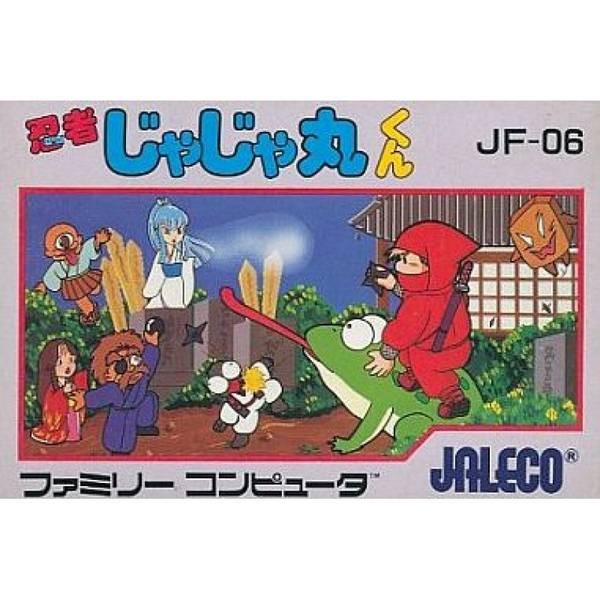
忍者茶茶丸
 1985-11-15
由 Jaleco 於 1985 年 11 月 15 日在任天堂 Famicom(紅白機)上推出的《忍者茶茶丸》(Ninja Jajamaru-kun),是紅白機早期極具代表性的動作遊戲之一,同時也是該公司最具代表性的招牌作品。作為《忍者君:魔城的冒險》的衍生續作,將主角換成忍者君的弟弟「茶茶丸」,並以更親民且流暢的遊戲節奏成功打入市場,在當年創下百萬銷量的亮眼成績。
採用當時相當流行的「定格多層平台」設計,每一關卡都由四層固定結構組成,在不同高度之間靈活移動,逐一清除各層的敵人。畫面雖然受限於早期硬體,但角色塑造卻極具特色,從雪女、油赤子到入道等日本傳統妖怪皆躍然於畫面之中,搭配充滿祭典氛圍的背景音樂,使整體風格帶有濃厚的和風民俗氣息,也讓人留下深刻印象。
故事本身採用非常王道的英雄救美架構。邪惡的妖怪首領「鯰魚太夫」率領手下擄走了櫻花公主,茶茶丸為了拯救她,必須一路突破層層關卡,最終擊敗敵人奪回公主。每一關結束時,公主會在高處拋下獎勵道具,而鯰魚太夫則時不時出現干擾玩家,甚至將公主再次帶走,讓整體流程在簡單之中多一點緊張感與變化。
在操作設計上,雖然看似簡單,卻充滿節奏感與策略性。透過跳躍用頭撞擊上方磚塊,這些磚塊可能藏有金錢或加分道具,也可能暗藏會爆炸的危險陷阱,讓每一次破壞都帶著不確定性。主要攻擊手段為投擲飛鏢,由於射程有限,玩家必須精準掌握距離與時機。此外,與 超級瑪利歐兄弟 類似的踩踏機制也被納入其中,能暫時壓制敵人,成為關鍵的保命技巧。
最令人熱血沸騰的要素,莫過於召喚巨大蛤蟆的特殊能力。當成功收集到特定的三種秘寶後,便能召喚出名為「ガマパックン」的大蛤蟆。在騎乘狀態下角色幾乎無敵,可以直接吞噬場上的敵人,瞬間逆轉原本緊張的局勢,帶來極大的爽快感。這種由弱轉強的爆發式設計,也成為本作最具代表性的特色之一。
在當時的市場評價中,被認為是一款節奏明快且完成度極高的動作遊戲。評論普遍肯定其敵人設計的多樣性,每種妖怪都有不同的攻擊模式,使得即使關卡結構相似,遊戲體驗仍能保持新鮮。同時,為了追求更高分數或更完美的通關方式,玩家往往會反覆挑戰,進一步提升耐玩度。
從歷史定位來看,本作不僅奠定茶茶丸作為 Jaleco 吉祥物的地位,也為後續系列作品鋪路,包括角色扮演與科幻風格的續作等,讓這個原本簡單的忍者角色發展出多樣的可能性。
對許多老玩家而言,最難忘的瞬間往往不是擊敗強敵,而是在敲碎磚塊的那一刻,看到冒出來的不是獎勵而是即將爆炸的炸彈,只能慌忙逃竄的緊張感;又或者是在關卡結尾,冒著危險衝向高處,只為接住櫻花公主丟下的那顆粉紅愛心。這些簡單卻充滿張力的瞬間,正是紅白機時代最純粹、也最令人懷念的遊戲魅力。
Released by Jaleco on November 15, 1985, for the Nintendo Famicom (NES), Ninja Jajamaru-kun is one of the most iconic early action games of the 8-bit era and a flagship title for the company. As a spin-off sequel to Ninja-kun: Majou no Bouken, the game shifts the spotlight to the younger brother, Jajamaru, delivering a smoother and more accessible gameplay experience that helped it achieve over a million copies in sales at the time.
The game adopts a then-popular fixed multi-platform structure, where each stage consists of four horizontal layers. Players must guide Jajamaru up and down these tiers, defeating enemies scattered across each level. Despite hardware limitations, the game stands out with its charming character designs inspired by Japanese folklore, featuring creatures such as the Yuki-onna, Abura-akago, and Nyūdō. Combined with its upbeat, festival-like soundtrack, the game creates a lively and distinctly traditional Japanese atmosphere that leaves a lasting impression.
The story follows a classic hero’s journey. The evil yokai boss Namazu Dayū has kidnapped Princess Sakura, and Jajamaru sets out to rescue her by clearing stage after stage. At the end of each level, the princess appears at the top of the tower, tossing down rewards, while Namazu Dayū occasionally interferes or drags her away again, adding tension and variation to the otherwise straightforward progression.
In terms of gameplay, Ninja Jajamaru-kun is simple on the surface but rich in rhythm and strategy. Jajamaru can jump and headbutt bricks above him, which may reveal coins, bonus items, or hidden bombs that explode if triggered, adding an element of risk to every action. His primary attack is throwing shurikens, which have limited range and require careful positioning. The game also incorporates a stomp mechanic similar to Super Mario Bros., allowing players to temporarily stun enemies and create breathing room in tight situations.
One of the most exciting features is the ability to summon a giant toad. By collecting three specific secret items, Jajamaru can call forth “Gama Packun,” a massive toad that he rides. While mounted, the player becomes nearly invincible and can devour enemies directly, turning the tide of battle in a dramatic and satisfying way. This transformation mechanic is one of the game’s most memorable highlights.
At the time of its release, the game was widely praised for its fast-paced action and high level of polish. Critics appreciated the variety of enemy behaviors, which kept the repetitive stage structure feeling fresh. Its strong replay value, driven by score chasing and item collection, encouraged players to refine their strategies and return for repeated playthroughs.
Historically, the game solidified Jajamaru as Jaleco’s mascot character and laid the groundwork for numerous sequels across different genres, including RPGs and even sci-fi-themed entries. It marked an important step in the evolution of character-driven action games on the Famicom.
For many players, the most unforgettable moments weren’t just about defeating enemies, but the tension of smashing a brick and discovering a ticking bomb instead of a reward, or desperately climbing to the top of the stage to catch the heart thrown by Princess Sakura. These simple yet intense experiences capture the pure, enduring charm of the Famicom era.
運費計算方式:
貨款滿1000元運費外加90元
貨款1000以下:買1件運費外加 60元,買2件運費外加 70元,
買3件運費外加 80元 ,買4件運費外加 90元
貨到付款外加30元手續費
外島及大陸地區運費另計
付款方式:
線上刷卡:本站採用Paypal線上刷卡
虛擬帳號匯款:屬於您專屬的虛擬帳戶,方便站長查帳使用,本站強力推薦
實體ATM匯款:請將匯款帳號記錄下來至各大銀行ATM提款機轉帳
超商條碼繳費:請列印本站提供的條碼至四大超商繳費
線上轉帳:透過玉山銀行線上ATM轉帳(此系統只支援IE瀏覽器)
貨到付款:本站採用黑貓宅急便貨到付款
其他注意事項:
如需購買線上點數卡請直接跟站長連絡,本站不提供點數卡的線上付款