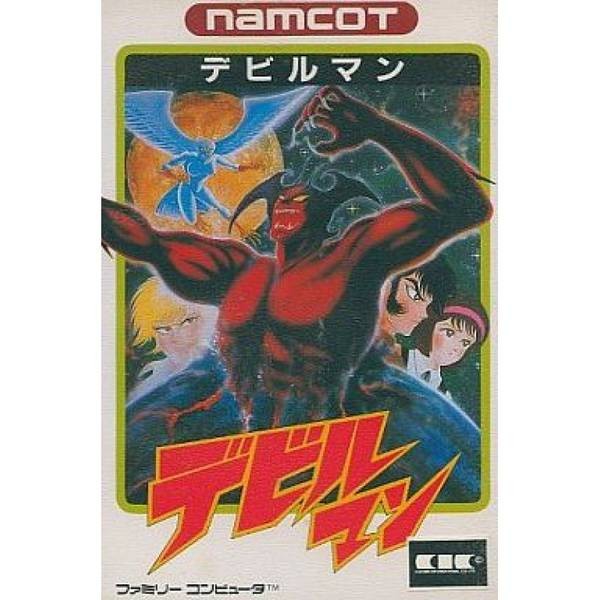
惡魔人

Namco於1989年4月25日在任天堂Famicom(紅白機)上推出的《惡魔人》,改編自漫畫大師永井豪的同名經典作品,是一款結合動作與冒險元素的異色之作。並未侷限於單純的橫向捲軸玩法,而是試圖在8位元主機上重現原著中那種充滿絕望、暴力與哲學深度的黑暗世界觀。透過劇情對話、場景探索與變身戰鬥的交錯設計,使其成為紅白機時期少數帶有強烈悲劇與恐怖氛圍的動漫改編遊戲。
在表現形式上,展現Namco「沉浸式敘事」的早期探索。遊戲分為探索與戰鬥兩大模式:在日常與劇情推進時,畫面會呈現角色的大型頭像與半身像,細膩地還原原作那種狂野且帶有陰鬱氣息的人物風格;而進入戰鬥時,則切換為節奏緊湊的橫向動作畫面。整體視覺以暗色調為主,無論是荒涼的都市街道或詭異的惡魔空間,都瀰漫著不安與壓迫感。音樂方面也刻意採用低沉、不和諧的電子旋律,成功營造出人類文明瀕臨崩潰的末日氛圍。
故事劇情忠於原著精神,圍繞主角不動明的轉變展開。原本性格懦弱的他,在好友飛鳥了的引導下,得知遠古惡魔即將復甦並威脅人類存亡的真相。為了獲得對抗惡魔的力量,他在「安息日」儀式中與強大的惡魔阿蒙融合,最終成為擁有惡魔之力卻保有人類之心的「惡魔人」。隨著劇情推進,將經歷從校園生活到全面戰爭的劇烈轉變,並在一次次戰鬥與抉擇中,逐漸體會到夾在人類與惡魔之間的孤獨與宿命,最終走向帶有濃厚悲劇色彩的結局。
在操作設計上,遊戲強調「人類形態」與「惡魔形態」之間的切換,形成層次分明的玩法結構。在人類狀態下,需要透過對話、探索與選擇推進劇情,部分決策甚至會影響後續戰鬥的條件與發展;而一旦變身為惡魔人,則進入高機動性的動作戰鬥模式,能施展強力的近戰攻擊與招牌技能「惡魔射線」。此外,還加入分身、縮小等特殊能力,用來應對各種關卡機制與敵人設計。Boss戰則是本作的一大挑戰,敵人體型龐大、攻擊模式多變,必須精準掌握跳躍與攻擊時機,才能在高壓戰鬥中取得勝利。
整體而言在當時獲得帶有兩極化但偏向正面的市場評價。評論普遍肯定其對原作氛圍的高度還原,以及勇於在家用主機平台上嘗試黑暗題材的創新精神。然而,較多的劇情對話與偏高的難度,也讓部分習慣快節奏動作遊戲的玩家感到門檻較高。儘管如此,對於喜愛原作或偏好深沉風格的玩家而言,本作無疑是一部誠意十足的佳作。時至今日,它依然被視為紅白機晚期最具個性與深度的動漫改編作品之一,其陰鬱而不妥協的末世氣質,仍讓許多老玩家記憶猶新。
Released on April 25, 1989, by Namco for the Nintendo Famicom (NES), Devilman is an action-adventure title based on the iconic manga by Go Nagai. Rather than being a straightforward side-scrolling action game, it attempts to recreate the original work’s dark tone—filled with despair, violence, and philosophical undertones—within the limitations of 8-bit hardware. By combining dialogue-driven storytelling, environmental exploration, and intense transformation-based combat, it stands out as one of the few anime adaptations on the Famicom to embrace a distinctly tragic and horror-infused atmosphere.
In terms of presentation, the game reflects Namco’s early ambition toward immersive storytelling. It is divided into two main modes: exploration and narrative sequences, which feature large character portraits that closely capture the wild, slightly unsettling style of Nagai’s artwork, and action-based side-scrolling combat segments. Visually, the game is notable for its heavy use of dark tones, from desolate cityscapes to eerie demonic realms, creating a constant sense of unease. The soundtrack further reinforces this mood by abandoning upbeat melodies in favor of somber, dissonant electronic compositions that evoke a collapsing human world under demonic threat.
The story closely follows the spirit of the original manga. Players take on the role of Akira Fudo, a timid young boy who learns from his friend Ryo Asuka about the imminent awakening of ancient demons. In order to gain the power to fight back, Akira participates in a ritual known as the Sabbath, merging with the powerful demon Amon. Retaining his human heart while wielding demonic strength, he becomes Devilman—a being caught between two worlds. As the narrative progresses, players witness his journey from ordinary school life into a brutal war against demons, confronting iconic enemies while grappling with isolation and the inevitable descent toward tragedy.
Gameplay is structured around the contrast between human exploration and demon combat, emphasizing the protagonist’s dual identity. In human form, players engage in dialogue choices, investigation, and story progression, with certain interactions subtly influencing upcoming encounters. Once transformed, Devilman gains enhanced mobility and combat abilities, including powerful claw attacks, high jumps, and signature techniques such as the Devil Beam. Additional abilities like splitting into clones or shrinking allow players to overcome specific obstacles and enemies. Combat, particularly boss encounters, is challenging and demands precise timing, positioning, and careful resource management between health and energy. Large-scale bosses with unpredictable patterns create intense, high-pressure battles that reward observation and mastery.
Upon release, Devilman received generally positive but somewhat polarized reception. Critics praised its faithful adaptation of the source material’s tone and its bold attempt to introduce dark, horror-themed storytelling to a family-oriented platform. However, its slower pacing due to heavy dialogue, combined with strict collision detection and high difficulty, made it less accessible to casual players. For fans of the original work and players who appreciated darker, more complex experiences, it was considered a deeply engaging title. Today, it is widely regarded as one of the most distinctive anime-based games of the late Famicom era, remembered for its uncompromising atmosphere and its successful translation of a bleak, apocalyptic narrative into interactive form.
運費計算方式:
貨款滿1000元運費外加90元
貨款1000以下:買1件運費外加 60元,買2件運費外加 70元,
買3件運費外加 80元 ,買4件運費外加 90元
貨到付款外加30元手續費
外島及大陸地區運費另計
付款方式:
線上刷卡:本站採用Paypal線上刷卡
虛擬帳號匯款:屬於您專屬的虛擬帳戶,方便站長查帳使用,本站強力推薦
實體ATM匯款:請將匯款帳號記錄下來至各大銀行ATM提款機轉帳
超商條碼繳費:請列印本站提供的條碼至四大超商繳費
線上轉帳:透過玉山銀行線上ATM轉帳(此系統只支援IE瀏覽器)
貨到付款:本站採用黑貓宅急便貨到付款
其他注意事項:
如需購買線上點數卡請直接跟站長連絡,本站不提供點數卡的線上付款