忍者君:魔城的冒險
 1985-05-10
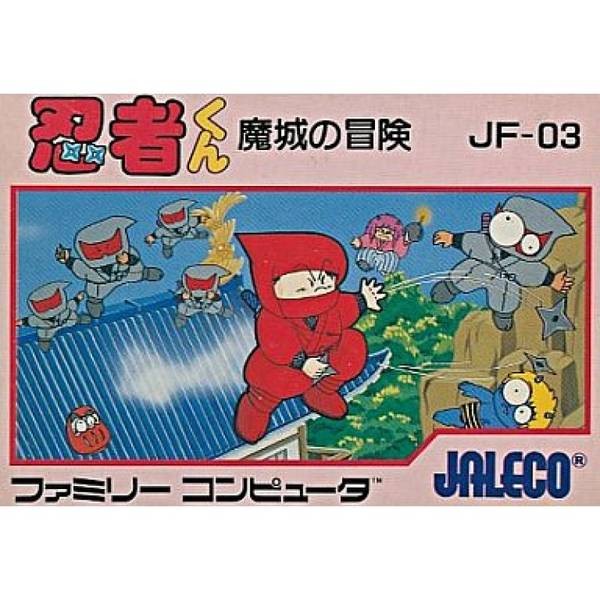
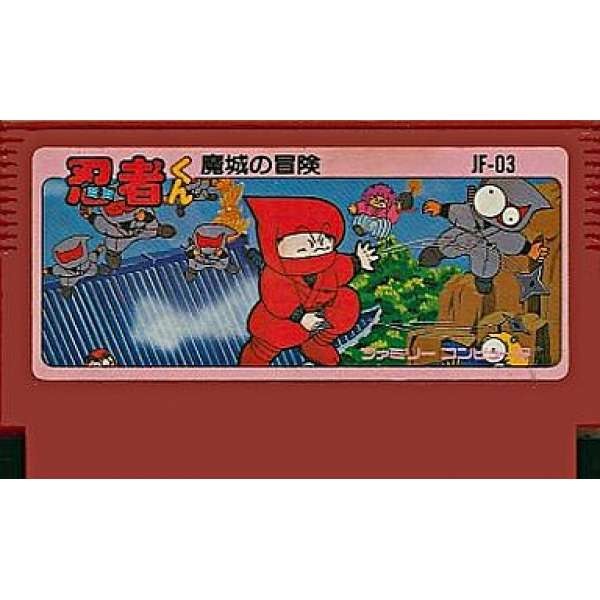
於1985年5月10日在Family Computer (FC/紅白機) 平台上推出的《忍者君:魔城的冒險》(Ninja-kun: Majou no Bouken / 忍者くん 魔城の冒険),是由UPL 原創並由Jaleco移植至家用主機的動作遊戲。作為系列作的開山之作,以其圓滾滾的二頭身可愛造型(紅衣忍者)以及技術含量極高的「垂直跳躍戰鬥」機制,在早期紅白機遊戲中佔有重要地位。它不僅開創「忍者君」這個長青IP,更憑藉獨特的物理慣性與敵人AI,成為玩家心中「可愛卻硬派」的代表作。
最初於1984年在街機平台推出,隨後迅速移植至紅白機。與當時主流的橫向捲軸遊戲不同,採用「單一畫面、多層平台」的垂直式設計。每個關卡由數層漂浮地板組成,必須不斷向上跳躍或向下墜落來尋找並擊敗敵人。遊戲的美術風格極具辨識度,主角與妖怪敵人呈現滑稽而討喜的動態,但在可愛的外表下,隱藏著對操作精準度要求極高的硬核靈魂。該作品在早期紅白機市場取得顯著成功,並為後續《忍者君:阿修羅之章》奠定堅實基礎。
故事以傳統冒險風格展開。主角「忍者君」為完成忍者修行並守護村莊安寧,決定獨自闖入充滿妖魔鬼怪的「魔城」。魔城由多個區域組成,如岩山與城池,每層皆有不同流派的忍者與日本傳統妖怪(如鎧武者、獅子舞、僧侶忍者等)駐守。玩家目標簡單直接:在每關中擊敗所有敵人,清空畫面威脅後方可晉級至下一關。這是一場對速度、精準度與生存能力的極致考驗。
在操作設計上,最迷人之處在於其獨特的物理碰撞系統,與後來「踩頭即死」的瑪利歐邏輯完全不同。核心機制「頭部碰撞與氣絕」允許玩家透過跳躍從下方擊中敵人腳部或從上方踩在敵人頭頂,使敵人暫時陷入「氣絕(暈眩)」狀態,失去攻擊能力,玩家必須趁機用手裏劍將其擊落以完成消滅。玩家可使用八向手裏劍進行遠程攻擊,但敵人反應靈敏,甚至會低頭躲避或反擊。跳躍的高度與滯空感具有明顯物理慣性,要求精準判斷落點以避免與敵人飛鏢碰撞。遊戲中每種敵人具備不同AI,例如僧侶忍者會快速投擲飛鏢,而鎧武者防禦力極高,玩家必須學會誘敵、閃避,並利用高低差地形進行奇襲。
在當時市場上獲得極佳反響,被視為紅白機早期不可多得的優質移植作。評論家讚賞其「簡單卻深奧」的玩法,認為平台跳躍與精準射擊結合的機制耐玩且富挑戰性。雖然畫面相對單純,但流暢的動作判定與高難度敵人配置,使其在當時動作遊戲中脫穎而出。市場普遍認為本作是「技巧派玩家」的最愛,高難度帶來的成就感讓其在老玩家心中擁有神聖地位。紅衣忍者形象深植人心,成為 80 年代動作遊戲象徵之一。對於喜愛研究遊戲物理與早期街機移植風格的玩家,《魔城的冒險》被視為探索忍者遊戲演進史的必修之作。
Released on May 10, 1985, for the Family Computer (FC/Nintendo Famicom), Ninja-kun: Majou no Bouken (Ninja-kun: Adventure of the Demon Castle / 忍者くん 魔城の冒険) is an action game originally developed by UPL and ported to home consoles by Jaleco. As the inaugural entry of the series, it stands out for its chubby, super-deformed red ninja character design and its highly technical "vertical jump combat" mechanics, making it a significant title among early Famicom games. The game not only established the enduring Ninja-kun IP but also gained recognition for its unique physics-based movement and enemy AI, earning a reputation as "cute yet hardcore" among players.
Originally released in arcades in 1984, the game was quickly ported to the Famicom. Unlike the popular side-scrolling games of the time, it features a "single-screen, multi-layer platform" vertical design. Each level consists of multiple floating platforms, requiring players to jump upward or fall downward continuously to locate and defeat enemies. The art style is highly distinctive, with both the protagonist and the Japanese yokai enemies depicted in comical yet appealing animations. Beneath this charming exterior, however, lies a challenging gameplay core that demands precise control. The game achieved notable success on the early Famicom market and laid a solid foundation for its sequel, Ninja-kun: Ashura no Shou.
The story follows a traditional adventure structure. The protagonist, Ninja-kun, must undertake his ninja training and protect his village by venturing alone into the Demon Castle, filled with monsters and supernatural threats. The castle is divided into multiple areas, such as rocky mountains and fortified structures, each guarded by ninjas of different schools and traditional Japanese yokai, including armored warriors, lion-dance spirits, and monk-ninjas. The player’s objective is straightforward: defeat all enemies in each stage, clearing the screen of threats before progressing to the next level. The gameplay tests speed, precision, and survival skills to the utmost.
Gameplay is notable for its unique physics-based collision system, which differs significantly from later "jump-on-enemy" mechanics seen in titles like Mario. Its core feature, head collision and stun, allows players to strike enemies from below or land on their heads from above, temporarily putting them into a "stunned" state and disabling their attacks. Players can then finish them off with shurikens. Shuriken attacks can be aimed in eight directions, but enemies react quickly, often dodging or counterattacking. Jumping involves realistic height and hang-time physics, requiring careful calculation of landing positions to avoid colliding with enemy projectiles. Each enemy type features unique AI behavior—for instance, monk-ninjas throw shurikens rapidly, while armored warriors possess high defense—demanding strategic use of terrain for ambushes and evasion.
Ninja-kun: Majou no Bouken received widespread acclaim for its engaging and deceptively deep gameplay, earning recognition as one of the best early Famicom arcade ports. Critics praised its combination of platforming and precision shooting as both challenging and highly replayable. Despite its relatively simple visuals, the smooth animation, tight control, and challenging enemy placements helped it stand out among contemporaneous action games. The game is celebrated as a favorite among skill-based players, with its high difficulty offering immense satisfaction and cementing the red ninja as an iconic symbol of 1980s action games. For enthusiasts interested in game physics and early arcade-to-home console ports, Ninja-kun: Majou no Bouken is considered an essential study in the evolution of ninja-themed video games.
運費計算方式:
貨款滿1000元運費外加90元
貨款1000以下:買1件運費外加 60元,買2件運費外加 70元,
買3件運費外加 80元 ,買4件運費外加 90元
貨到付款外加30元手續費
外島及大陸地區運費另計
付款方式:
線上刷卡:本站採用Paypal線上刷卡
虛擬帳號匯款:屬於您專屬的虛擬帳戶,方便站長查帳使用,本站強力推薦
實體ATM匯款:請將匯款帳號記錄下來至各大銀行ATM提款機轉帳
超商條碼繳費:請列印本站提供的條碼至四大超商繳費
線上轉帳:透過玉山銀行線上ATM轉帳(此系統只支援IE瀏覽器)
貨到付款:本站採用黑貓宅急便貨到付款
其他注意事項:
如需購買線上點數卡請直接跟站長連絡,本站不提供點數卡的線上付款