
傳統產業轉型與美國資本市場價值重估
傳統產業轉型與美國資本市場價值重估
摘要 (Executive Summary)
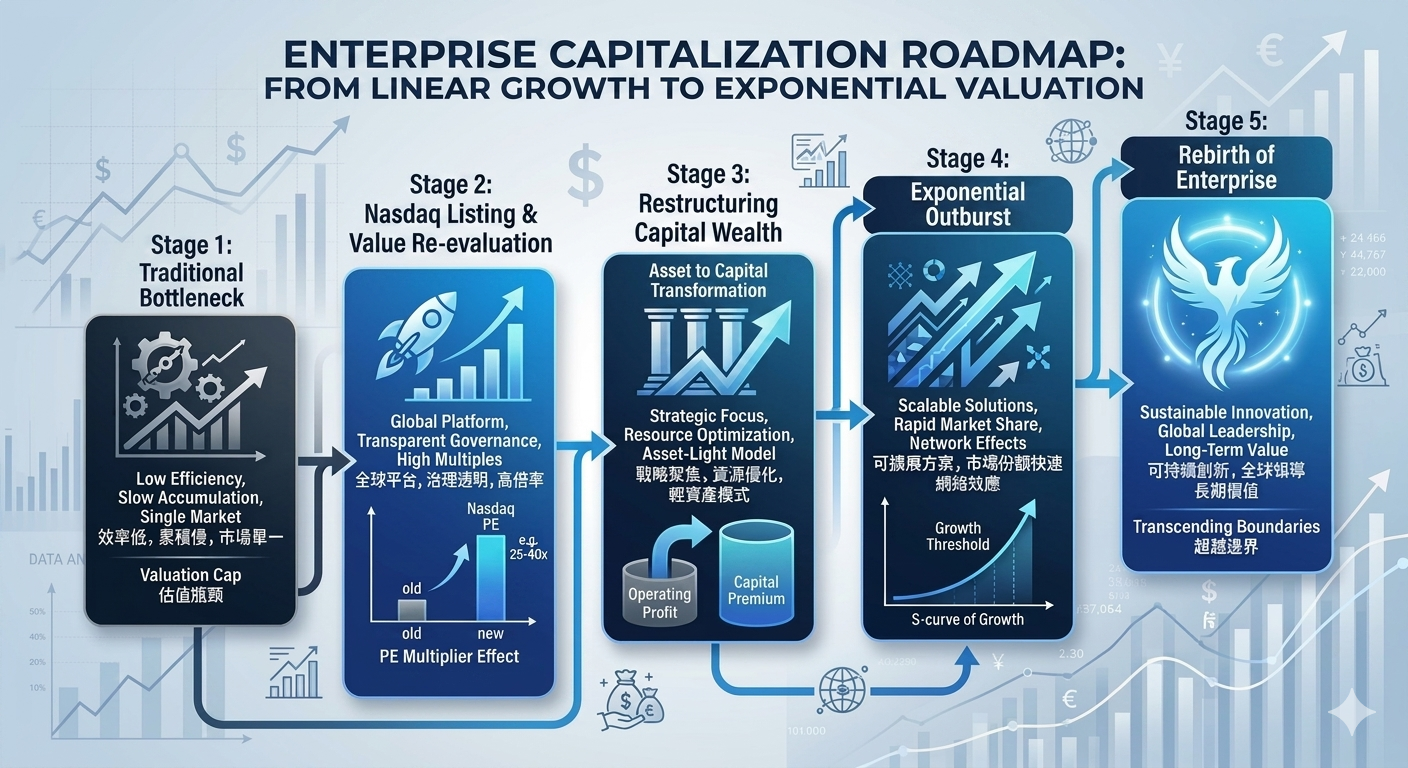
在全球產能過剩及存量競爭(Red Ocean Competition)的宏觀背景下,傳統實體經營的邊際報酬遞減效應日益顯著。本報告旨在探討企業如何透過納斯達克(Nasdaq)資本市場實現從「線性利潤增長」向「資本價值倍數」的策略性轉型,並論證股權價值溢價(Equity Premium)在個人財富邏輯重構中的核心作用。
一、 實體經營的系統性瓶頸 (Systemic Constraints of Traditional Business)
當前傳統行業面臨供需失衡與同質化競爭,企業普遍受限於線性增長模型:
利潤空間受擠壓:仰賴產品價差與服務溢價的模式,在高度透明的市場中難以維持長期競爭優勢。
抗風險能力匱乏:現金流依賴單一營運維度,缺乏資本緩衝與槓桿效應。
財富累積效率低下:依賴利潤留存進行擴張的模式,其速度遠落後於資本化節奏。
二、 納斯達克市場的槓桿與估值體系 (The Leverage of Capital Markets)
納斯達克作為全球科技與高成長企業的首選掛牌地,其核心優勢在於基於未來預期的估值體系(Forward-looking Valuation):
流動性溢價:透過全球化的投資者結構與高度活躍的交易環境,為企業股權提供顯著的流動性。
指數級增長邏輯:資本市場將企業的經營利潤轉化為市盈率(P/E)或市銷率(P/S)倍數,實現股權價值的幾何級爆發。
三、 身份與財富邏輯的結構性重組 (Structural Transformation of Wealth Logic)
赴美上市(IPO/RTO)代表企業家從「營運者」向「資本管理者」的轉型:
資產形態轉化:財富累積從依賴「利潤分紅」轉向「股權增值」。
身份重塑:上市不僅是融資行為,更是企業信譽與國際化視野的背書,賦予創始人更廣闊的資本運作空間。
財富倍率效應:資本市場的槓桿效應能使個人資產在短週期內實現與經營業績非線性的倍增。
四、 市值管理與資本變現路徑 (Liquidity and Capital Structure)
上市為企業提供了多元化的資本運作工具,優化資本結構並實現財富流動性:
融資與再融資 (SPO/PIPE):提供低成本資金以支持併購與規模擴張。
流動性管理:透過減持策略、股權質押及市值管理工具,將帳面價值轉化為具備流動性的資本實體。
五、 結論與展望 (Conclusion and Strategic Outlook)
在「資本驅動」的時代背景下,赴美上市不再僅是企業發展的可選項,而是傳統企業突破增長天花板、改寫財富邏輯的優選策略。
然而,我們必須強調:合規性(Compliance)與可持續增長的業績基礎(Sustainable Growth)仍是市值表現的基石。企業應在保持營運韌性的同時,積極搶灘國際資本市場,以實現財富與社會價值的最大化溢價。
Traditional Sector Transformation and U.S. Capital Market Valuation Re-rating
Executive Summary
Against the macro backdrop of global industrial overcapacity and intensified Red Ocean Competition, the diminishing marginal returns of traditional brick-and-mortar operations have become increasingly pronounced. This report explores the strategic transition from linear profit growth to capital value multiples via the Nasdaq Stock Market. It further elucidates the pivotal role of the Equity Risk Premium in restructuring personal wealth logic through institutionalized capital appreciation.
I. Systemic Constraints of Traditional Business Models
Traditional industries currently face a fundamental imbalance between supply and demand, coupled with commoditized competition. Enterprises are structurally constrained by a Linear Growth Model:
Margin Erosion: Models relying on product arbitrage and service premiums struggle to maintain a long-term competitive moat in high-transparency markets.
Systemic Risk Vulnerability: Cash flows dependent on a single operational dimension lack the "capital buffer" and leverage effects necessary to withstand macro volatility.
Inefficient Capital Accumulation: Expansion funded solely by retained earnings results in a growth velocity that lags significantly behind the pace of institutional capitalization.
II. The Nasdaq Ecosystem: Leverage and Valuation Frameworks
As the premier listing venue for global technology and high-growth enterprises, Nasdaq’s core advantage lies in its Forward-Looking Valuation framework:
Liquidity Premium: Nasdaq’s globalized institutional investor base and high-velocity trading environment provide significant liquidity and a lower Cost of Equity.
Exponential Growth Logic: Capital markets convert operating income into Price-to-Earnings (P/E) or Price-to-Sales (P/S) multiples, facilitating a geometric explosion in equity value.
III. Structural Transformation of Wealth Logic and Identity
A U.S. listing (IPO/RTO) marks a definitive transition for the founder from a "Functional Operator" to a "Capital Allocator":
Asset Class Migration: Wealth accumulation shifts from a reliance on "Dividend Yields" to "Capital Gains" and equity appreciation.
Institutional Identity: A listing is more than a financing event; it is an endorsement of corporate governance and international visibility, granting the founder broader leverage for sophisticated capital operations.
The Multiplier Effect: Capital market leverage allows personal net worth to decouple from underlying operational growth, achieving non-linear, accelerated appreciation.
IV. Liquidity Architecture and Capital Structure Optimization
Public status provides a suite of sophisticated capital tools to optimize balance sheets and enhance personal liquidity:
Secondary Financing (SPO/PIPE): Access to low-cost, permanent capital to fuel inorganic growth through M&A and scale expansion.
Monetization Strategies: Utilizing managed divestment, equity pledges (Stock Loans), and active Market Capitalization Management to transform paper wealth into liquid capital entities.
V. Conclusion and Strategic Outlook
In a capital-driven era, a U.S. listing is no longer merely an optional milestone but a Strategic Imperative for traditional enterprises seeking to shatter growth ceilings and redefine wealth logic.
However, we must emphasize that Regulatory Compliance and a foundation of Sustainable Fundamental Growth remain the bedrock of market valuation. Enterprises must maintain operational resilience while aggressively positioning themselves in international capital markets to capture maximum alpha and social value premiums.
https://www.ivy-service.com
- 1
- 2
- 3
- 4


