七龍珠III:烈戰人造人
 1992-08-07
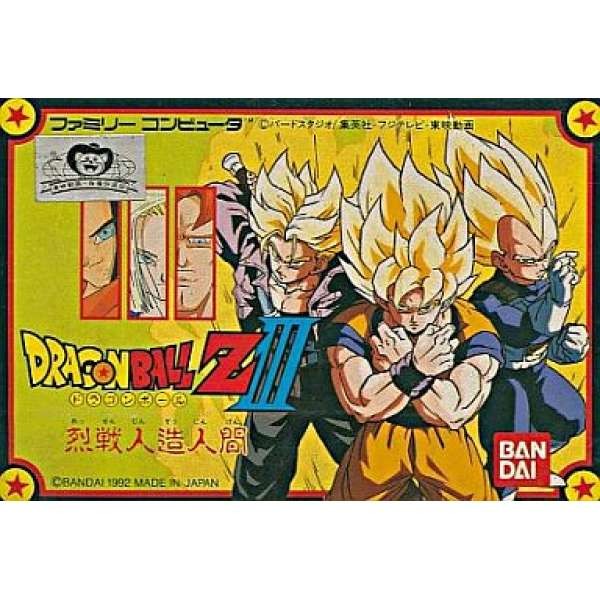
《七龍珠Z III:烈戰人造人》(Dragon Ball Z III: Ressen Jinzou Ningen / ドラゴンボールZ3 烈戦人造人間)於1992年8月7日由萬代(Bandai)在任天堂 Famicom(紅白機)上推出,是紅白機卡牌RPG系列的第三部正統續作。當時,電視動畫正處於熱血沸騰的「人造人篇」,不僅延續前作《激戰弗力札》的優良傳統,更在動畫演出流暢度與戰鬥節奏上進行大幅度的優化,試圖在8位元主機的生命末期呈現最震撼的龍珠戰鬥體驗。
在技術表現上,代表萬代對紅白機硬體榨取的極致。相較前作,畫面更加鮮豔細膩,戰鬥動畫的張力達到前所未有的高度。角色施展必殺技時的運鏡更具速度感,背景破壞特效與分鏡處理也更為豐富,完美捕捉人造人16、17、18號以及生化人賽魯(第一型態)的神韻。配樂方面,遊戲採用電子搖滾風格的音樂,旋律中充滿面對未知機械強敵的壓迫感與金屬質感,即使在紅白機有限的音源下,也能營造沉浸式的戰場氛圍。
劇情緊接在前作擊敗弗力札之後展開,從悟空在宇宙中修煉歸來、神秘少年特南克斯現身警告未來危機開始。將經歷「機械弗力札」入侵地球的插曲,隨後進入核心的人造人威脅篇章。劇情涵蓋Z戰士們為應對三年後危機的艱苦修煉,並與人造人19號、20號(蓋洛博士)對決,直到最強的人造人16、17、18號覺醒,以及賽魯(第一型態)的悄然現身。特別值得一提的是,還加入劇場版強敵「克維拉(弗力札的哥哥)」的故事,使原本稍短的人造人前期篇章變得更加充實且充滿驚喜。
在操作機制上,遊戲保留經典卡牌系統的核心特色,同時提升便利性與戰術深度。透過手牌中的卡片來下達指令,星數決定攻擊力,漢字則影響防禦。自動戰鬥系統經過優化,讓不想手動出牌的玩家也能快速推進雜魚戰。角色流派(如「神」、「魔」、「龜」)與卡片漢字的對應仍是發動必殺技的關鍵,而必殺技動畫演出更短促有力,減少重複觀看的疲勞感。隨著角色等級提升,BP(戰鬥力)數值成長驚人,需精密管理KI(氣)消耗,以應對吸收能量或防禦極高的人造人。地圖探索更加流暢,玩家可切換不同領隊角色,修煉系統中也包含反應力測試等趣味小遊戲,提升角色潛在數值,為大戰做足準備。
市場評價方面,被認為是紅白機龍珠卡牌RPG系列中系統最成熟、節奏感最佳的一作。劇場版與本傳劇情的結合獲得玩家高度好評,動畫演出效果與戰鬥張力亦達到頂峰。然而,由於16位Super Famicom(超任)已全面普及,加上超任《超武鬥傳》系列即將掀起格鬥遊戲革命,使本作在銷量與歷史地位上略遜前兩作。儘管如此,本作仍被公認為8位元時代的最後輝煌之作,以最完美姿態為紅白機上的龍珠傳奇畫下句點,是所有喜愛卡牌戰略與龍珠敘事玩家不可錯過的經典。
Dragon Ball Z III: Raging Battle of the Androids (Dragon Ball Z III: Ressen Jinzou Ningen / ドラゴンボールZ3 烈戦人造人間) was released on August 7, 1992, by Bandai for the Nintendo Famicom (NES). It is the third official entry in the Famicom “card RPG” series. At the time, the Dragon Ball Z anime was in its highly popular Android Saga. The game not only continued the strengths of its predecessor, Dragon Ball Z: Super Battle of Frieza, but also made significant improvements in animation fluidity and combat pacing, aiming to deliver the most intense Dragon Ball battles possible on an 8-bit system at the end of its life cycle.
Technically, Raging Battle of the Androids represents Bandai’s peak exploitation of the Famicom hardware. The graphics are more vibrant and detailed than in previous installments, and combat animations reach unprecedented levels of intensity. Camera movements during character special attacks convey a strong sense of speed, while background destruction effects and cinematic framing add visual flair. The game faithfully captures the essence of Androids 16, 17, and 18, as well as the first form of Cell. Its soundtrack leans toward electronic rock, delivering a sense of tension and metallic edge when facing powerful mechanical enemies. Despite the Famicom’s limited sound capabilities, it creates a remarkably immersive battlefield atmosphere.
The story picks up directly after Frieza’s defeat, starting with Goku returning from training in space and the mysterious young Trunks appearing to warn of a future threat. Players experience an initial episode with the “Mechanical Frieza” invasion of Earth before moving into the central Android threat storyline. The plot covers the Z Fighters’ rigorous training to prepare for the crisis three years later and confrontations with Androids 19 and 20 (Dr. Gero). It culminates with the awakening of the most powerful Androids 16, 17, and 18, as well as the subtle emergence of Cell (first form). Notably, the game also includes the story of the movie-exclusive villain Krilin’s Brother (Cooler’s Brother), enriching the early Android Saga and providing additional surprises.
Gameplay retains the classic card-based system while enhancing convenience and strategic depth. Players issue commands through cards in their hand, with stars determining attack power and kanji influencing defense. The automated battle system has been optimized, allowing players who prefer not to manually select cards to advance quickly through minor battles. Card-kanji combinations corresponding to character archetypes (such as “God,” “Demon,” and “Turtle”) remain crucial for executing special attacks. Special attack animations are shorter and more dynamic, reducing the fatigue of repeated viewing.
As characters level up, BP (battle points) grow dramatically, visually representing the leap in power after a Super Saiyan transformation. Players must carefully manage KI (energy) consumption to overcome energy-absorbing or highly defensive androids. Map exploration is smoother, with the ability to switch party leaders. The training system also includes reaction-based mini-games that improve characters’ potential stats, requiring players to adequately prepare before major battles.
Critically, Raging Battle of the Androids is regarded as the most refined and well-paced entry in the Famicom Dragon Ball card RPG series. Its integration of movie and main storyline content was highly praised, and its animation and combat execution were considered top-notch. However, by the time of its release, the 16-bit Super Famicom (SNES) had become widespread, and the Super Famicom Super Butouden fighting game series was poised to revolutionize the genre. As a result, the game’s sales and historical prominence were slightly overshadowed by its predecessors. Nevertheless, it is widely acknowledged as a crowning achievement of the 8-bit era, bringing the Dragon Ball saga on the Famicom to a perfect conclusion, and remains a must-play classic for fans of strategic card battles and Dragon Ball storytelling.
運費計算方式:
貨款滿1000元運費外加90元
貨款1000以下:買1件運費外加 60元,買2件運費外加 70元,
買3件運費外加 80元 ,買4件運費外加 90元
貨到付款外加30元手續費
外島及大陸地區運費另計
付款方式:
線上刷卡:本站採用Paypal線上刷卡
虛擬帳號匯款:屬於您專屬的虛擬帳戶,方便站長查帳使用,本站強力推薦
實體ATM匯款:請將匯款帳號記錄下來至各大銀行ATM提款機轉帳
超商條碼繳費:請列印本站提供的條碼至四大超商繳費
線上轉帳:透過玉山銀行線上ATM轉帳(此系統只支援IE瀏覽器)
貨到付款:本站採用黑貓宅急便貨到付款
其他注意事項:
如需購買線上點數卡請直接跟站長連絡,本站不提供點數卡的線上付款
-
七龍珠III:烈戰人造人
- 定 價: 8,190円
- 售 價: 1850.00
- 庫存量: 1 套
- 已賣出: 0 套
人氣指數: 0 / 6 顆星